Narcissistic Family Quotes: 12 Sourced Lines From Ovid to Austen
Words My Family Quotes Editors
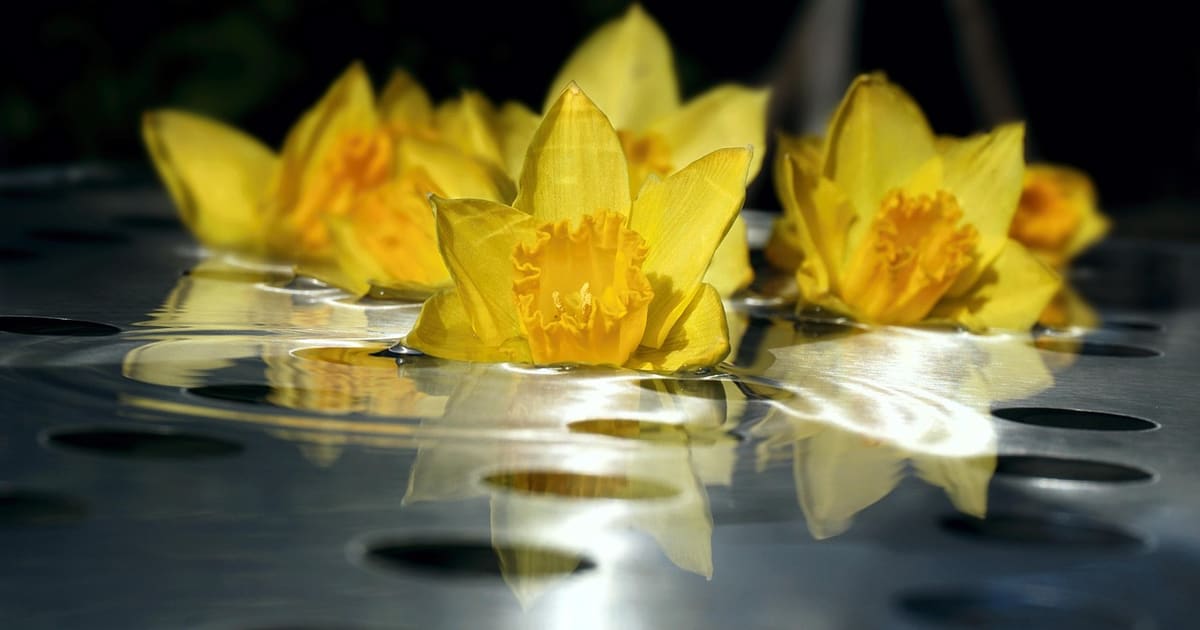
The word "narcissistic" starts with a mother's question. In Ovid's Metamorphoses, the nymph Liriope asks the blind prophet Tiresias whether her baby son, Narcissus, will live to old age, and the answer is a riddle: only "if he never recognizes himself." Two thousand years later, people searching for narcissistic family quotes are usually asking the reverse question: how do you put words to a parent, sibling or in-law who cannot see anyone but themselves?
This page collects 12 narcissistic family quotes, each checked word for word in its original text: Ovid's myth, Freud's 1914 essay, Erich Fromm on the mother who loves only the small child, novels by Austen, Dickens, Gaskell and Henry James that drew self-absorbed parents long before the word existed, Dickens's own memory of his mother, and two Bible verses. One caution first. Narcissistic personality disorder is a clinical diagnosis made by a qualified professional in a clinical interview; the lines below describe behavior, and none of them can diagnose a relative. For lines about family harm in general, see our toxic family quotes hub.
The 12 lines at a glance
A quick map first. Each line appears in full further down with its source and the story around it.
| Line (shortened) | Who and where | Best used for |
|---|---|---|
| "If he never recognizes himself." | Tiresias, Ovid, Metamorphoses III | Explaining where the word comes from |
| "I burn with the love of myself" | Narcissus, Ovid, Metamorphoses III | A journal heading about self-absorption |
| "parental narcissism born again" | Sigmund Freud, "On Narcissism" (1914) | Understanding the parent who lives through a child |
| "experiences as real only that which exists within oneself" | Erich Fromm, The Art of Loving (1956) | Naming why the conversation never lands |
| "as long as the child is small" | Erich Fromm, The Art of Loving (1956) | A mother who changed when you grew up |
| "love for one's mother quite comes by nature" | Cynthia, Gaskell, Wives and Daughters | Guilt about not feeling close to a mother |
| "I never can forget" | Charles Dickens, autobiographical fragment | Forgiving without pretending |
| "Vanity was the beginning and the end" | Jane Austen, Persuasion (1817) | A father who cares how things look |
| "nothing to be proud of in poor Catherine" | Henry James, Washington Square (1880) | A parent who wanted a trophy child |
| "any name if he could take it from him" | Dickens, Bleak House (1853) | A parent who takes credit for your work |
| "lovers of their own selves" | 2 Timothy 3:2-3 (KJV) | What the Bible says about self-love |
| "esteem other better than themselves" | Philippians 2:3-4 (KJV) | The opposite habit, for yourself |
Where the word comes from: a mother's question in Ovid
The myth is told in Book III of Ovid's Metamorphoses, finished around 8 AD. We quote Henry T. Riley's 1851 prose translation because it keeps close to the Latin. Liriope's son is so beautiful that young men and women fall for him, and he rejects all of them, including the nymph Echo, who can only repeat the last words she hears.
"Being consulted concerning him, whether he was destined to see the distant season of mature old age; the prophet, expounding destiny, said, 'If he never recognizes himself.'"
— Ovid, Metamorphoses, Book III, translated by Henry T. Riley (1851)
Notice who asks. It is the mother, worried about her child's future, and the prophecy is about the boy's relationship with himself, not with her. Families of a self-absorbed person often feel exactly that: the question of the relationship keeps coming back to the other person's image.
"In thee 'tis I, I now perceive; nor does my form deceive me. I burn with the love of myself, and both raise the flames and endure them."
— Narcissus at the pool, Ovid, Metamorphoses, Book III, translated by Henry T. Riley (1851)
Narcissus finally recognizes that the face in the water is his own, and it does not free him. He wastes away beside the pool and becomes the flower that carries his name. The line is useful because it shows the trap from the inside: the flames and the burning come from the same person. Psychiatrists borrowed his name for self-love at the end of the nineteenth century, and Freud made the term famous.
What do psychologists mean by a narcissistic parent?
In the older writing, a narcissistic parent is one who treats the child as an extension of the self: a second chance, a mirror or a stage. Two classic texts say this plainly, and both are more careful than the internet lists that quote them.
"Parental love, which is so touching and at bottom so childish, is nothing but parental narcissism born again and, transformed though it be into object-love, it reveals its former character infallibly."
— Sigmund Freud, "On Narcissism: An Introduction" (1914), translated by Cecil M. Baines, Collected Papers, vol. IV
Freud is not writing about cruel parents here. He means ordinary ones. A page earlier he describes how parents hope the child will escape every limit they met, will "become a great man and a hero in his father's stead", which he sums up as "His Majesty the Baby". The sentence helps when a parent's pride in you seemed to be pride in themselves: Freud thought a little of that is in every parent, and the problem begins when it is all there is.
"The narcissistic orientation is one in which one experiences as real only that which exists within oneself, while the phenomena in the outside world have no reality in themselves, but are experienced only from the viewpoint of their being useful or dangerous to one."
— Erich Fromm, The Art of Loving (1956), chapter IV, "The Practice of Love"
Fromm's definition explains a feeling many adult children describe: you are not really being heard, only sorted into helpful or threatening. It is also humbling, because Fromm adds that all of us have this distortion to some degree. That makes the line good for a journal or a conversation with a therapist rather than a weapon in a family argument.
Narcissistic mother quotes: love that stops when the child grows
Searches for narcissistic mother quotes outnumber every other version of this topic, and the best line on the subject comes from Fromm's chapter on motherly love. His point is that loving a baby is easy; the real test comes when the child starts to separate.
"The narcissistic, the domineering, the possessive woman can succeed in being a 'loving' mother as long as the child is small. Only the really loving woman, the woman who is happier in giving than in taking, who is firmly rooted in her own existence, can be a loving mother when the child is in the process of separation."
— Erich Fromm, The Art of Loving (1956), chapter II, "The Theory of Love"
If a mother was warm when you were little and turned cold, critical or competitive when you made your own choices, this passage names the pattern without name-calling. Fromm's wider claim is that "the very essence of motherly love is to care for the child's growth, and that means to want the child's separation from herself." Quote that half when you want to describe what you needed rather than what went wrong.
"I don't think love for one's mother quite comes by nature; and remember how much I have been separated from mine! … I heard mamma say to a caller, not a fortnight after his funeral, 'Oh, no, Cynthia is too young; she has quite forgotten him'—and I bit my lips, to keep from crying out, 'Papa! papa! have I?'"
— Cynthia Kirkpatrick to Molly Gibson, Elizabeth Gaskell, Wives and Daughters, chapter XIX (serialized 1864-66)
Gaskell's Mrs. Kirkpatrick, later Mrs. Gibson, is one of the most exact portraits of a self-centered mother in English fiction: charming in company, careless with her daughter's grief, and always the heroine of her own story. Cynthia's confession is the line for readers who feel guilty that love for their mother does not come easily. Gaskell died in 1865 before finishing the novel, and the last section was completed by Frederick Greenwood.
"I do not write resentfully or angrily; for I know how all these things have worked together to make me what I am; but I never afterwards forgot, I never shall forget, I never can forget, that my mother was warm for my being sent back."
— Charles Dickens, autobiographical fragment, printed in John Forster, The Life of Charles Dickens, vol. I (1872)
This is a real memory, not fiction. At twelve, while his father was in a debtors' prison, Dickens was sent to work in Warren's Blacking Warehouse pasting labels on pots. When a quarrel ended the job, his mother smoothed it over and brought home a request for the boy to return; his father decided he should go to school instead. We are not diagnosing Elizabeth Dickens. The sentence is here because it holds two things at once that many adult children need to hold: no resentment in the writing, and no pretending it did not happen. If you are dealing with a mother-in-law rather than a mother, our toxic mother-in-law quotes page covers that relationship.
Fathers who need an audience
Nineteenth-century novelists had no clinical word for it, but they drew the vain, image-first father with real precision. Three portraits stand out.
"Vanity was the beginning and the end of Sir Walter Elliot's character; vanity of person and of situation. He had been remarkably handsome in his youth; and, at fifty-four, was still a very fine man."
— Jane Austen, Persuasion, chapter I (published December 1817)
Sir Walter, Austen tells us, "never took up any book but the Baronetage", the directory of titled families where he could read his own entry, and he values his three daughters by how well they reflect on him. Austen's quiet heroine Anne is the daughter who counts for nothing at home. Use the opening clause for a father who cares more about how the family looks than how it feels; it is sharp, but it is Austen's sharpness, not yours. We cover Anne's side of the story on our favoritism in family quotes page.
"Dr. Sloper would have liked to be proud of his daughter; but there was nothing to be proud of in poor Catherine. There was nothing, of course, to be ashamed of; but this was not enough for the Doctor, who was a proud man and would have enjoyed being able to think of his daughter as an unusual girl."
— Henry James, Washington Square, chapter II (1880)
Dr. Sloper is never loud or violent. He is clever, dry and disappointed, and that is the point: some children of self-absorbed parents were never mistreated in a way anyone could see, they were simply not enough. In the same chapter he tells his sister, "You are good for nothing unless you are clever." The novel follows Catherine as she slowly stops trying to win him over.
"'He wouldn't let his son have any name if he could take it from him,' returned the old lady. 'Look at the son's dress!'"
— An old lady to Esther Summerson about Mr. Turveydrop, Charles Dickens, Bleak House, chapter XIV, "Deportment" (serialized 1852-53)
Old Mr. Turveydrop does "nothing whatever but stand before the fire, a model of deportment", while his son Prince teaches dancing all day in plain, threadbare clothes, and it is the father's name on the door. Prince adores him and calls him "a celebrated character". The scene fits anyone whose parent takes the credit for their work and still expects gratitude.
Bible verses about narcissistic family members
The Bible has no word for narcissism, but two passages in Paul's letters come close, one describing the self-loving person and one describing the cure.
"For men shall be lovers of their own selves, covetous, boasters, proud, blasphemers, disobedient to parents, unthankful, unholy, without natural affection, trucebreakers, false accusers…"
— 2 Timothy 3:2-3 (King James Version)
The list opens with self-love and runs straight into family words: "disobedient to parents" and "without natural affection". It is the verse people quote about a relative who seems unable to love, but read in context it is a warning about an age, not a label for one person. It works best as a description of what you do not want your own home to become.
"Let nothing be done through strife or vainglory; but in lowliness of mind let each esteem other better than themselves. Look not every man on his own things, but every man also on the things of others."
— Philippians 2:3-4 (King James Version)
"Vainglory" is the old word for empty self-display, which makes this the Bible's closest antidote to the narcissistic habit. If you want a verse for a hard family season that points at your own conduct rather than someone else's, this is it.
A viral "Jung quote" we could not trace
"The greatest burden a child must bear is the unlived life of its parents" is the most shared line on narcissistic-parent pages, almost always signed Carl Jung. We could not find that sentence in his work. Jung did write an introduction to Frances Wickes's book The Inner World of Childhood; we read the 1927 English edition (1929 printing), and his introduction there does not contain the word "unlived". A longer version he wrote for a later German edition is printed in his Collected Works, which we could not check, and Jungian writers point to passages about parents' unlived lives elsewhere in his writing. The honest label is "a paraphrase commonly attributed to Carl Jung (exact wording not found)". Our misattributed family quotes page tracks more lines like this one.
How to use these lines without starting a family war
Quotes about narcissistic relatives are rarely read by the relative in question; they are read by everyone else. A few practical rules from the way these lines get used:
- Keep the sharpest ones private. Austen on vanity or Dickens on Mr. Turveydrop are satisfying in a journal and explosive in a public post that tags a parent. If you post, post the line, not a name.
- Describe behavior, not a diagnosis. "She could only love me while I was small" (Fromm's idea in your words) starts a conversation. A clinical label thrown across the dinner table usually ends one, and a diagnosis is a clinician's call anyway.
- Pick a line about what you need. Fromm on wanting the child's growth or Philippians on looking to "the things of others" can go in a letter to a sibling who shares the history, because they name the goal rather than the injury.
- Write your own in one sentence. Start with the pattern and end with your choice, for example: "I stopped performing for an audience of one." Or: "I can love who you are without reflecting who you need me to be."
- Get support for the hard part. If a relationship involves threats, control of money or fear, a licensed therapist or a local support service is the right next step; a quote is only a starting point.
For lines about the wider family pattern, see toxic family quotes about relationships, selfish family quotes and, if you are the one cast out, black sheep of the family quotes.
Questions people ask about narcissistic family quotes
What is a good quote about a narcissistic family?
Erich Fromm's definition is the clearest: the narcissistic orientation "experiences as real only that which exists within oneself". For parents specifically, his line about the mother who can be "loving" only "as long as the child is small" is the most precise, from The Art of Loving (1956).
What does the Bible say about narcissistic family members?
The closest passage is 2 Timothy 3:2-3, which describes people who are "lovers of their own selves" and "without natural affection". Philippians 2:3-4 gives the opposite habit: "in lowliness of mind let each esteem other better than themselves."
Did Carl Jung say "the greatest burden a child must bear is the unlived life of its parents"?
Not in those words, as far as we could find. The sentence is a paraphrase of ideas in his writing about parents and children; it is not in his 1927 English introduction to Frances Wickes's The Inner World of Childhood, so label it as commonly attributed.
Where does the word narcissistic come from?
From Narcissus in Ovid's Metamorphoses, Book III, the youth who fell in love with his own reflection. His mother had been told he would live long "if he never recognizes himself". Psychiatrists adopted the name at the end of the nineteenth century, and Freud's 1914 essay "On Narcissism" made it standard.
Sources checked for this page: Ovid, Metamorphoses, tr. H. T. Riley (Project Gutenberg 21765); Freud, Collected Papers vol. IV (archive.org); Fromm, The Art of Loving, 1956 (archive.org scan); Gaskell, Wives and Daughters (Gutenberg 4274); Forster, The Life of Charles Dickens (Gutenberg 25851); Austen, Persuasion (Gutenberg 105); James, Washington Square (Gutenberg 2870); Dickens, Bleak House (Gutenberg 1023); King James Bible (Gutenberg 10); Wickes, The Inner World of Childhood, 1927/1929 (archive.org).