Jealous Family Members Quotes: 12 Sourced Lines and What to Say Back
Words My Family Quotes Editors
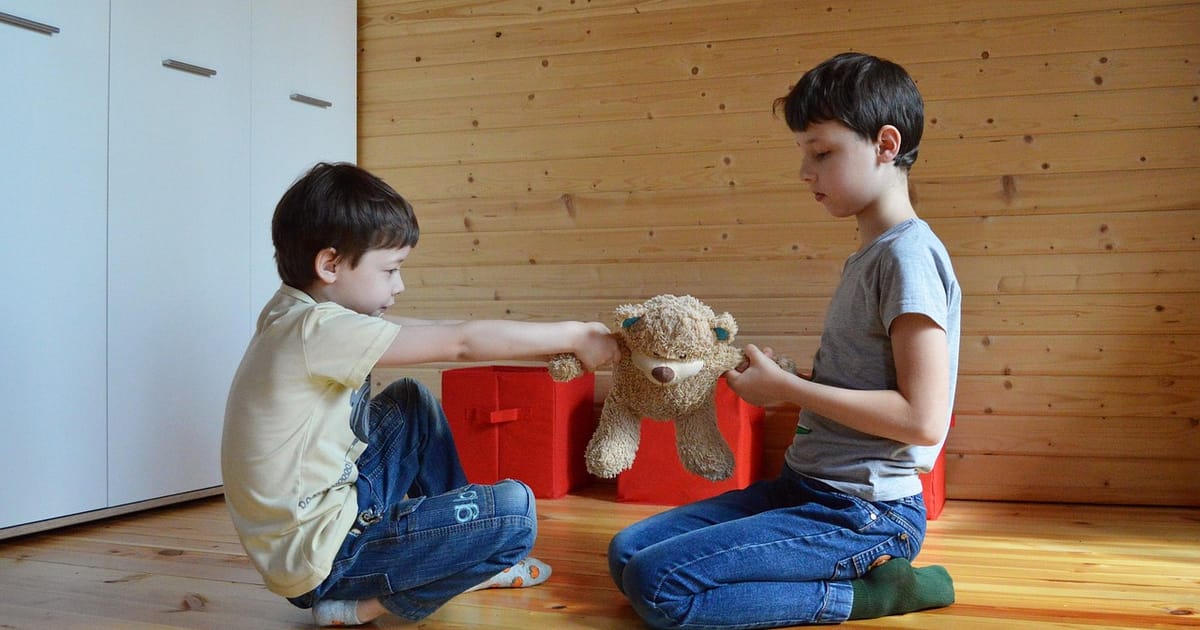
Aristotle noticed it more than two thousand years ago: we rarely envy strangers. We envy the people "near us in time, place, age, or reputation", and to prove the point he quoted a line of verse that could be the motto of every tense family dinner: "Ay, kin can even be jealous of their kin." A cousin's promotion, a sister's wedding, a brother who seems to be the favourite: jealousy inside a family hurts more than a stranger's because the two people are measured against each other all their lives.
Below are 12 jealous family members quotes, each checked against the text it comes from (Aristotle, Francis Bacon, Bertrand Russell, La Rochefoucauld, Shakespeare, Louisa May Alcott and the King James Bible), with what is happening around each line and when it is worth using. They are arranged around the question most people actually have: what do you say to a relative who is jealous of you? If you want one line now, Bacon's "pity ever healeth envy" is the most useful four words on the subject, and the reply table further down shows how to put it into practice.
Why is jealousy so sharp between relatives?
Because family members are the people we are compared with first and longest. Siblings are measured against each other at school, cousins at weddings, adult children by their parents' friends. The two writers below explain why that closeness makes envy worse, not better.
"we envy those who are near us in time, place, age, or reputation. Hence the line: 'Ay, kin can even be jealous of their kin.'" — Aristotle, Rhetoric, Book II, chapter 10 (c. 350 BCE; W. Rhys Roberts translation)
Aristotle was writing a handbook for speakers, and this chapter explains who feels envy and towards whom, so that an orator could use it. His answer is proximity: we envy our equals and neighbours, not people far above us or long dead. A few lines later he quotes the old proverb "Potter against potter", the rivalry of people in the same trade. Read with a family in mind, the passage explains why a relative can be glad for a celebrity's success and sour about yours. Use the quoted line when you want to name family jealousy without accusing anyone: it is old, short and impersonal.

"Beggars do not envy millionaires though of course they will envy other beggars who are more successful." — Bertrand Russell, The Conquest of Happiness, chapter 6, "Envy" (1930)
Russell makes Aristotle's point in modern dress. In the same chapter he says that envy is "closely connected with competition" and that we do not envy a good fortune we see as hopelessly out of reach. In family terms, the relative who resents you is rarely the one who is much richer or much poorer; it is the sibling or cousin who started level with you. This line is too blunt to send to a relative, but it is a good one to keep in mind when you are trying to understand why the jealousy comes from the person closest to you.
When family is jealous of your success
The most common version of the problem: you get the job, the house, the degree or the partner, and someone in the family goes quiet, changes the subject or makes a joke at your expense. Bacon and La Rochefoucauld both wrote about exactly this moment.
"near kinsfolks, and fellows in office, and those that have been bred together, are more apt to envy their equals, when they are raised." — Francis Bacon, "Of Envy", Essays (1625 edition)
Bacon's essay lists the kinds of people most likely to envy, and he ends the list with relatives and people "bred together". The key words are "when they are raised": the envy starts at the moment one of the equals moves up. He explains why in the next sentence: your rise "doth upbraid unto them their own fortunes", it reminds them of where they are, and it is talked about. He also gives the shortest summary of the mechanism, "where there is no comparison, no envy". Use this passage when you need to understand that a relative's coldness after your good news is about their own position, not about anything you did.
"Our envy always lasts longer than the happiness of those we envy." — François de La Rochefoucauld, Maxims, no. 476 (J. Hain Friswell translation, 1871)
La Rochefoucauld's maxims were first published in the 1660s, and this one is the most practical of his many lines on envy. Success fades, a promotion becomes ordinary, a new house becomes just a house, but a relative's resentment about it can carry on for years. That is worth knowing when you are waiting for the jealousy to wear off by itself: it may not. The line works as a quiet caption about a long family grudge, and as a reminder that you cannot fix someone's envy by making your life smaller. If the jealousy shows up as stinginess or greed rather than coldness, our page of selfish family quotes covers money and inheritance quarrels. And if the coolness has hardened into being cast as the one who does not fit, black sheep of the family quotes traces where that phrase comes from and what to say back.
When the jealous one is a brother or sister
Sibling jealousy is the oldest family story in literature, and it nearly always turns on a parent's attention. These four passages show the same pattern from four angles: the favoured child, the overlooked child, the half-brother and the little sister left out.
"And when his brethren saw that their father loved him more than all his brethren, they hated him, and could not speak peaceably unto him." — Genesis 37:4, King James Version (1611)
Joseph's brothers see their father's favouritism (the coat of many colours in the verse before) and stop being able to talk to Joseph civilly. Seven verses later the text says it plainly: "his brethren envied him". The story goes further than most family quarrels, since the brothers sell Joseph into Egypt, but the verse itself describes something ordinary: a family where one child is visibly preferred and the others go silent. It is the right line when a parent's favouritism is the root of a sibling's jealousy, and it puts at least some of the weight on the parent.
"Lo, these many years do I serve thee, neither transgressed I at any time thy commandment: and yet thou never gavest me a kid, that I might make merry with my friends." — Luke 15:29, King James Version (1611)
This is the elder brother in the parable of the prodigal son. His younger brother has wasted his inheritance and come home, and the father has thrown a feast; the elder son, who stayed and worked, refuses to go in. His complaint is the voice of every dutiful sibling who watches the difficult one get the attention. The father's reply, two verses later, is the best answer in the Bible to that kind of jealousy: "Son, thou art ever with me, and all that I have is thine." Quote the pair together when you are the parent in the middle.
"Legitimate Edgar, I must have your land: / Our father's love is to the bastard Edmund / As to the legitimate: fine word: legitimate!" — William Shakespeare, King Lear, Act 1, Scene 2 (c. 1606)
Edmund, the Earl of Gloucester's illegitimate younger son, speaks this alone on stage, just before he uses a forged letter to turn his father against his half-brother Edgar. What makes the speech chilling is that he admits their father loves both sons equally; the jealousy is about status and land, not affection. It is a useful line for a step-sibling or half-sibling rivalry, and a reminder that jealousy can survive a parent's fairness. Use it with care, though: the speech's word "bastard" makes it a line to discuss, not to post.
"You wicked, wicked girl! I never can write it again, and I'll never forgive you as long as I live." — Louisa May Alcott, Little Women, chapter 8, "Jo Meets Apollyon" (1868)
Amy, the youngest March sister, is left behind when Jo and Meg go to the theatre with Laurie. In revenge she burns the manuscript Jo has been writing, and Jo shouts this line at her. The chapter is the most honest picture of sisterly jealousy in American fiction, because both sisters are in the wrong: Amy acts out of jealousy at being excluded, and Jo nurses her anger until, the next day, she nearly lets Amy skate onto thin ice that breaks under her. They make up only after the scare. Marmee's advice that night, "don't let the sun go down upon your anger", is in our collection of short sibling quotes; Jo's line is the one to quote when you want to admit that the jealousy went both ways.
What does the Bible say about jealous family members?
The Bible's answer has two parts: the stories above show what envy does to brothers (Cain and Abel in Genesis 4, Joseph in Genesis 37, the elder brother in Luke 15), and the wisdom books say what it does to the person who carries it. The two verses below are the clearest on the second point.
"A sound heart is the life of the flesh: but envy the rottenness of the bones." — Proverbs 14:30, King James Version (1611)
The verse sets a calm heart against envy and says envy rots the person from the inside. Its point is that jealousy harms the jealous one first. That makes it a gentle verse to share with a relative you think is eaten up by comparison, because it is about their peace rather than your grievance. It also works for a church newsletter or a family devotional about rivalry.

"For where envying and strife is, there is confusion and every evil work." — James 3:16, King James Version (1611)
James is writing to early Christian communities that were quarrelling, and he ties envy directly to "strife", division inside the group. Applied to a family, the verse explains why one jealous relative can unsettle everyone: the envy turns into side-taking, gossip and confusion about who said what. The verse before it calls the "wisdom" behind such envy "earthly, sensual, devilish", and the verse after it praises a wisdom that is "peaceable, gentle". Use it when jealousy has already split a family into camps.
What to say to a jealous family member
Usually less than you think. Defending your success makes it bigger; apologising for it makes it smaller than it is. The most reliable approach is the one Bacon recommends in the same essay.
"pity ever healeth envy." — Francis Bacon, "Of Envy", Essays (1625 edition)
Bacon's context is political: people who rose to high office "with great travels, cares, or perils" were envied less, he says, because others thought they had earned it the hard way and even pitied them. He adds, with some cynicism, that clever men in power were "ever bemoaning themselves" to blunt envy. The honest family version is simpler: let your relatives see the cost as well as the reward. Mention the long hours, the debt, the worry. You are not inventing hardship, only showing the part of the picture that jealousy leaves out.
The table turns that idea into replies for the situations people search for most. The replies are suggestions written by our editors, not quotations.
| Situation (and what is often underneath) | A reply that lowers the temperature | Line to keep in mind |
|---|---|---|
| A sibling goes quiet after your good news (your rise reminds them of their own position) | "It's been a hard year getting here. How are things going with you?" | Bacon, "when they are raised" |
| A parent's favouritism is the real issue (one child has felt overlooked for years) | "I don't want to compete with you for Mom and Dad. Can we talk about it?" | Genesis 37:4 |
| The dutiful sibling resents the difficult one (years of unthanked effort) | (From the parent) "You've always been here, and I see it." | Luke 15:29 and 15:31 |
| Jokes at your expense, "must be nice" (envy that cannot be said directly) | Answer the joke lightly once; if it keeps happening, say privately that it hurts | La Rochefoucauld, no. 476 |
| Rivalry with a step- or half-sibling (status, inheritance, belonging) | Keep money and property questions in writing and out of family events | King Lear, 1.2 |
| A jealous in-law (fear of losing a place in the family) | Include them early in plans instead of telling them last | Aristotle, "kin can even be jealous of their kin" |
Two things rarely help: arguing the person out of their feelings, and posting a pointed quote where they will see it. A quote on social media usually reads as a public accusation, even when it is meant as a sigh. If the jealous relative is a mother-in-law or sister-in-law, the situations on our page of toxic in-laws quotes are closer to what you are facing.
If you are the jealous one
Plenty of people search for this subject because they recognise the feeling in themselves: the twinge when a sister announces a pregnancy, a brother buys a house or a cousin is praised at a family party. Russell's advice is the most practical a philosopher has given.
"Merely to realize the causes of one's own envious feelings is to take a long step towards curing them." — Bertrand Russell, The Conquest of Happiness, chapter 6, "Envy" (1930)
Russell's chapter treats envy as a habit of thought rather than a moral failing, and in the next breath he calls "the habit of thinking in terms of comparison" a fatal one. Naming the cause, "I'm not angry at her, I'm afraid I've fallen behind", takes the sting out of it. For a family, that might mean saying it out loud: telling a sibling "I'm happy for you, and I'm a bit jealous" is often what ends a rivalry, because it leaves nothing hidden for the other person to guess at.
Short jealous family quotes for a caption or text
Short forms of the lines above, for a caption, a journal or a message to someone who understands. Each one keeps the original wording.
- "Ay, kin can even be jealous of their kin." (a line quoted by Aristotle, Rhetoric)
- "Pity ever healeth envy." (Francis Bacon, "Of Envy")
- "Our envy always lasts longer than the happiness of those we envy." (La Rochefoucauld)
- "Envy the rottenness of the bones." (Proverbs 14:30)
- "Where envying and strife is, there is confusion." (James 3:16)
- "They hated him, and could not speak peaceably unto him." (Genesis 37:4)
For something with more bite about relatives in general, our most-read page collects sarcastic quotes about bad family relatives.
Questions about jealous relatives
What should you do when family members are jealous of you?
Don't defend or shrink your success. Show some of what it cost you, as Bacon suggests ("pity ever healeth envy"), ask about their life, keep money matters out of family gatherings, and if the jealousy turns into repeated digs, tell the person privately that it hurts.
What does the Bible say about jealous family members?
The Bible tells the story of family envy several times (Cain and Abel, Joseph and his brothers in Genesis 37, the elder brother in Luke 15) and warns against it in Proverbs 14:30, "envy the rottenness of the bones", and James 3:16, "where envying and strife is, there is confusion and every evil work."
Why are family members jealous of each other?
Because they are compared with each other more than with anyone else. Aristotle says we envy those "near us in time, place, age, or reputation", Bacon names "near kinsfolks" as the most likely to envy an equal "when they are raised", and Russell notes that beggars envy other beggars, not millionaires.
Jealousy in a family is rarely about the thing itself, the house or the job or the attention; it is about the comparison. The writers here agree on that much, from Aristotle to Russell, and the stories agree on the ending: Joseph forgives his brothers, the father goes out to the elder son, and Jo March pulls Amy out of the ice. None of them pretend the jealousy wasn't there.