17 Quotes for Grandparents' Love Honoring Generational Anchors
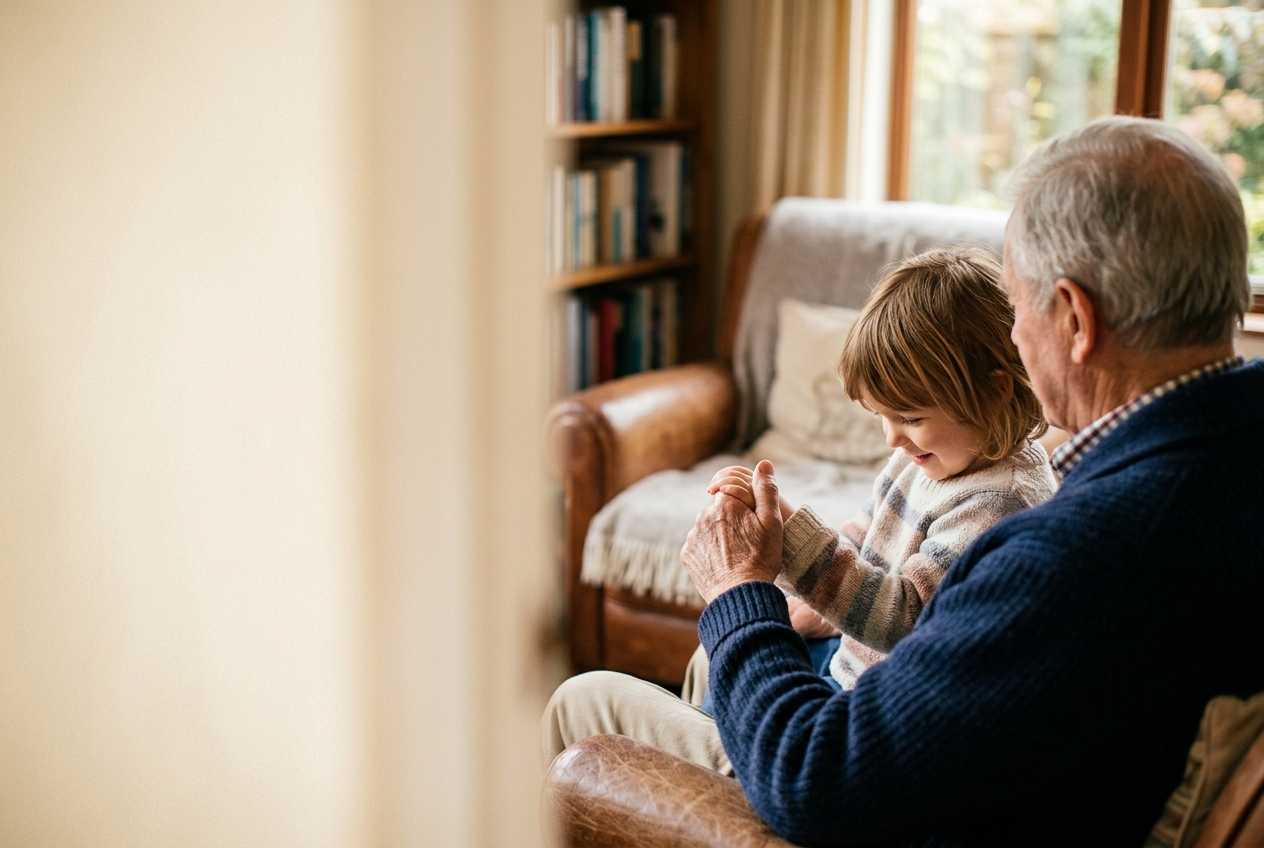
The Misunderstood Role of the Family Elder
Popular culture frequently reduces the role of family elders to a caricature of endless indulgence and rule-breaking. Television shows and holiday advertisements insist that a grandmother’s primary function is sneaking candy to toddlers while winking at exasperated parents. This flat portrayal ignores the heavy emotional lifting that older generations actually perform within the family structure. I recognized this shift clearly while watching my grandmother in a cramped kitchen in Omaha, Nebraska, 2014. She was quietly managing a volatile dispute between two of her adult sons while simultaneously teaching a teenager how to knead bread dough.
The reality of a matriarch or patriarch involves holding the collective memory of a lineage together. They serve as living archives of a family's triumphs, failures, and survival strategies over the span of decades. Exploring the broader spectrum of family bonds reveals that these relationships often provide the psychological grounding children need when the immediate nuclear unit faces instability. A steady elder offers a unique vantage point that younger parents, caught in the daily grind of child-rearing, simply cannot access.
The Quiet Architecture of Family Lines
"Every generation revolts against its fathers and makes friends with its grandfathers." — Lewis Mumford, The Brown Decades, 1931
Mumford captured the natural friction between immediate parents and children, highlighting how the skip-generation relationship often bypasses disciplinary tension to form an alliance of mutual appreciation.
"It is one of nature's ways that we often feel closer to distant generations than to the generation immediately preceding us." — Igor Stravinsky, Poetics of Music, 1942

The famed composer noted a psychological phenomenon where individuals seek identity and validation from the older branches of their family tree rather than their direct forebears.
"The closest friends I have made all through life have been people who also grew up close to a loved and loving grandmother or grandfather." — Margaret Mead, Blackberry Winter: My Earlier Years, 1972
Mead observed that the early experience of unconditional elder affection often shapes a person's capacity for empathy and deep friendship in adulthood.
"To keep the heart unwrinkled, to be hopeful, kindly, cheerful, reverent—that is to triumph over old age." — Thomas Bailey Aldrich, Ponkapog Papers, 1903
Aldrich suggested that the true victory of a long life is maintaining an open, generous disposition that naturally draws younger family members seeking refuge.
"The old are the precious gem in the center of the household." — Traditional Chinese Proverb, Early Translations, 1899
This enduring cultural maxim places the elder not on the periphery of domestic life, but at its structural and emotional core.
"A child needs a grandparent, anybody's grandparent, to grow a little more securely into an unfamiliar world." — Charles and Ann Morse, Grandparents, 1979
The Morses argued that the specific biological connection matters less than the presence of an older, steady figure to help a child navigate early anxieties.
Passing Down More Than Anecdotes
When examining how a granddaughter views her elders, the focus often shifts from mere storytelling to the transmission of survival skills. These shared afternoons spent gardening, repairing engines, or simply sitting in silence build a framework for resilience. Children absorb the unstated lessons of endurance just by observing how an older person moves through a changing world.
"They say genes skip generations. Maybe that's why grandparents find their grandchildren so likeable." — Joan McIntosh, The Reluctant Grandparent, 1990
McIntosh offered a humorous but sharp observation on the biological and temperamental similarities that often leapfrog over parents to unite the old and the young.
"The history of our grandparents is remembered not with rose petals but in the laughter and tears of their children and their children's children." — Charles Spohr, The Generational Tie, 1982
Spohr rejected the romanticized version of family history, insisting that true legacies are built on authentic emotional exchanges rather than sanitized memories.
"An elder's hands are the physical maps of a family's journey out of hardship." — Inspired by Willa Cather
The physical toll of labor and sacrifice remains visible on the bodies of those who paved the way for current comforts.
"We are the sum of our ancestors' quietest decisions." — Elizabeth Gaskell, Letters and Reflections, 1860
Gaskell understood that dramatic historical events shape families less than the daily, unseen choices made by protective forebears.
"A house without an elder is like an orchard without a well." — Levantine Proverb, Folk Wisdom Compendium, 1912
This agrarian metaphor perfectly encapsulates how a family without generational roots risks drying up during seasons of drought.
Anchors During Sudden Shifts

During periods of acute crisis, the immediate family often fragments under stress. It is usually the oldest members who step in to stabilize the foundation. Anyone looking into finding brief words of courage during sudden shifts will recognize that elders often embody this stoicism naturally. They have survived wars, economic collapses, and personal tragedies, providing a living testament that current disasters are also survivable.
"Age is not a matter of years, but of the strength of the timber." — Washington Irving, Bracebridge Hall, 1822
Irving equated the aging process with the seasoning of wood, suggesting that time hardens and strengthens a person's core against external pressure.
"The affection of old age is the purest of all, stripped of ambition and the frantic need to acquire." — Hamilton Wright Mabie, My Study Fire, 1890
Mabie defined the unique quality of late-stage love, noting its freedom from the competitive anxieties that often plague younger adults.
"Grandparents are voices of the past and the door to the future." — Helen Ketchum, Generations, 1988
Ketchum positioned the elder as a necessary threshold, linking historical identity with future potential.
"A grandfather’s silence is often more instructive than a father’s lecture." — Inspired by Henry Van Dyke

The restraint shown by older generations often allows children the space to arrive at their own moral conclusions without feeling cornered.
"We find our footing in the footprints left by those who walked the path when it was dark." — Christina Rossetti, Time Flies, 1885
Rossetti beautifully illustrated how the prior struggles of ancestors illuminate the way forward for the current generation.
"The ultimate privilege of age is to love without the burden of discipline." — Richard Steele, The Spectator, 1711
Steele pointed out the liberating dynamic that allows elders to foster deep affection without the daily friction of enforcing rules.
Understanding the ways elders define generational ties helps clarify why these relationships remain so vital. They are not merely an accessory to the nuclear family, but its bedrock. As you move into the coming week, consider reaching out to an older relative or mentor to hear a story they haven't told in a while.
The Short Version
- Elder family members serve as living archives, holding the collective memory and survival strategies of a lineage.
- The skip-generation relationship often bypasses the natural disciplinary friction found between immediate parents and children.
- Physical traits and temperaments frequently leapfrog a generation, creating an unspoken alliance between the old and the young.
- During acute crises, elders provide a stabilizing presence born from surviving their own historical and personal disasters.
- The affection offered by grandparents is often uniquely pure, stripped of the competitive anxieties of middle adulthood.