Bible Verses for My Daughter: Which Verse for Which Moment, From Her Birth to Her Wedding Day
Words My Family Quotes Editors
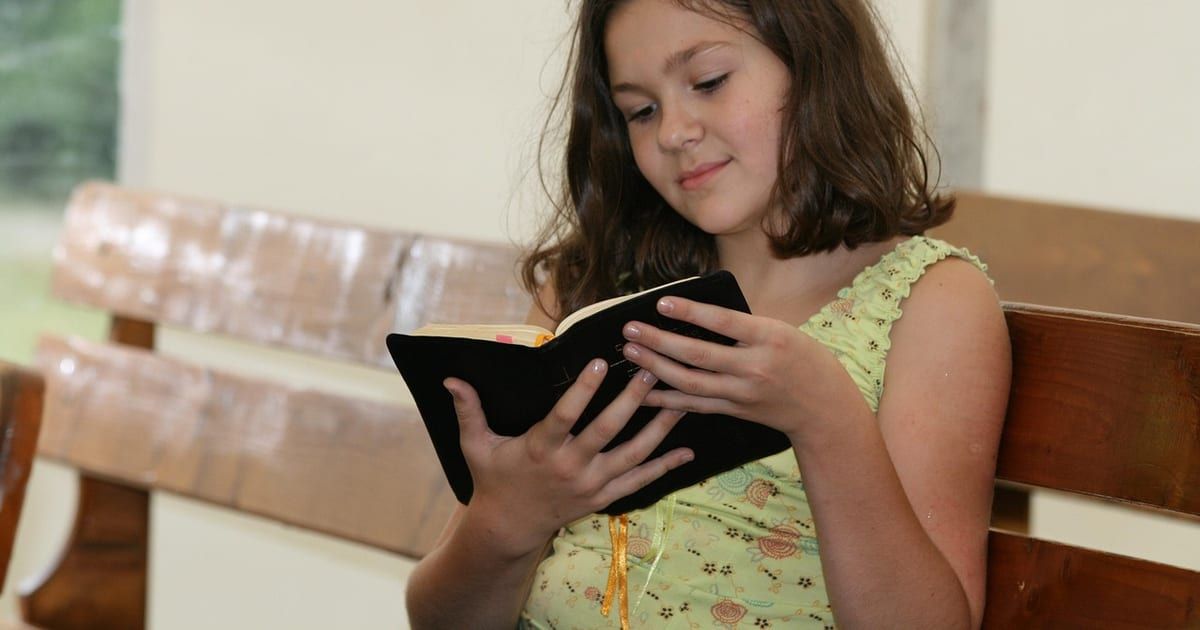
The words "daughter" and "daughters" appear 581 times in the King James Bible. "Son" and "sons" appear more than 3,400 times, close to six for every one. That imbalance is the first thing to know when you look for Bible verses for your daughter: many of the verses printed on girls' bookmarks and nursery walls were written about someone else, and the ones that really speak to or about a daughter are fewer, older and often more interesting than the greeting-card versions.
This guide sorts Bible verses for a daughter by the moment you need them: her birth or dedication, a birthday, the teenage years, graduation, her wedding, a hard season, and the verses a father, a mother or a daughter herself might choose. Every verse is quoted from the King James Version and checked against the full text. Each comes with a note on who is speaking and to whom, so you know what you are giving her. (The counts above are ours, made on the Project Gutenberg edition of the KJV; "Son" includes every use of the word.)
Which verse for which moment
| Moment | Verse | Does it say "daughter"? | Good to know |
|---|---|---|---|
| Birth, baptism, dedication | Psalm 139:14; 1 Samuel 1:27 | No | 1 Samuel 1:27 is a mother speaking about her son, Samuel |
| Birthday | Psalm 144:12; Proverbs 31:25; Zephaniah 3:17 | Yes (Psalm 144:12); figuratively (Zephaniah) | Psalm 144:12 is the clearest blessing on daughters in the Psalms |
| Teenage years | 1 Timothy 4:12; Proverbs 31:30 | No | 1 Timothy was written to a young man; it fits a girl just as well |
| Graduation, first job, leaving home | Esther 4:14; Joel 2:28; Numbers 27:7 | Yes (Joel, Numbers) | Esther 4:14 ends a warning; quote only the last clause |
| Wedding day | Psalm 45:13; Ruth 3:11 | Yes | Psalm 45 is a royal wedding song addressed to the bride |
| Illness, grief, a hard week | Mark 5:34; Mark 5:41 | Yes | Two "daughters" in one chapter, both healed |
| From her father | Job 42:15; Esther 2:7 | Yes | Job gave his daughters an inheritance alongside their brothers |
| From her mother | Proverbs 31:29 | Yes, in the KJV | Modern translations say "women" |
| From a daughter to her parents | Proverbs 23:25 | No | Works in a card to mom or dad |
When she is born, baptized or dedicated
No verse in the Bible is a birth announcement for a girl, so parents borrow two that are about every child.
"I will praise thee; for I am fearfully and wonderfully made: marvellous are thy works; and that my soul knoweth right well." — Psalm 139:14, King James Version (1611)
Psalm 139 is traditionally attributed to David, and the speaker is talking about himself: the verse before it says "thou hast covered me in my mother's womb." On a birth card or a dedication program the "I" becomes the baby, which is why the verse is so often printed under a newborn photo. If you would rather speak to her, the honest way is to put her name above the verse rather than changing its pronouns, and to keep the old word "fearfully", which here means with awe, not with fear.
"For this child I prayed; and the LORD hath given me my petition which I asked of him." — 1 Samuel 1:27, King James Version (1611)
This is Hannah, who had prayed for years for a child. She says it when she brings the boy Samuel to the priest Eli at Shiloh. The verse is about a son, but nothing in its wording says so, which is why parents who waited a long time for a daughter, through infertility, loss or adoption, use it for girls too. On an adoption announcement or a dedication card it needs no explanation.
For her birthday card
For a birthday, start with one of the few verses that blesses daughters by name, then add one about the woman she is becoming.
"That our sons may be as plants grown up in their youth; that our daughters may be as corner stones, polished after the similitude of a palace." — Psalm 144:12, King James Version (1611)
The psalm is a prayer for a whole people: sons growing like healthy plants, daughters like the carved corner pillars of a palace, then full barns and safe streets. The image is about strength and beauty together; a corner stone carries the building. The New International Version puts it as "pillars carved to adorn a palace," which reads more easily on a card. Of everything on this page it is the verse that best answers "what is the psalm for my daughter?", because it was written about daughters from the start.
"Strength and honour are her clothing; and she shall rejoice in time to come." — Proverbs 31:25, King James Version (1611)
This verse belongs to the poem that closes Proverbs, the portrait of a "virtuous woman" (31:10–31), which in Hebrew is an alphabetical acrostic. The woman in the poem is a grown wife running a household and a business, so the verse suits an 18th, 21st or 30th birthday better than a fifth. "She shall rejoice in time to come" is a good line for a daughter facing a year she is nervous about.
"The LORD thy God in the midst of thee is mighty; he will save, he will rejoice over thee with joy; he will rest in his love, he will joy over thee with singing." — Zephaniah 3:17, King James Version (1611)
Three verses earlier the prophet says who he is talking to: "Sing, O daughter of Zion... O daughter of Jerusalem." The "thee" is a city pictured as a daughter, and God is pictured as a parent singing over her. It is one of the most natural verses to read aloud at a small child's birthday, since singing over a child is something most parents know well.
Through the teenage years
"Let no man despise thy youth; but be thou an example of the believers, in word, in conversation, in charity, in spirit, in faith, in purity." — 1 Timothy 4:12, King James Version (1611)
Paul wrote this to Timothy, a young man he had left in charge of a church. The point is that age doesn't decide whose example counts. For a teenage daughter it is an encouraging verse rather than a corrective one, and it fits a confirmation, a first leadership role or a youth-group trip. "Conversation" in 1611 English means conduct, the way you live, not talk.
"Favour is deceitful, and beauty is vain: but a woman that feareth the LORD, she shall be praised." — Proverbs 31:30, King James Version (1611)
From the same poem as 31:25, this is the verse parents reach for when a daughter is worried about how she looks. "Vain" means fleeting, like a breath, not conceited. Write it in a note rather than on a public post; it lands as comfort in private and can read like a lecture in a caption.
Graduation, a first job, leaving home
"…and who knoweth whether thou art come to the kingdom for such a time as this?" — Esther 4:14, King James Version (1611)
Mordecai says this to Esther, the young cousin he raised as his own daughter, when he asks her to risk her life by going to the king to save her people. The first half of the verse is a warning ("thou and thy father's house shall be destroyed"), so graduation cards quote only the closing question, as above, with the ellipsis showing the cut. It is the best verse in the Bible for a daughter starting something bigger than herself.
"And it shall come to pass afterward, that I will pour out my spirit upon all flesh; and your sons and your daughters shall prophesy, your old men shall dream dreams, your young men shall see visions." — Joel 2:28, King James Version (1611)
Peter quotes this verse in his sermon at Pentecost (Acts 2:17), which is why it matters in church history: it promises a public voice to daughters as well as sons. For a daughter graduating from seminary, starting to preach or teach, or simply finding her voice, "your daughters shall prophesy" is a short and striking line.
"The daughters of Zelophehad speak right: thou shalt surely give them a possession of an inheritance among their father's brethren." — Numbers 27:7, King James Version (1611)
Five sisters, Mahlah, Noah, Hoglah, Milcah and Tirzah, came to Moses because their father had died without sons and his land would pass out of the family. The answer they got changed the law (27:8): a man's inheritance would pass to his daughters. For a daughter finishing law school, winning an argument for a good cause or standing up for her sisters, "The daughters of Zelophehad speak right" has a quiet wit, and few people will have seen it on a card before.
On her wedding day
"The king's daughter is all glorious within: her clothing is of wrought gold." — Psalm 45:13, King James Version (1611)
Psalm 45 is a royal wedding song, and three verses earlier it turns to the bride and calls her "O daughter": "Hearken, O daughter, and consider... forget also thine own people, and thy father's house." That line is bittersweet for the father of the bride, which is exactly why some fathers read it in a toast. Verse 13 is the gentler choice for a card: "all glorious within" praises who she is before it mentions her dress.
"And now, my daughter, fear not; I will do to thee all that thou requirest: for all the city of my people doth know that thou art a virtuous woman." — Ruth 3:11, King James Version (1611)
Boaz says this to Ruth on the night she asks him to marry her. He calls her "my daughter" because he is older, and her mother-in-law Naomi uses the same words at the start of the chapter: "My daughter, shall I not seek rest for thee?" The Hebrew for "virtuous woman" here is eshet chayil, the very phrase that opens the Proverbs 31 poem, so Ruth is the one person in the Bible given that title by name. It suits a wedding card from a mother-in-law, and you will find more lines for that relationship in our daughter-in-law quotes.
When she is ill, grieving or having a hard week
Mark 5 holds two daughters in one story. A synagogue leader named Jairus begs Jesus to come because "my little daughter lieth at the point of death." On the way, a woman who has been bleeding for twelve years touches his clothes and is healed.
"Daughter, thy faith hath made thee whole; go in peace, and be whole of thy plague." — Mark 5:34, King James Version (1611)
The same scene is in Matthew 9:22 and Luke 8:48, and in all three the word Jesus uses is "Daughter". It is the one time in the Gospels that he addresses a single woman that way, and he says it to someone who had been treated as unclean for twelve years. For a daughter who is ill or ashamed of something, this is the verse that speaks to her directly. Luke's version, "Daughter, be of good comfort," is softer if "plague" feels too strong.
"And he took the damsel by the hand, and said unto her, Talitha cumi; which is, being interpreted, Damsel, I say unto thee, arise." — Mark 5:41, King James Version (1611)
Back at Jairus's house the girl is already dead, and Jesus takes her hand and speaks to her in Aramaic, words Mark kept untranslated before explaining them. Verse 42 adds that "she was of the age of twelve years", the same twelve years the woman in the crowd had suffered. "Talitha cumi" ("little girl, get up") has become a short phrase parents write on a hospital card or say on a hard morning.
Verses a father can give his daughter
The Bible has little to say about fathers and daughters directly, but two passages stand out.
"And in all the land were no women found so fair as the daughters of Job: and their father gave them inheritance among their brethren." — Job 42:15, King James Version (1611)
At the end of the book, Job has seven sons and three daughters. The sons are not named; the daughters are: Jemima, Kezia and Keren-happuch. Then their father gives them a share of his estate alongside their brothers, which the law of Numbers 27 only required when there were no sons. Fathers who choose this verse are saying something specific: you are named, and you are equal. It pairs well with our father daughter quotes from literature if you want a line for a toast as well.
"And he brought up Hadassah, that is, Esther, his uncle's daughter: for she had neither father nor mother, and the maid was fair and beautiful; whom Mordecai, when her father and mother were dead, took for his own daughter." — Esther 2:7, King James Version (1611)
Mordecai was Esther's cousin, not her father, and he "took her for his own daughter" after her parents died. For a stepfather, an adoptive father, a grandfather or an uncle who raised a girl, this is the one verse in the Bible that describes exactly what he did. The last clause, "took for his own daughter", is short enough for an engraving.
From a mother, and from a daughter to her parents
"Many daughters have done virtuously, but thou excellest them all." — Proverbs 31:29, King James Version (1611)
In the poem this is the husband speaking about his wife, right after "her children arise up, and call her blessed" (31:28, which we explain in our blessed family Bible verses). The KJV says "daughters" because the Hebrew word is banot, daughters. Modern translations read it as "women": the NIV has "Many women do noble things, but you surpass them all," and the ESV "Many women have done excellently, but you surpass them all." If you want the word "daughters" on a card from a mother, use the King James wording and cite it as KJV.
A note before you search for "like mother, like daughter" in Scripture: the line exists, in Ezekiel 16:44, but it is a rebuke, not a compliment. We explain the context in What Is a Mother? 10 quotes with sources.
"Thy father and thy mother shall be glad, and she that bare thee shall rejoice." — Proverbs 23:25, King James Version (1611)
Many people searching for verses "for mom from daughter" or "for dad from daughter" want the reverse direction: a verse a daughter can write to her parents. This one, from a passage about raising a wise child, says that a child who turns out well is her parents' joy. In a card from a grown daughter it reads as thanks; with "she that bare thee" it also names her mother especially. "Honour thy father and thy mother" (Exodus 20:12) is the better-known option, though it is a command rather than a thank-you.
Is "You are my beloved daughter" in the Bible?
No. People search for it as a verse and it turns up on gifts, but no verse in the KJV, NIV or ESV says "You are my beloved daughter." The words echo Matthew 3:17, where the voice from heaven says "This is my beloved Son, in whom I am well pleased," at Jesus's baptism. The closest verse that does include daughters is this one:
"And will be a Father unto you, and ye shall be my sons and daughters, saith the Lord Almighty." — 2 Corinthians 6:18, King James Version (1611)
Paul is drawing on God's promise about David's son in 2 Samuel 7:14, "I will be his father, and he shall be my son," and his version adds the daughters. If you want a verse that tells a girl she is God's daughter, cite this one rather than an invented line.
Two more verses are often used for daughters in ways their context doesn't support:
- Psalm 46:5, "God is in the midst of her; she shall not be moved," is a popular choice for girls. The "her" is "the city of God" in the verse before it, so the verse is about Jerusalem. You can still give it to her, but don't say it was written about women.
- Jeremiah 29:11, "For I know the thoughts that I think toward you," comes from a letter Jeremiah sent to the exiles carried off to Babylon (29:1). The "you" is a whole people in exile, which makes it a fine verse for a hard move or a long wait rather than a promise of a smooth year.
How to write a verse in her card, Bible or bracelet
- Pick by the moment, then check the speaker. Look up two verses either side. If the speaker is warning or grieving, choose a different verse or quote only the part that stands on its own.
- Name the translation. Write "Psalm 144:12 (KJV)" or "(NIV)". Wording differs a lot between versions, as Proverbs 31:29 shows.
- Mark any cut. If you drop words, use an ellipsis, as with Esther 4:14 above. Don't rewrite the verse.
- Put her name outside the verse. "Grace — Zephaniah 3:17" respects the text; changing "thee" to "Grace" inside the quotation turns Scripture into something it isn't.
- Add one sentence of your own. Short examples: "For Ellie on her tenth birthday: Psalm 144:12. You carry more than you know." Or: "For such a time as this (Esther 4:14). Go get them, Maya. Love, Dad." The verse gives the weight; your sentence makes it hers.
- For engraving, count the characters. "Talitha cumi — Mark 5:41" and "Fearfully and wonderfully made — Psalm 139:14" both fit a bracelet; Esther 2:7 needs a page.
Questions people ask
What is the psalm for my daughter?
Psalm 144:12 is the psalm verse written about daughters: "that our daughters may be as corner stones, polished after the similitude of a palace." Psalm 45, a wedding song that addresses the bride as "O daughter", suits her wedding day, and Psalm 139:14 suits a birth or dedication.
What is a short Bible verse for my daughter?
"Daughter, be of good comfort" (Luke 8:48), "Talitha cumi" (Mark 5:41), "for such a time as this" (Esther 4:14) and "fearfully and wonderfully made" (Psalm 139:14) are all short enough for a card, a caption or an engraving. Each is explained in its section above.
Where does the Bible say "like mother, like daughter"?
Ezekiel 16:44: "As is the mother, so is her daughter." In context it is a prophet's rebuke of Jerusalem, not praise, so it is a risky choice for a Mother's Day card.
What Bible verse can a daughter give her mom or dad?
Proverbs 23:25, "Thy father and thy mother shall be glad, and she that bare thee shall rejoice," works for either parent. For a mother, Proverbs 31:28, "Her children arise up, and call her blessed," is the classic choice.