Blessed Family Quotes From the Bible: 12 Verses, What Each Means, and Where to Use It
Words My Family Quotes Editors
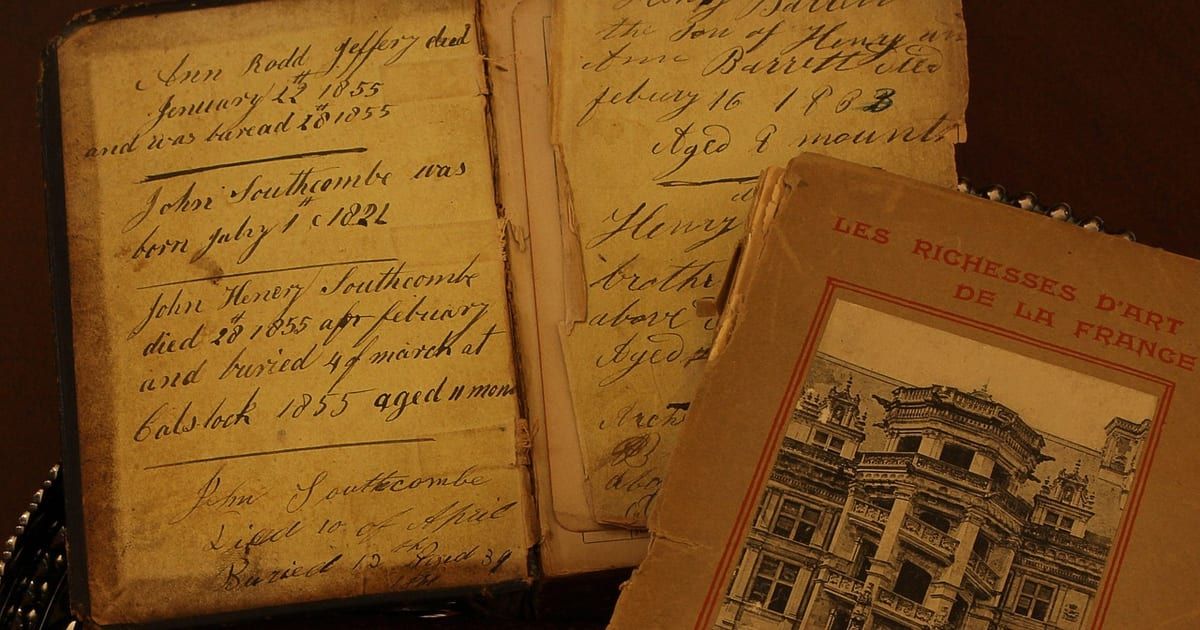
Before birth certificates were routine, many households kept their records inside the Bible itself. Publishers bound blank "Family Record" pages between the Testaments, and parents filled them in by hand: a birth in July, a burial in March, a child "aged 11 months". Genealogists still treat those pages as evidence. So when people search for blessed family quotes from the Bible today, for a plaque by the door, a christening card or a reunion banner, they are continuing a very old habit of writing family and scripture on the same page.
Below are twelve verses that actually speak about a family being blessed, quoted word for word from the King James Version of 1611 and checked against the full KJV text. Each comes with where it sits in the Bible, what it meant to its first readers, and the kind of occasion it suits. If you want non-scriptural lines on the same theme, our short blessed family quotes for everyday gratitude cover that side.
The Twelve Verses at a Glance
Word counts are for the exact KJV wording quoted on this page, which matters if you are paying per letter for engraving or fitting a line onto a card.
| Verse | Opening words | Words | Best for |
|---|---|---|---|
| Psalm 68:6 | God setteth the solitary in families | 6 | Adoption, foster or blended family cards |
| Genesis 12:3 (end) | In thee shall all families | 11 | Family history book, reunion program |
| Joshua 24:15 (end) | As for me and my house | 12 | Doorway sign, house blessing |
| Proverbs 20:7 | The just man walketh in his integrity | 13 | Father's Day, a grandfather's memorial |
| Psalm 133:1 | Behold, how good and how pleasant | 15 | Family reunion, siblings |
| Proverbs 31:28 | Her children arise up | 15 | Mother's Day, a mother's eulogy |
| Proverbs 17:6 | Children's children are the crown | 16 | Grandparents' cards, Grandparents Day |
| Psalm 127:3 | Lo, children are an heritage | 17 | New baby, baby dedication |
| Psalm 115:14-15 | The LORD shall increase you | 23 | Wedding cards, anniversary blessing |
| Psalm 128:3 | Thy wife shall be as a fruitful vine | 23 | Wedding reading, a table or kitchen sign |
| Ruth 1:16 (part) | Whither thou goest, I will go | 24 | In-laws, chosen family, weddings (see note) |
| Numbers 6:24-26 | The LORD bless thee, and keep thee | 32 | Spoken blessing at a meal, christening, farewell |
Blessings Spoken Over a Household
These three are blessings in the strict sense: words said over people, asking God to do them good. They work best read aloud.
"The LORD bless thee, and keep thee: The LORD make his face shine upon thee, and be gracious unto thee: The LORD lift up his countenance upon thee, and give thee peace." — Numbers 6:24-26, King James Version, 1611
This is the Priestly Blessing. In Numbers 6:23 Moses is told to give it to "Aaron and unto his sons", the priests, as the form of words for blessing the people of Israel, and it is still used in synagogues and as a closing benediction in many churches. It is also the oldest biblical text we can hold: two tiny silver scrolls found at Ketef Hinnom in Jerusalem in 1979, dated to around 600 BCE and now in the Israel Museum, carry a version of it. Because it addresses "thee", one person, it suits a christening or a parent blessing a child at bedtime; read it slowly and it takes about fifteen seconds.
"…and in thee shall all families of the earth be blessed." — Genesis 12:3, King James Version, 1611
The end of God's call to Abram, when he is told to leave his father's house for an unknown land. The promise is not that Abram's family will be comfortable, but that it will become a channel of blessing for everyone else; Paul quotes it centuries later in Galatians 3:8 ("In thee shall all nations be blessed"). That outward-facing sense makes it a thoughtful line for the first page of a family history or a reunion program, where the point is what a family passes on.
"The LORD shall increase you more and more, you and your children. Ye are blessed of the LORD which made heaven and earth." — Psalm 115:14-15, King James Version, 1611
Psalm 115 belongs to the Hallel, Psalms 113 to 118, which Jewish families recite at the Passover seder, so these words have been said around family tables for a very long time. "You and your children" makes it one of the few verses that blesses a couple and the generation after them in one breath, which is why it reads naturally inside a wedding or anniversary card.
Children and Grandchildren as the Blessing
The wisdom books and the Psalms of Ascent (Psalms 120 to 134, sung by pilgrims going up to Jerusalem) return again and again to one idea: the family itself is the gift.
"Lo, children are an heritage of the LORD: and the fruit of the womb is his reward." — Psalm 127:3, King James Version, 1611
Psalm 127 is headed "A Song of degrees for Solomon" in the KJV, and it opens with the line many people know from house plaques, "Except the LORD build the house, they labour in vain that build it." Verse 3 turns from building a house to building a family, and calls children an inheritance rather than a possession. It is the standard choice for a birth announcement or a baby dedication; the next verse, about arrows in the hand of a mighty man, is the one people add for a large family.
"Thy wife shall be as a fruitful vine by the sides of thine house: thy children like olive plants round about thy table." — Psalm 128:3, King James Version, 1611
Psalm 128 is the Bible's most complete picture of a blessed household. Verse 4 spells out the point, "thus shall the man be blessed that feareth the LORD", and the psalm ends with "thou shalt see thy children's children". Vines and olive trees take years to bear fruit, so the image is about patience and growth, not ornament. It is long for a card but fits a kitchen or dining-room sign, where "round about thy table" lands literally.
"Children's children are the crown of old men; and the glory of children are their fathers." — Proverbs 17:6, King James Version, 1611
A two-way proverb: grandchildren honor the old, and parents are the pride of their children. The second half is easy to forget, and it is what makes the verse work in a card from grandchildren as well as one to them. For a whole page of lines for that relationship, see our quotes about being grateful for family.
"The just man walketh in his integrity: his children are blessed after him." — Proverbs 20:7, King James Version, 1611
This is the verse most directly about a blessing handed down. Its claim is modest and moral: a parent who lives honestly leaves the children something better than money. That is why it is chosen so often for Father's Day and for the order of service at a father's or grandfather's funeral. The Bible's other instructions to fathers are gathered in The Bible on Paternal Duty.
Lines About the Household Itself
"…but as for me and my house, we will serve the LORD." — Joshua 24:15, King James Version, 1611
Joshua says this at Shechem, where he has gathered the tribes of Israel near the end of his life (Joshua 24:1). The full verse is a challenge, "choose you this day whom ye will serve", and the famous line is his answer for his own family. "House" here means household, everyone under one roof, which is why it became the most common verse on doorway signs. On a sign it is honest to keep the opening "as for me" so that it reads as a family's own decision rather than a command to visitors.
"Behold, how good and how pleasant it is for brethren to dwell together in unity!" — Psalm 133:1, King James Version, 1611
Another Song of Ascents, this one headed "of David". The rest of the psalm compares family harmony to the oil poured on Aaron's head and the dew on Mount Hermon, things that run down and spread. In KJV English "brethren" can mean kin in general, so the line belongs on a reunion banner or a card for siblings who have patched up a quarrel. Modern versions differ here, as the comparison table below shows.
"Her children arise up, and call her blessed; her husband also, and he praiseth her." — Proverbs 31:28, King James Version, 1611
From the closing poem of Proverbs, verses 10 to 31, on the "virtuous woman", which in Hebrew is an acrostic with each verse starting on the next letter of the alphabet. The chapter is introduced as "the prophecy that his mother taught him", words a king learned from his mother, which gives a Mother's Day card using this line a neat circularity. Here "blessed" is something the family says about her, not something God does to them.
For Families That Were Joined, Not Born
"…whither thou goest, I will go; and where thou lodgest, I will lodge: thy people shall be my people, and thy God my God" — Ruth 1:16, King James Version, 1611
These words are often read at weddings, but in the story they are spoken by Ruth, a widowed Moabite, to her mother-in-law Naomi, who is urging her to go home. The verse is a vow of loyalty between two women related only by marriage. That makes it a striking line for an in-law, a stepmother or anyone in a chosen family; at a wedding it still works, as long as nobody claims it was said between spouses. Our sister-in-law quotes and messages page has more for that relationship.
"God setteth the solitary in families" — Psalm 68:6, King James Version, 1611
Six words, and the verse before it calls God "a father of the fatherless". This is the line adoptive and foster parents reach for, because it describes a family as something given to the lonely, not only inherited by blood. It is the shortest verse here and fits on a mug, a bracelet or the inside of a ring.
Shortening a Verse Without Bending It
Most of the verses above are already trimmed, and the trims are marked. A few rules keep a shortened verse honest:
- Mark every cut. Use an ellipsis (…) where words are left out, as with Joshua 24:15 and Genesis 12:3 above, and keep the reference so anyone can look up the rest.
- Don't change who is speaking. Joshua 24:15 cut down to "we will serve the LORD" loses the sense that this is one family's choice. Ruth 1:16 should not be captioned as a husband's promise.
- Pick one translation per item. Mixing KJV and modern wording on the same sign looks like a misquote. The KJV is free to reproduce in most of the world (in the UK it is held under Crown patent); modern versions carry their publishers' copyright notices, so check their permissions page before printing in quantity.
- Read the verse before and after. Psalm 127:3 sounds different once you have read verse 1, and Proverbs 17:6 changes meaning if you drop its second half.
Modern translations can change the feel of a line more than people expect. Here is the same verse in three versions:
| Verse | KJV (1611) | NIV | ESV |
|---|---|---|---|
| Psalm 127:3 | Lo, children are an heritage of the LORD: and the fruit of the womb is his reward. | Children are a heritage from the Lord, offspring a reward from him. | Behold, children are a heritage from the Lord, the fruit of the womb a reward. |
| Proverbs 20:7 | The just man walketh in his integrity: his children are blessed after him. | The righteous lead blameless lives; blessed are their children after them. | The righteous who walks in his integrity—blessed are his children after him! |
| Psalm 68:6 | God setteth the solitary in families | God sets the lonely in families | God settles the solitary in a home |
| Psalm 133:1 | Behold, how good and how pleasant it is for brethren to dwell together in unity! | How good and pleasant it is when God's people live together in unity! | Behold, how good and pleasant it is when brothers dwell in unity! |
Notice Psalm 68:6: only the KJV and NIV keep the word "families", which is why adoption cards almost always use one of those two. And the NIV's "God's people" in Psalm 133:1 makes it a church verse rather than a family one, so for a reunion the KJV or ESV wording fits better.
A Line That Is Not in the Bible
"The family that prays together stays together" appears on more blessed-family plaques than most real verses, and it is often captioned as scripture. It is not. It was written in 1947 by Al Scalpone, an advertising copywriter who volunteered for Father Patrick Peyton's Family Theater radio program, and it became the motto of Peyton's Family Rosary Crusade. It is a fine sentiment with a real history; just credit it to Scalpone and Peyton rather than to a book of the Bible. We track more lines like this on our page of misattributed family quotes.
Questions People Ask
Where in the Bible does it say a family is blessed?
Psalm 128 is the fullest description of a blessed household, with a wife "as a fruitful vine" and children "like olive plants round about thy table". Proverbs 20:7 says a just man's "children are blessed after him", Psalm 115:14-15 blesses "you and your children", and Genesis 12:3 promises that "all families of the earth" will be blessed through Abram.
What is a short Bible verse about a blessed family?
Psalm 68:6, "God setteth the solitary in families", is six words in the KJV. For something slightly longer, the second half of Proverbs 20:7, "his children are blessed after him", or Psalm 133:1 on brethren dwelling "together in unity" both fit on a card or a small sign.
Is "the family that prays together stays together" a Bible verse?
No. It is a 1947 slogan written by Al Scalpone for Father Patrick Peyton's Family Theater radio program and later used by the Family Rosary Crusade. No verse in the Bible uses those words.
Before You Engrave
Look the verse up yourself in the translation you plan to use, copy it from there rather than from an image online, and keep the reference with the words. Graphics shared on social media often blend two translations or drop a clause, and a plaque or a headstone is hard to correct afterwards. A verse that is quoted exactly, with its chapter and number, lets the people who read it in fifty years find it for themselves, much as families once did with the record pages bound into their Bibles.