Why We Need Beautiful Quotes to Organize Chaotic Kinship

The Architecture of Kinship in Literature
Watching my younger sister in a backyard garden in Richmond, Virginia, 1996, I realized how quickly our shared mythology was taking root. People rarely speak in perfectly constructed prose while passing the mashed potatoes across a crowded dining table. We rely on the curated language of others to interpret the noise of our own domestic lives. It organizes the chaos. This instinct drives us toward poetic phrasing when we try to explain the people who know us best, turning everyday friction into something meaningful.
When we sift through heartfelt family expressions, we are usually looking for a mirror. The polished syntax of novelists and essayists gives our mundane arguments and quiet sacrifices a vital sense of dignity. Striking a balance between romanticizing our origins and acknowledging their flaws requires precision. Tolstoy understood this structural demand better than anyone.
"All happy families are alike; each unhappy family is unhappy in its own way." — Leo Tolstoy, Anna Karenina, 1877
This opening line famously sets the stage for a sprawling tragedy by treating domestic bliss as a uniform, almost unremarkable baseline.
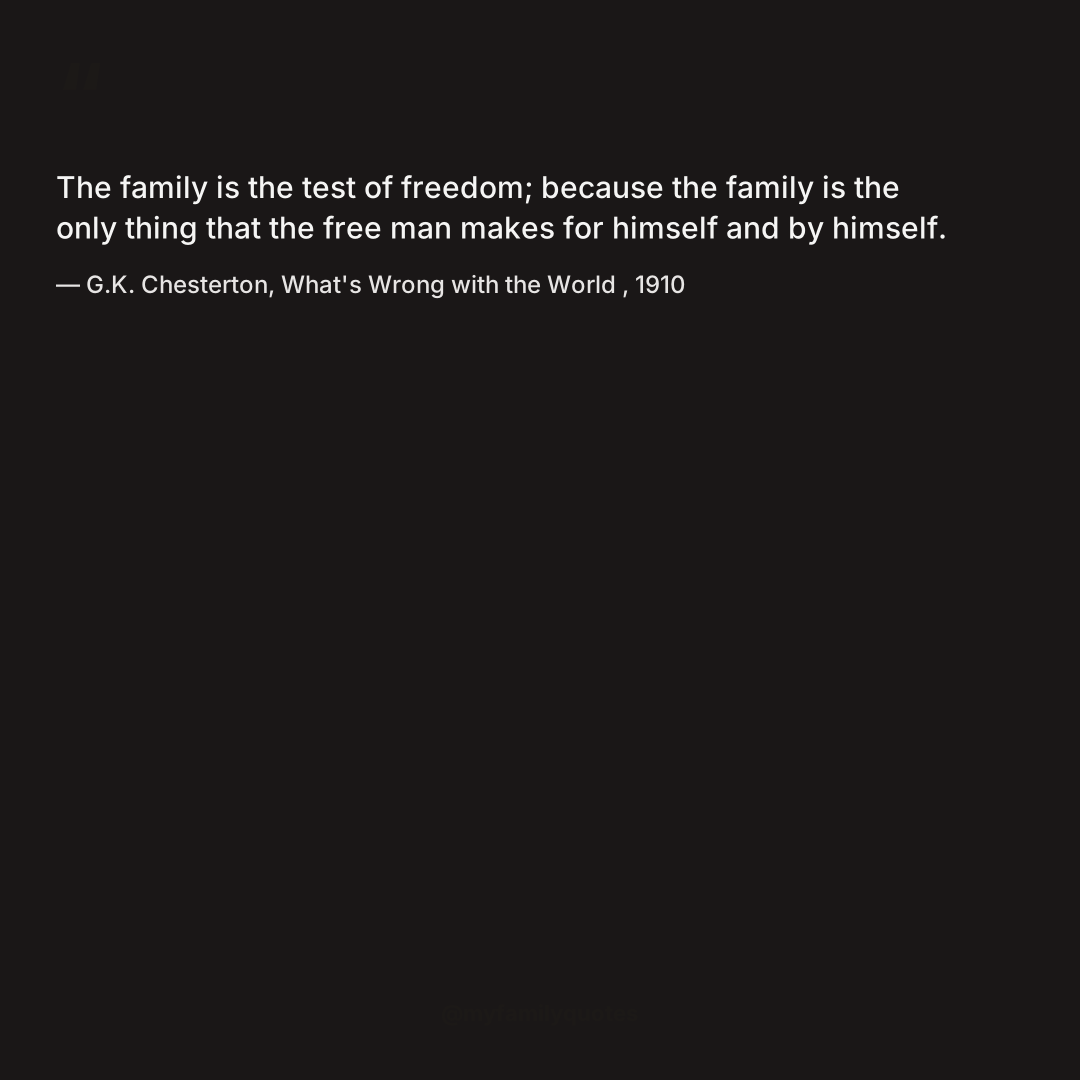
"The family is the test of freedom; because the family is the only thing that the free man makes for himself and by himself." — G.K. Chesterton, What's Wrong with the World, 1910
Chesterton positions the household not as a restriction on individual liberty, but as its ultimate proving ground.
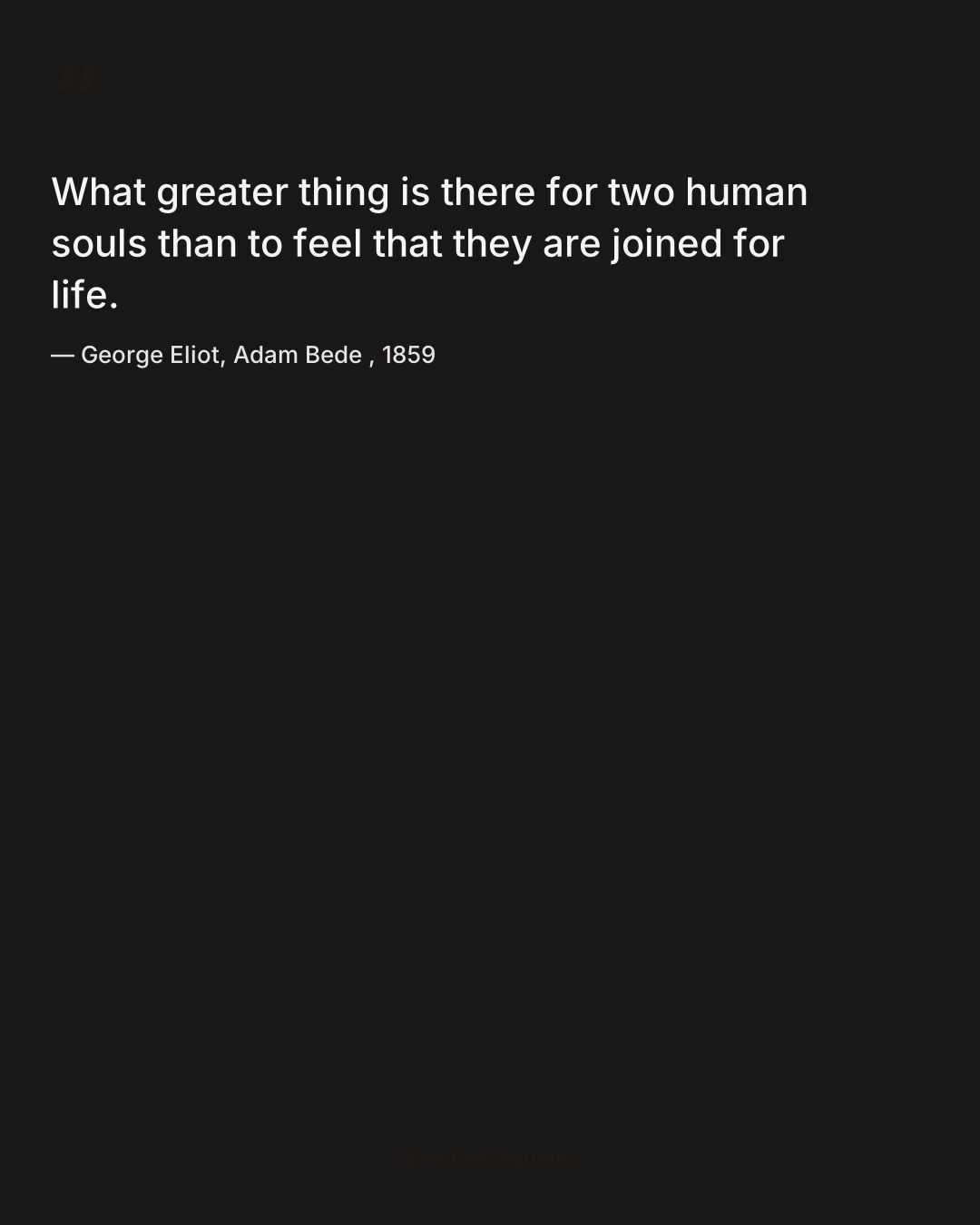
"What greater thing is there for two human souls than to feel that they are joined for life." — George Eliot, Adam Bede, 1859
Eliot grounds the abstract concept of lifelong commitment in the tangible weight of shared emotional labor.
Framing the Hard Boundaries
We do not only use beautiful sentiments to celebrate harmony. Often, we deploy carefully worded truths when drawing clear boundaries with toxic relatives. Sometimes, words serve as walls. A beautifully articulated boundary transforms a messy emotional retreat into a highly principled stance. Language elevates our deepest interpersonal conflicts, turning the private act of walking away into a statement of self-respect.
Common Questions, Straight Answers
Why do we rely on literature to explain our families?
Authors spend years distilling complex interpersonal dynamics into single sentences, saving us from having to articulate the overwhelming chaos of our own living rooms.
Can a quote change a family dynamic?
Language shapes perception. Adopting a new framework for understanding a sibling or parent can fundamentally alter how you react to their oldest habits.
Are older quotes still relevant to modern households?
The technological landscape of a home changes constantly, but the underlying friction of sharing space and resources remains identical to the nineteenth century.