What Makes Their Wisdom Endure? 15 Thankful For Grandparents Quotes
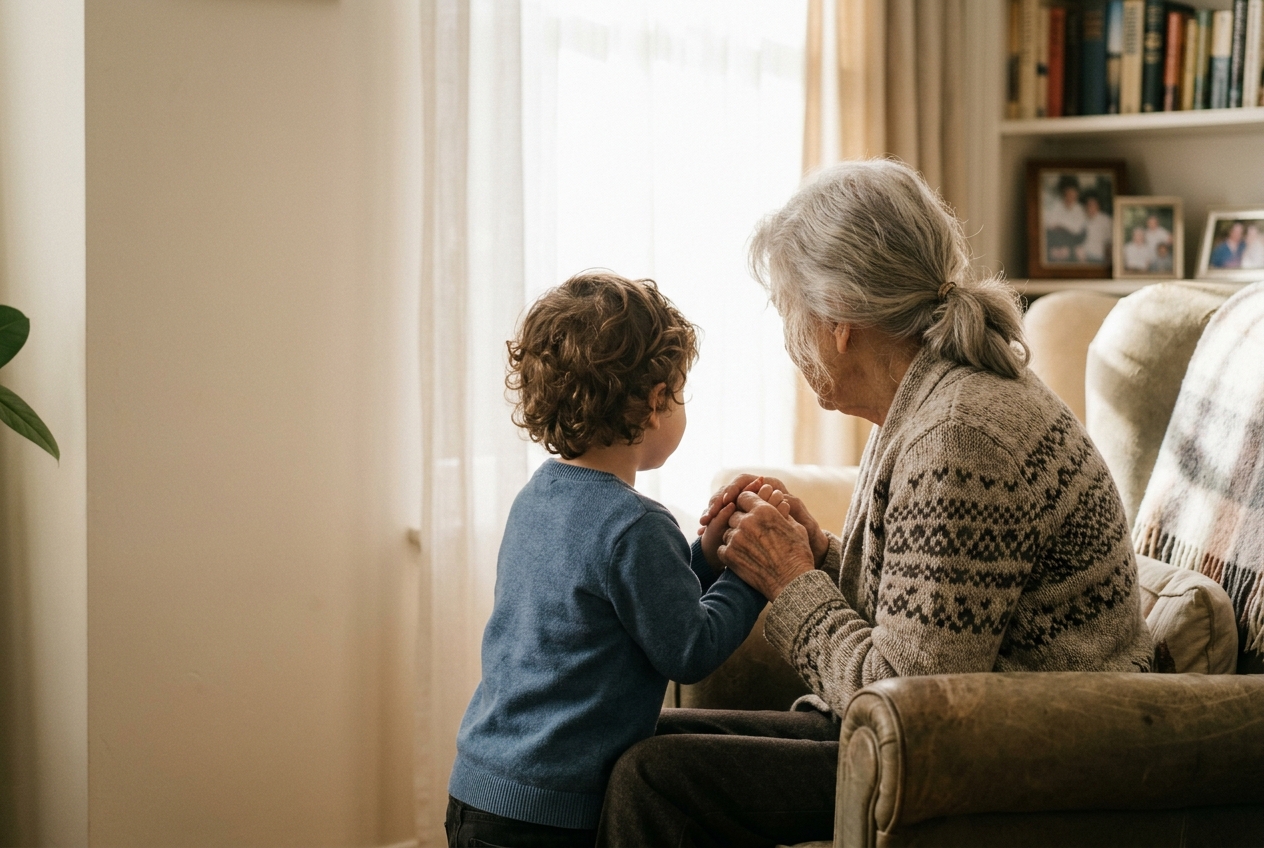
"Every generation revolts against its fathers and makes friends with its grandfathers," noted the historian Lewis Mumford in 1931. This dynamic of generational skipping reveals a profound truth about kinship: the rhythm of a household is often inherited from the elders who built it rather than from the generation currently running it. If we could sit down with writers and thinkers today to discuss the debt we owe our elders, the conversation would likely span decades of reflection. We would hear voices analyzing the unique patience required to raise a second generation, alongside those who simply appreciate the quiet stability older relatives provide.
On Patience and Presence
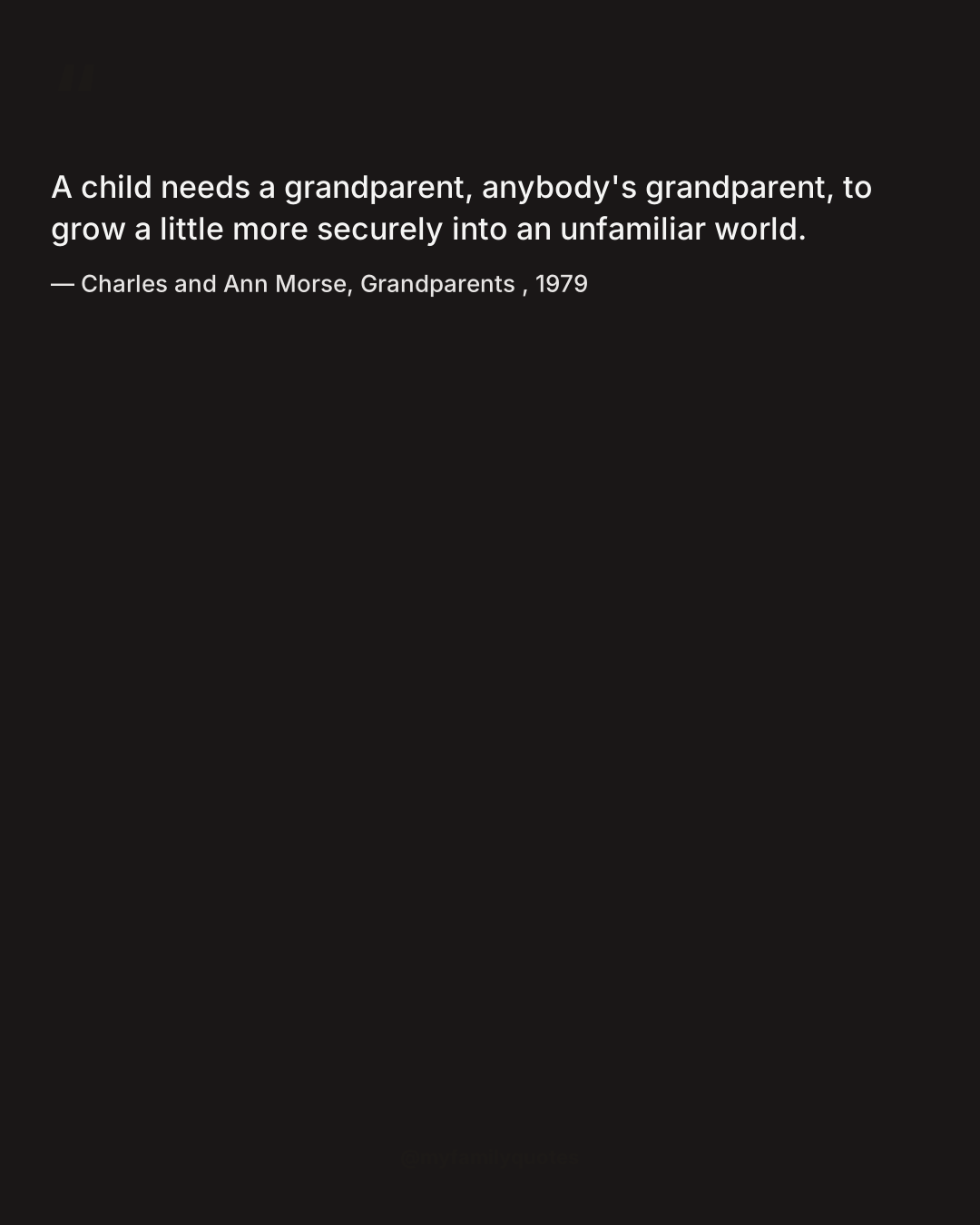
We begin by examining the specific type of security that skips a generation. The authors of a late-seventies sociological study captured this dynamic perfectly.
"A child needs a grandparent, anybody's grandparent, to grow a little more securely into an unfamiliar world." — Charles and Ann Morse, Grandparents, 1979
The Morses understood that security does not always come from immediate parents. A longer take on this lives in the deep roots of generational affection.
Moving from the child's perspective to the mother's evolution, an early twentieth-century essayist offered a sharp observation on aging.
"It is as grandmothers that our mothers come into the fullness of their grace." — Christopher Morley, Letters of Askance, 1939
Morley observed how the anxieties of immediate parenting often give way to a softer, more forgiving approach later in life.
When discussing the cultural function of elders, we must look at how they anchor the young during turbulent eras.
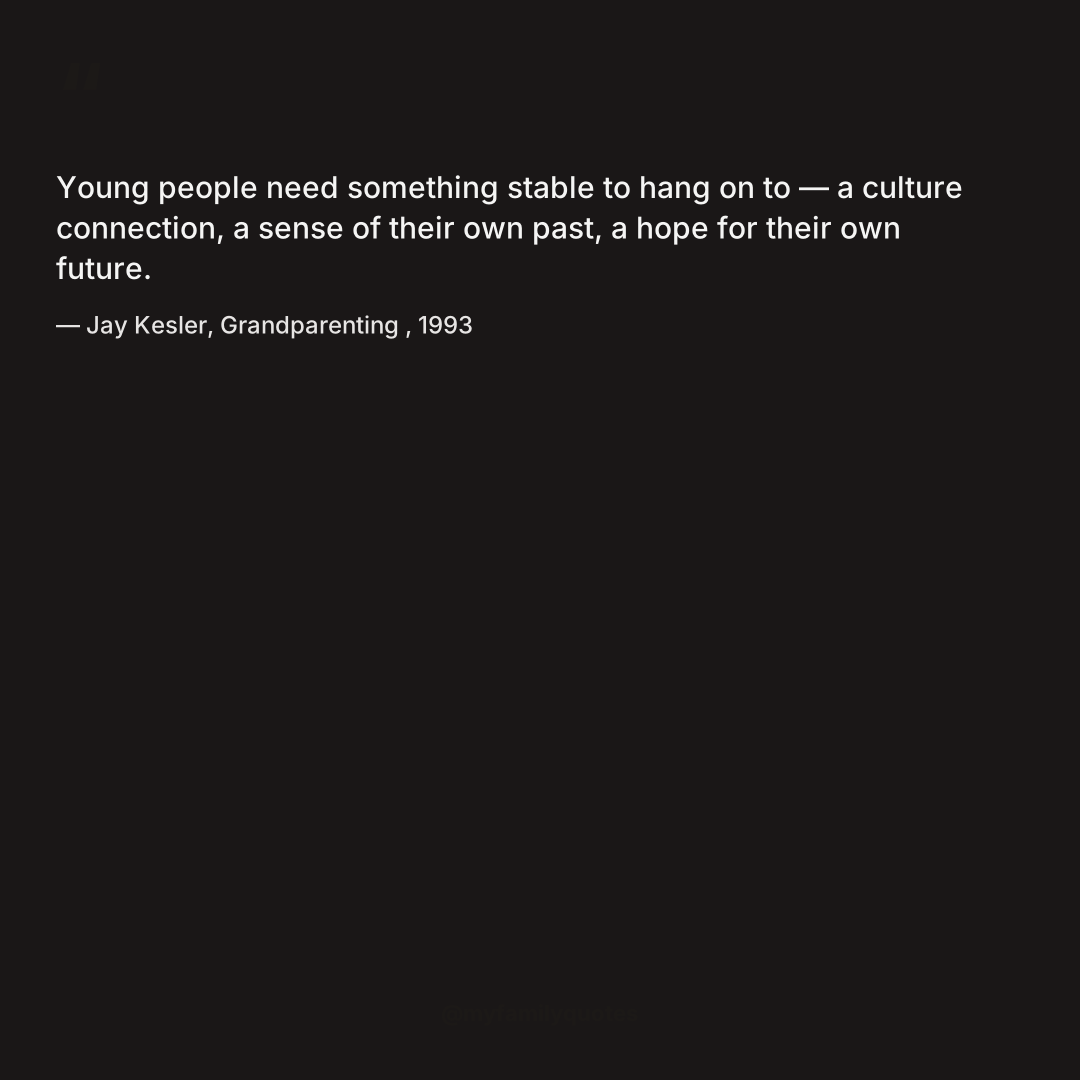
"Young people need something stable to hang on to — a culture connection, a sense of their own past, a hope for their own future." — Jay Kesler, Grandparenting, 1993
Kesler frames the elder relative not just as a caregiver, but as a living bridge to history.
On Laughter and Levity
The conversation inevitably turns to the performative vulnerability that defines many of these relationships.
"To a small child, the perfect granddad is unafraid of big dogs and fierce storms but absolutely terrified of the word 'boo'." — Robert Brault, Round Up the Usual Subjects, 2014
Brault captures the delightful contradiction of a protector who willingly plays the fool for a toddler's amusement.
A mid-century humorist approached the same dynamic from a slightly more cynical, yet deeply affectionate, angle.
"The simplest toy, one which even the youngest child can operate, is called a grandparent." — Sam Levenson, Everything But Money, 1966
Levenson's humor points to the boundless energy older relatives often summon for play. For the counterpoint, consider the invisible threads connecting relatives.
Another legendary syndicated columnist knew exactly how far a grandmother would go to maintain the magic of a holiday.
"A grandmother pretends she doesn't know who you are on Halloween." — Erma Bombeck, Family: The Ties That Bind... And Gag!, 1987
Bombeck recognized that feigned ignorance is a high form of familial devotion.
On Legacy and Memory
When we ask how oral history survives, we often find it wrapped in the quiet moments of childhood.
"Grandparents sort of sprinkle stardust over the lives of little children." — Alex Haley, Interview, 1980s
Haley, famous for tracing his own lineage across continents, understood the magical quality of stories passed down directly.
A contemporary columnist delivers a more urgent directive regarding the fleeting nature of this access.
"If you are lucky enough to have your grandparents alive, visit them, cherish them and celebrate them while you can." — Regina Brett, God Never Blinks, 2010
Brett offers a straightforward command born from the realization that this specific window of connection is temporary.
Sometimes, the role is best distilled into a single spatial metaphor.
"Grandparents are voices of the past and the door to the future." — Helen Ketchum
Ketchum positions the elder as the threshold through which a family's identity must pass. This gets argued with in how writers reflect on their lineage.
Memoirs frequently ground these relationships in sensory details rather than abstract moral lessons.
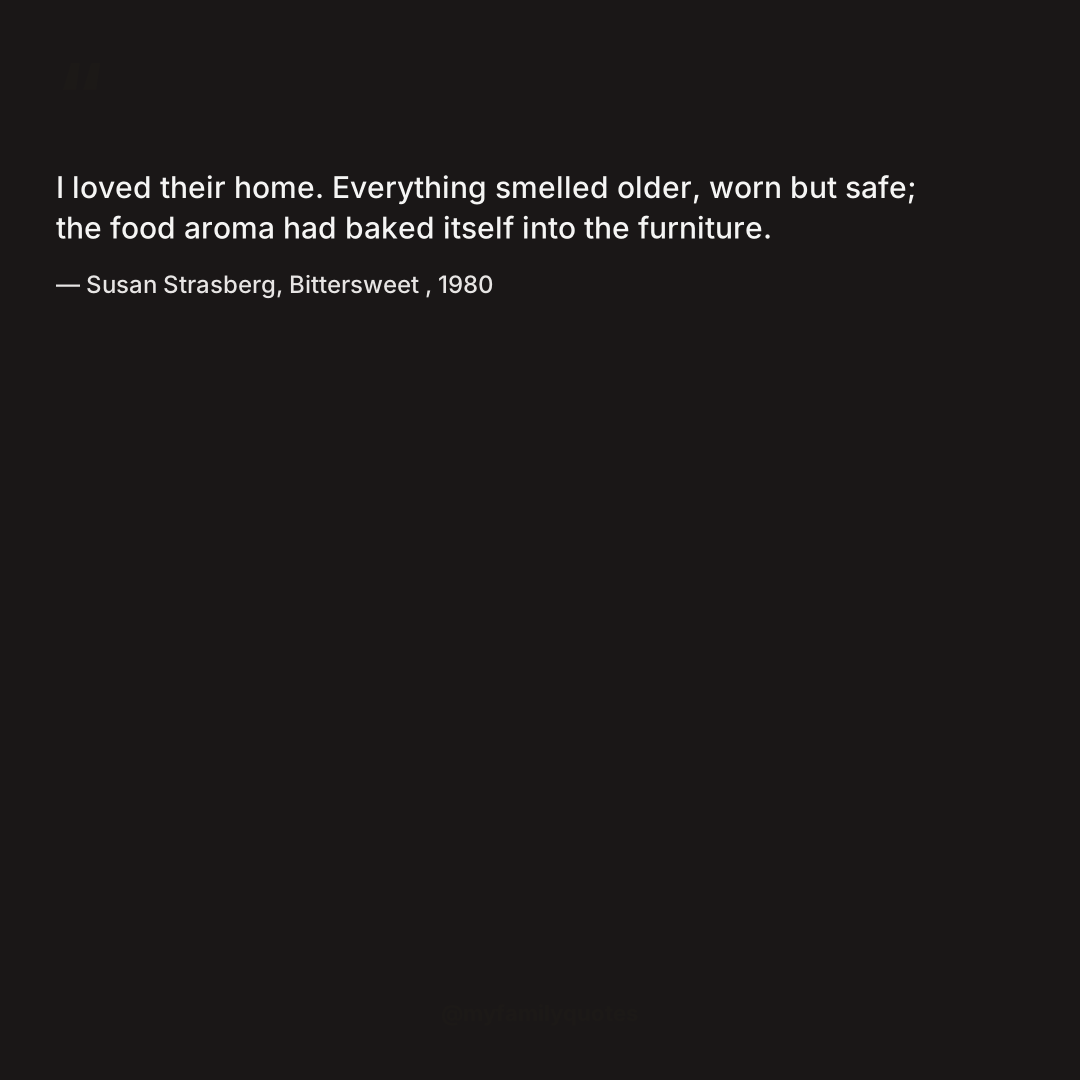
"I loved their home. Everything smelled older, worn but safe; the food aroma had baked itself into the furniture." — Susan Strasberg, Bittersweet, 1980
Strasberg proves that the physical environment of an elder's house leaves an indelible mark on a child's psyche.
On Unexpected Wisdom
If we view the family structure as an educational system, the hierarchy of teachers shifts dramatically.
"Some of the world's best educators are grandparents." — Charles W. Shedd, Then God Created Grandparents, 1976
Shedd suggests that the most effective instruction happens entirely outside the formal classroom.
Returning to the historian who opened our discussion, we find a structural explanation for this bond.
"Every generation revolts against its fathers and makes friends with its grandfathers." — Lewis Mumford, The Brown Decades, 1931
Mumford identifies the natural alliance formed across a skipped generation, free from the friction of immediate authority. Related — what young women learn from their elders.
A former president articulated the exact mechanism that makes this alliance possible.
"Because they are usually free to love and guide and befriend the young without having to take daily responsibility for them, they can often reach out past pride and fear of failure and close the space between generations." — Jimmy Carter, A Remarkable Mother, 2008
Carter maps out the structural advantage of the grandparenting role with political precision.
In scientific circles, the elder is often invoked as the ultimate test of clarity.
"You do not really understand something unless you can explain it to your grandmother." — Attributed to Albert Einstein
Though the attribution to Einstein is frequently debated by biographers, the underlying principle honors the elder as the supreme arbiter of plain truth. See also brief expressions of kinship.
Finally, we must acknowledge the foundational role these figures play in our understanding of the world.
"Our grandmothers and grandfathers are the first historians we ever meet." — Inspired by Maya Angelou
Before we ever open a textbook, we listen to the people who actually lived through the eras we will eventually study.
The voices gathered here remind us that the influence of our elders extends far beyond the boundaries of childhood. Their perspectives offer a necessary counterweight to the relentless urgency of modern life.
Questions Readers Send In
Why do writers focus so heavily on the sensory details of their grandparents' homes?
Sensory memories bypass intellectual processing and trigger immediate emotional recall. Authors frequently use smells, sounds, and textures to recreate the profound feeling of safety associated with those specific environments.
Is the quote about explaining things to your grandmother actually from Einstein?
There is no definitive proof that Albert Einstein ever said or wrote this exact phrase. The sentiment likely evolved from his general insistence on simplicity in scientific communication, eventually attaching itself to his famous persona.
How does the "skipped generation" dynamic actually work in family psychology?
Without the daily burden of discipline and financial provision, grandparents can interact with children purely through mentorship and play. This lack of direct friction allows for a more relaxed, unconditionally supportive relationship.