12 Mother Daughter Quotes for Instagram Highlighting Generational Ties
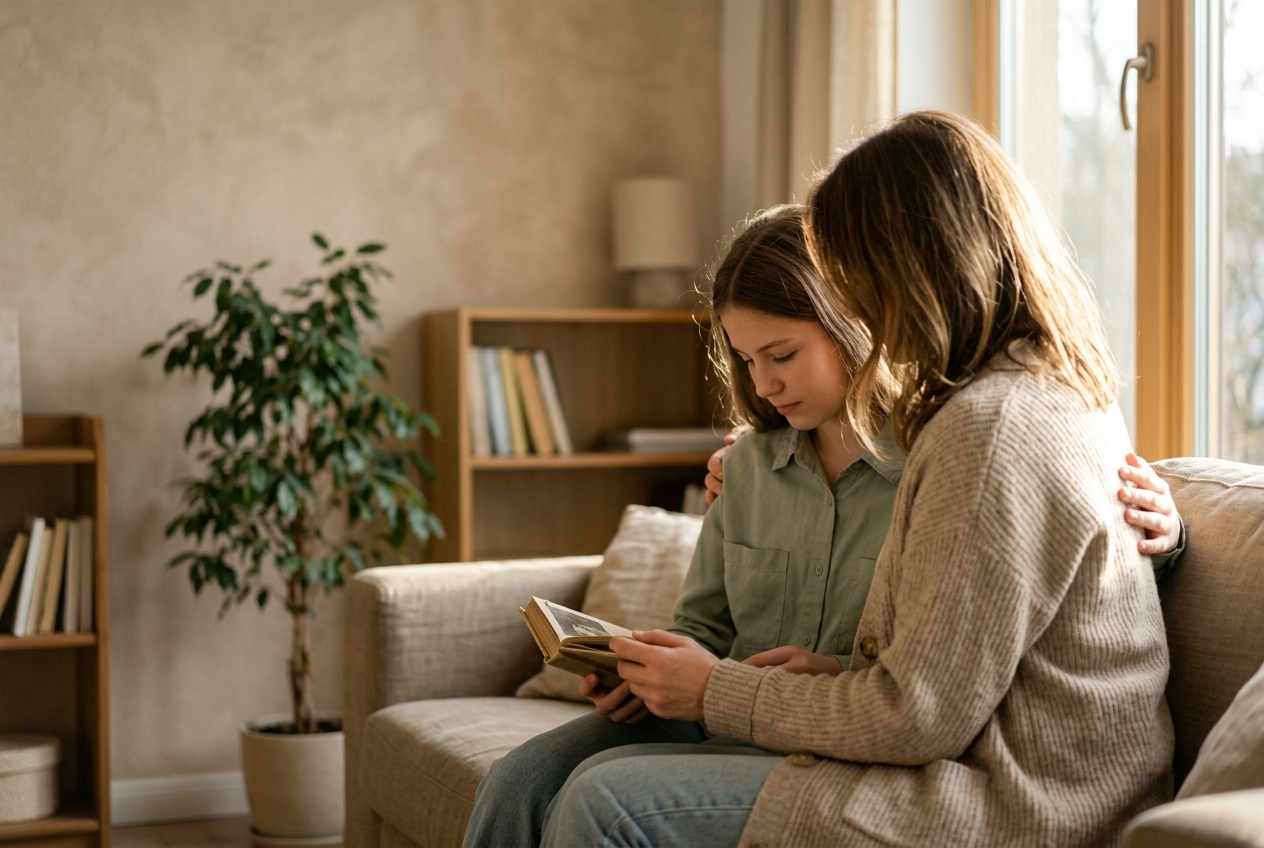
Sitting in a dim diner in Wicker Park, Chicago, in 2014, my own mother slid a faded Polaroid across the sticky table. The image showed the two of us standing on a porch during a summer storm, completely unaware of the camera. We spend hours scrolling through digital feeds searching for the perfect caption to encapsulate these exact types of fragmented memories. Finding the right language to accompany a photograph often feels like translating an ancient dialect into a modern vernacular. You want words that carry the weight of decades without sounding like a formal eulogy.
Photographs freeze a single fraction of a second, but the relationship between a woman and her child spans lifetimes of quiet negotiations. When we post these images online, we are participating in a public curation of our most private domestic realities. Choosing a caption becomes an exercise in brevity in digital storytelling, stripping away the noise to leave only the essential truth of the bond. The digital landscape demands authenticity, yet we frequently hide behind overused clichés that fail to capture the specific texture of our shared histories.
Social Media Demands Authenticity Over Perfection
Every uploaded photograph adds a new layer to the public archive of our family lineage. We often fall into the trap of presenting a sanitized version of maternal affection, ignoring the complex reality of raising and being raised by another woman. A strong caption grounds the visual image in historical or emotional reality.
"A daughter is the happy memories of the past, the joyful moments of the present, and the hope and promise of the future." — Bruce Barton, The Man Nobody Knows, 1925
Barton originally penned this sentiment during a period of massive social change in America, reflecting a post-war desire for domestic continuity. His words serve as a sturdy anchor for photographs that bridge multiple generations.
"The mother's heart is the child's schoolroom." — Henry Ward Beecher, Life Thoughts, 1858
Beecher delivered this metaphor to nineteenth-century congregations grappling with the moral education of the next generation. It pairs seamlessly with images of mothers teaching their daughters everyday skills, from tying shoes to balancing a checkbook.
Navigating the transition from child to adult requires acknowledging the shifting dynamics of authority and friendship. When gauging a parent's lasting imprint, we often look to the subtle habits we inherited rather than the grand lectures we endured. The captions we choose should reflect this nuanced understanding of legacy.
"Youth fades; love droops; the leaves of friendship fall; a mother's secret hope outlives them all." — Oliver Wendell Holmes Sr., The Mother's Secret, 1860
Holmes published this poem just before the outbreak of the American Civil War, capturing a sense of enduring maternal resilience in the face of inevitable loss. It provides a melancholic but beautiful backdrop for vintage photographs or throwback posts.
"A mother is she who can take the place of all others but whose place no one else can take." — Gaspard Mermillod, Sermons, 1880
Mermillod spoke these words to his Swiss parishioners, emphasizing the irreplaceable nature of maternal guidance in a rapidly industrializing society. This quote effectively highlights the singular role a mother plays in a crowded modern world.
Documenting these moments online is not merely about vanity; it is about chronicling maternal bonds online for future generations to dissect and understand. We leave a trail of digital breadcrumbs that tell the story of who we were when the cameras were not rolling.
"All that I am, or hope to be, I owe to my angel mother." — Abraham Lincoln, Letter to William Herndon, 1865
Lincoln reportedly shared this reflection with his law partner, acknowledging the profound impact of Nancy Hanks Lincoln on his early intellectual development. It remains a powerful testament to foundational gratitude.
"The sweetest sounds to mortals given are heard in Mother, Home, and Heaven." — William Goldsmith Brown, Mother, Home, Heaven, 1884
Brown composed this verse during the Victorian era's intense romanticization of the domestic sphere. The rhythmic cadence offers a poetic contrast to candid, chaotic family snapshots.
The Digital Archive Requires Emotional Specificity
Generic platitudes fail to capture the sharp edges and soft landings of a real familial relationship. When framing the daily domestic chaos, the most effective captions lean into the specific, undeniable truths of living in close proximity to another human being.
"A mother's love is patient and forgiving when all others are forsaking." — J.C. Hare, Guesses at Truth, 1827
Hare wrote this observation alongside his brother in a collection of philosophical aphorisms, noting the unique endurance of maternal affection. It suits photographs taken during periods of personal struggle or quiet reconciliation.
"A daughter is a mother's gender partner, her closest ally in the family confederacy, an extension of her self." — Victoria Secunda, Women and Their Fathers, 1992
Secunda explored the psychological architecture of family alliances in her late-twentieth-century research. This analytical perspective adds intellectual weight to images of mothers and daughters standing in solidarity.
The act of selecting a quote forces us to distill our sprawling emotional landscapes into a few lines of text. Much like mapping out lifelong domestic alliances, choosing the right words requires honesty about the friction and the joy that define our closest ties.
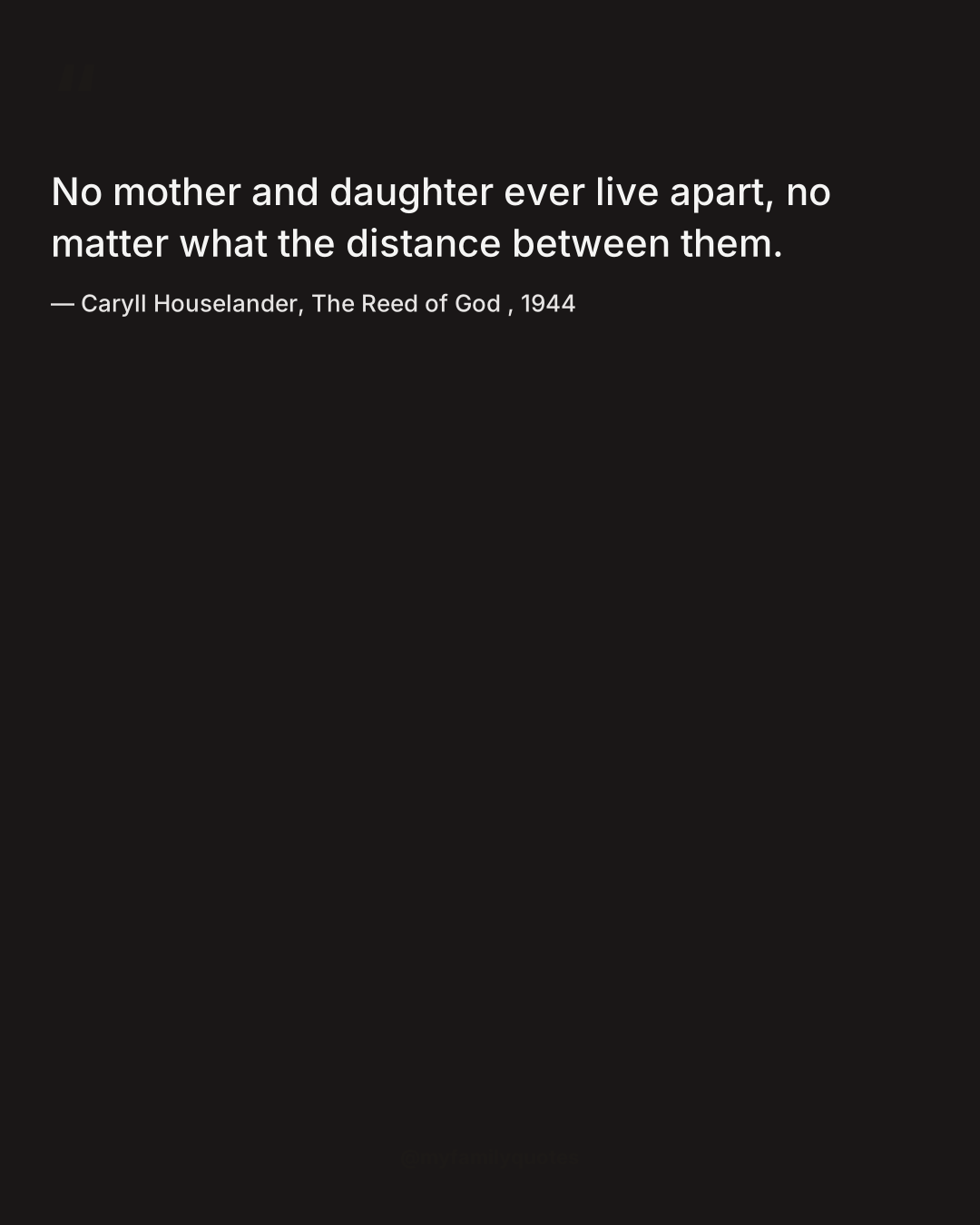
"No mother and daughter ever live apart, no matter what the distance between them." — Caryll Houselander, The Reed of God, 1944
Houselander published this spiritual meditation during the height of World War II, a time marked by profound physical separations. Her words offer comfort for those posting photographs of mothers living in different cities or countries.
"My mother wanted me to be her wings, to fly as she never quite had the courage to do." — Erica Jong, Fear of Flying, 1973
Jong captured the generational shift of the 1970s feminist movement, highlighting the complex mix of maternal sacrifice and projection. This quote resonates deeply with women breaking new professional or personal ground.
We look to the past to find language for the present, appreciating elder generational wisdom that has survived the transition from print to pixels. The words of those who came before us lend gravity to our fleeting digital updates.
"The mother-daughter relationship is the most complex." — Wynonna Judd, Coming Home to Myself, 2005
Judd wrote candidly about her highly publicized and often turbulent relationship with her mother Naomi in her memoir. This blunt assessment cuts through the artificial sweetness often found on social media platforms.
"I am a beautiful reflection of my mother's enduring spirit." — Inspired by Maya Angelou, 2026
This modernized phrasing honors Angelou's frequent thematic focus on ancestral strength and maternal legacy without directly lifting a copyrighted passage. It works perfectly for side-by-side generational portraits highlighting physical resemblances.
What People Usually Get Wrong
Common claim: Social media captions must be entirely original to be authentic.
Closer to the evidence: Utilizing historical quotes actually connects your personal photograph to a broader human tradition. Borrowing language from nineteenth-century poets or twentieth-century authors demonstrates a recognition that the maternal bond is a universal experience stretching far beyond your immediate digital circle.
Common claim: Short quotes lack the emotional depth required for family tributes.
Closer to the evidence: Brevity often forces clarity, stripping away unnecessary adjectives to reveal the core sentiment. A single, well-chosen sentence from Abraham Lincoln or Erica Jong carries more emotional resonance than three paragraphs of rambling personal exposition.
Common claim: Mother-daughter quotes should only focus on positive, conflict-free emotions.
Closer to the evidence: The most compelling captions acknowledge the complexity and occasional friction inherent in the relationship. Quotes that touch upon sacrifice, generational differences, and the messy reality of domestic life resonate more deeply with audiences because they reflect lived reality rather than a curated fantasy.