Why Short Toxic Family Quotes Act as Necessary Emotional Scalpels

We are frequently taught that healing from generational trauma requires endless, nuanced conversation. Pop psychology books and daytime talk shows insist that with enough dialogue, any fractured kinship can be mended. Lindsay C. Gibson's Adult Children of Emotionally Immature Parents, published in 2015, made the opposite case widely readable: some dynamics simply do not respond to more talking. The exhausting loop of over-explaining feeds the very pattern it attempts to fix.
The reality is that clarity often arrives in a single, unsparing sentence. Short statements leave no room for gaslighting or misinterpretation. When you stop trying to write a dissertation on why a relative’s behavior hurts and instead drop a firm, definitive boundary, the power dynamic shifts immediately. Concise phrasing acts as an emotional scalpel, excising the rot of obligation without damaging the surrounding psyche.
If we could assemble a panel of writers, therapists, and cultural observers to discuss the precise mechanics of toxic kinship, the conversation would likely be brief. They would understand that brevity is the ultimate defense mechanism against manipulation. Let us listen in on how they might dissect the anatomy of estrangement, guilt, and self-preservation in real time.
On the Illusion of Obligation
The panel opens by addressing the idealized visions of family loyalty that keep so many people trapped in harmful cycles.
"Family is supposed to be our safe haven. Very often, it's the place where we find the deepest heartache." — Iyanla Vanzant, Peace from Broken Pieces, 2010
Vanzant dismantles the myth that biological proximity guarantees emotional safety. This sentiment perfectly captures the modern shift toward selective association over unconditional loyalty.
The conversation shifts to how abusers frame their demands.
"Controllers, abusers, and manipulative people don't question themselves. They don't ask if the problem is them... they always say the problem is someone else." — Darlene Ouimet, Emerging from Broken, 2012
Ouimet identifies the exact cognitive blind spot that makes reasoning with toxic relatives impossible. Arguing with someone committed to misunderstanding you is a futile exercise.
To close this thought, the panel examines the specific pain of letting go.
"Sometimes it's better to end something and try to start something new than imprison yourself in hoping for the impossible." — Karen Salmansohn, How to Be Happy, Dammit, 2001
A practical reminder that hope can sometimes be the most destructive emotion in a dysfunctional dynamic. Salmansohn advocates for realistic assessments over fairy-tale endings.
On the Mechanism of Guilt
Next, the discussion turns to the psychological breaking points of blood ties and the guilt that inevitably follows estrangement.
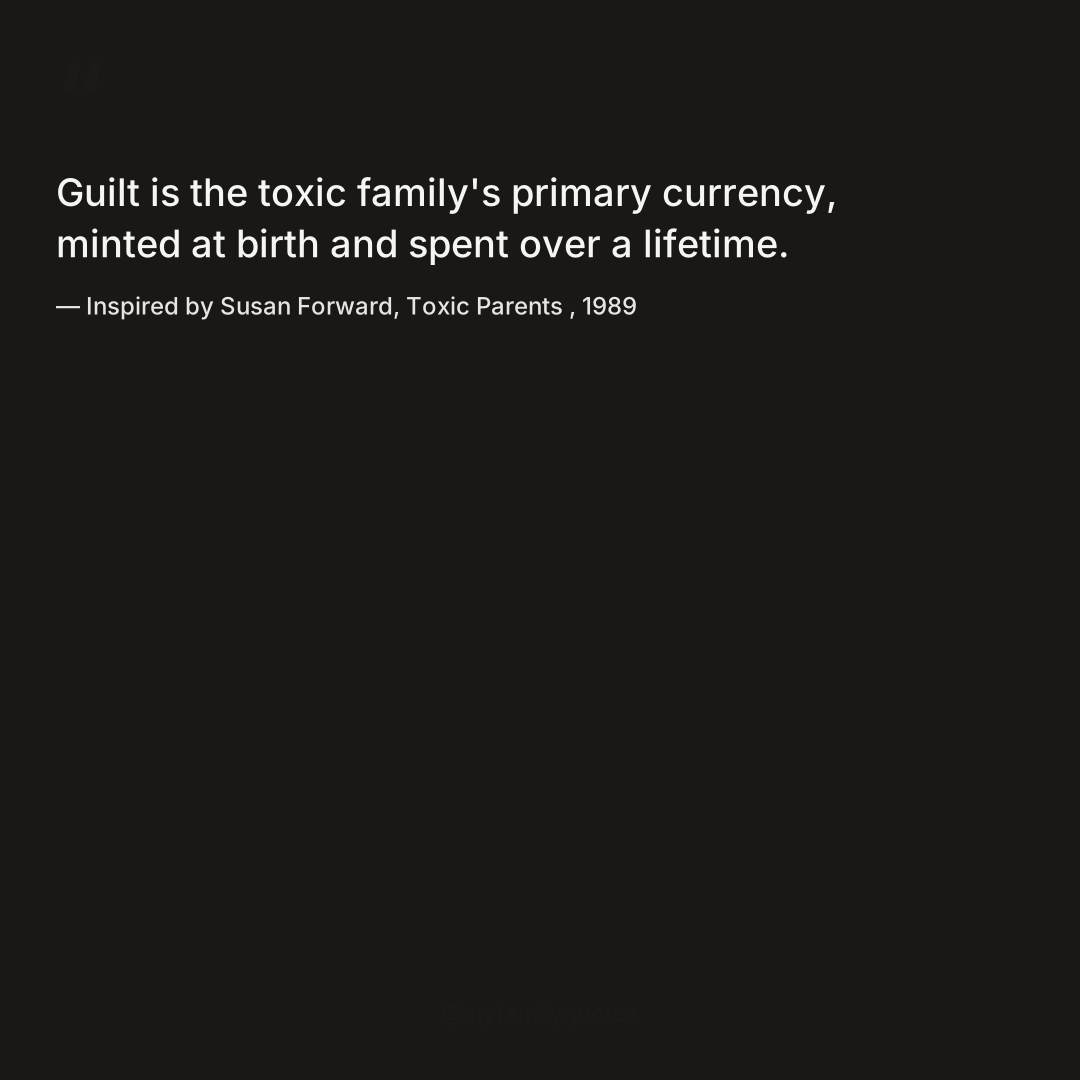
"Guilt is the toxic family's primary currency, minted at birth and spent over a lifetime." — Inspired by Susan Forward, Toxic Parents, 1989
Forward's groundbreaking work laid the foundation for understanding emotional blackmail within the nuclear unit. She correctly identified that guilt is rarely organic; it is usually installed by design.
The moderator asks how individuals can recognize when this currency is being spent.
"If you have to constantly walk on eggshells to avoid upsetting someone, that is not love. That is fear." — Unknown, Folk Psychology, 2015
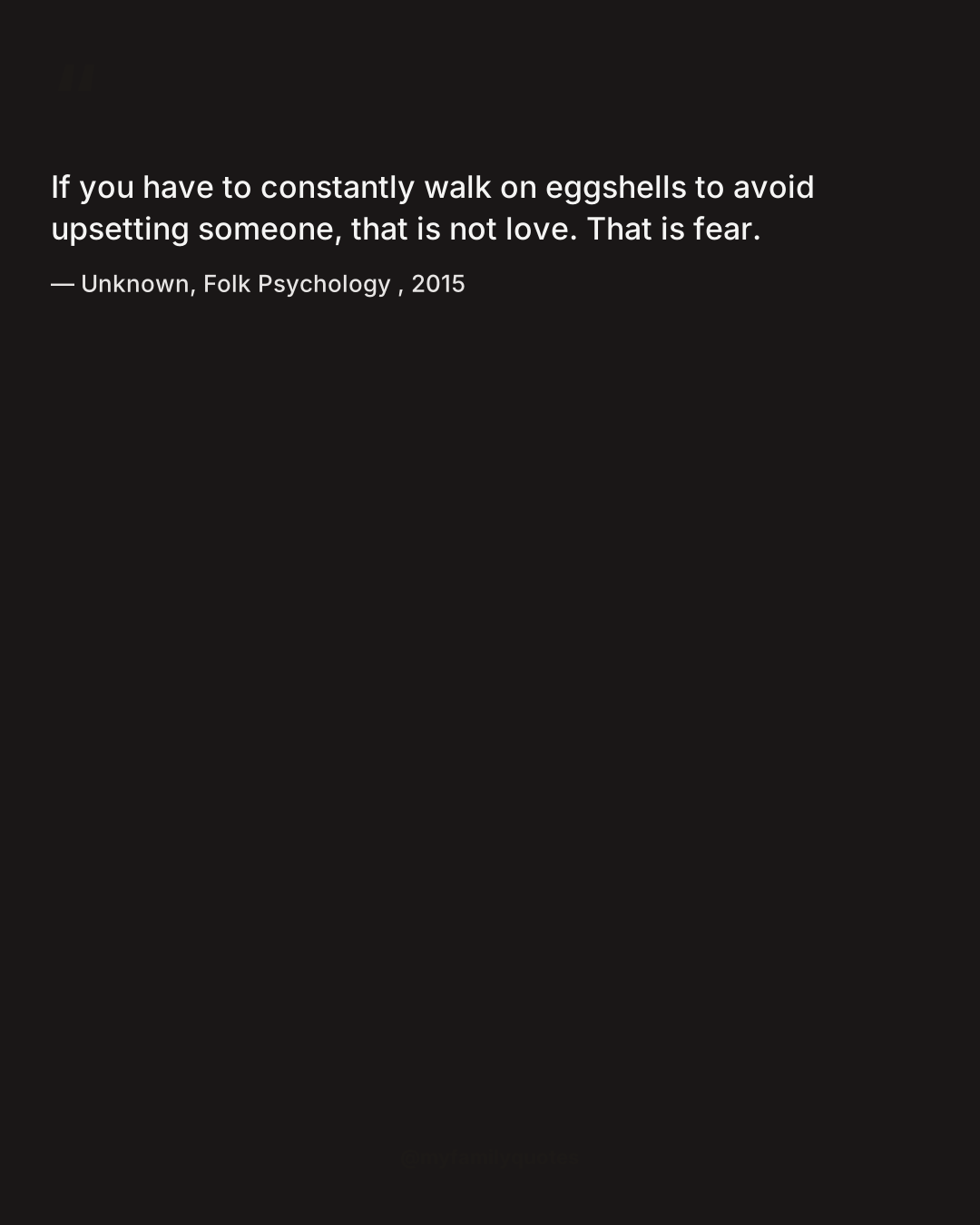
While the original author remains lost to internet history, the metaphor of eggshells remains the most universally recognized symptom of a volatile household. It perfectly illustrates chronic hypervigilance.
Addressing the weaponization of history, a voice chimes in on the concept of loyalty.
"Toxic family members will see expressions of forgiveness as weaknesses to exploit." — Sherrie Campbell, But It's Your Family..., 2019
Dr. Campbell highlights the exact danger of applying traditional conflict resolution to pathological relationships. Forgiveness without changed behavior is just an invitation for further abuse.
On the Architecture of Boundaries
Establishing defenses requires knowing how to validate your hardest personal boundaries without flinching.
"The only people who get upset about you setting boundaries are the ones who were benefiting from you having none." — Unknown, Therapeutic Adage, 2010
This profound piece of clinical wisdom frequently circulates in recovery spaces because it reframes anger as proof that the boundary is working. Resistance is simply the sound of a parasite losing its host.
The panel considers how to communicate these lines in the sand.
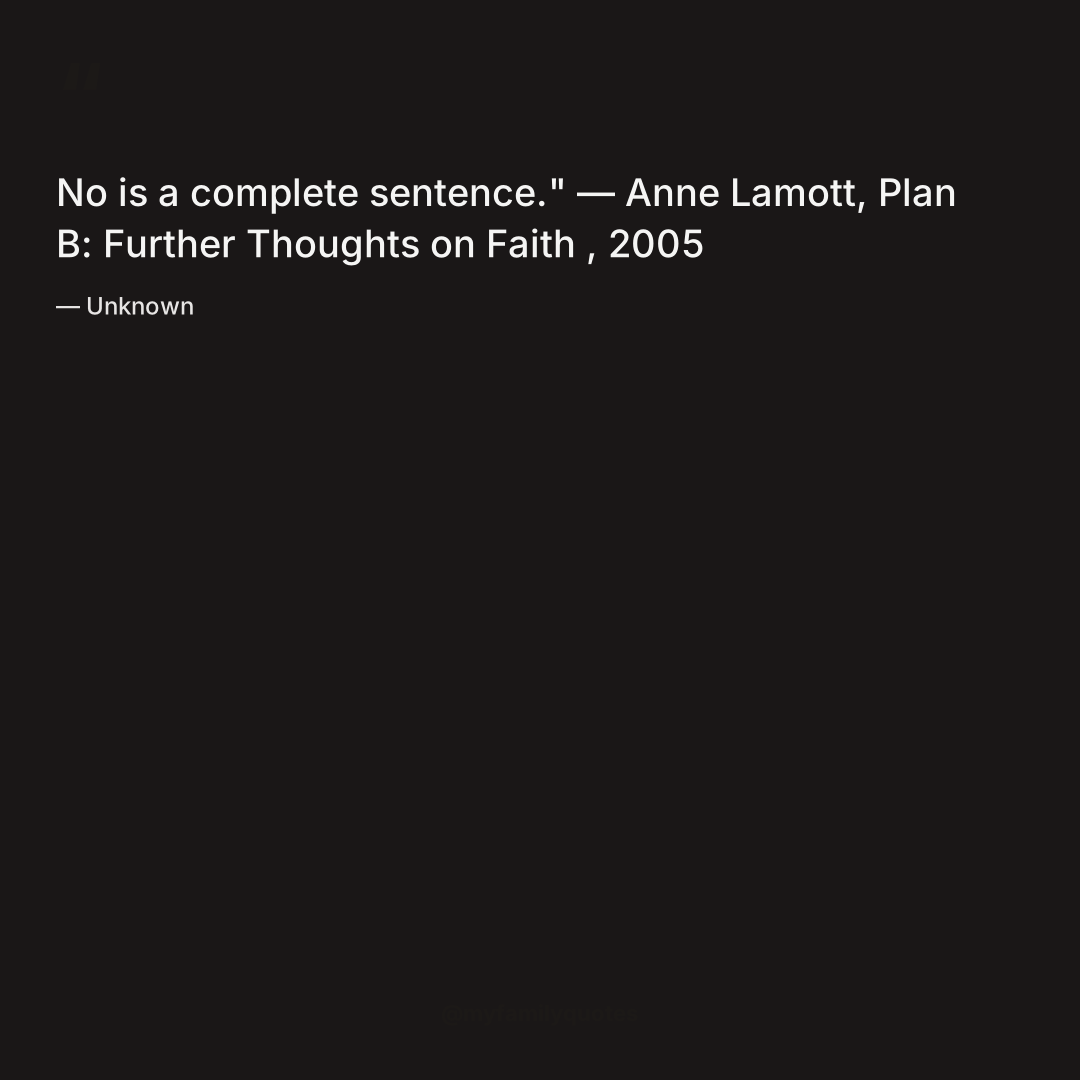
"No is a complete sentence." — Anne Lamott, Plan B: Further Thoughts on Faith, 2005
Lamott popularized this absolute distillation of self-advocacy. It reminds victims that justifications only offer manipulators a foothold for debate.
Sometimes, distance is the only boundary that holds, especially when deciding the moment politeness turns into passive complicity.
"You can miss a person every day, and still be glad that they are no longer in your life." — Tara Westover, Educated, 2018
Westover's memoir about surviving extreme family dysfunction perfectly articulates the duality of grief and relief. Mourning an estranged parent does not mean you made the wrong choice.
On the Aftermath of Severance
As the imaginary symposium winds down, the focus shifts to finding the sharpest concise expressions of grief and eventual peace.
"Letting go of toxic people in your life is a big step in loving yourself." — Hussein Nishah, Self-Love Reflections, 2020
Nishah positions estrangement not as an act of malice, but as the ultimate expression of self-preservation. It is a necessary amputation to save the rest of the body.
The moderator notes that humor often serves as a final coping mechanism, exploring using dark humor to survive holiday gatherings.
"Family is just accident. They don't mean to get on your nerves. They don't even mean to be your family, they just are." — Marsha Norman, 'night, Mother, 1983
Norman's Pulitzer-winning play highlights the sheer random absurdity of biological assignment. Recognizing the accidental nature of kinship can strip toxic relatives of their mythological power.
A final thought is offered on the peace that follows the storm.
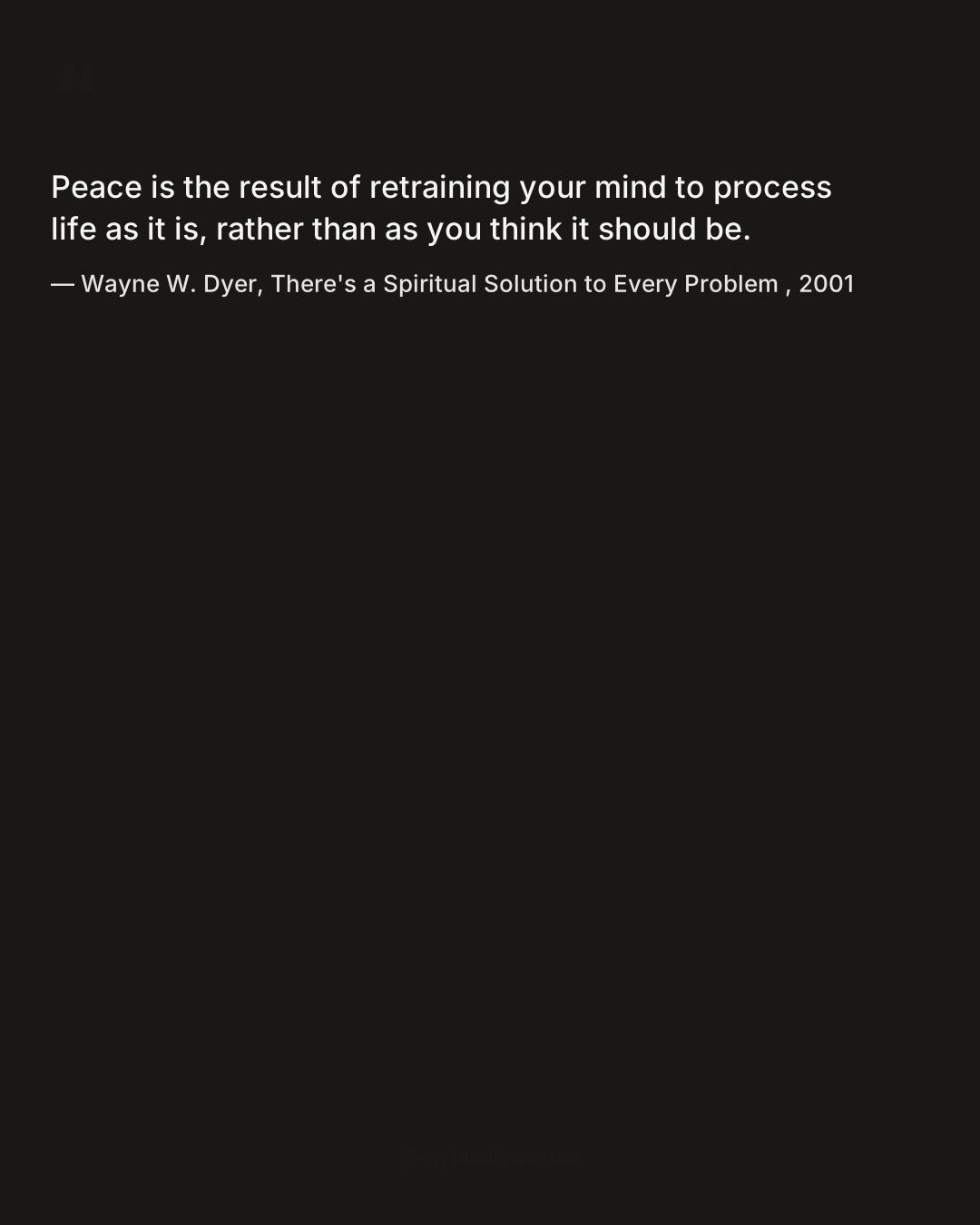
"Peace is the result of retraining your mind to process life as it is, rather than as you think it should be." — Wayne W. Dyer, There's a Spiritual Solution to Every Problem, 2001
Dyer's assertion applies perfectly to mourning the family you deserved but never received. True healing begins the moment you stop waiting for a toxic dynamic to magically become healthy.
The exhausting loop of over-explaining simply feeds the dynamic it attempts to fix. We are frequently taught that healing from generational trauma requires endless, nuanced conversation, but as these brief interventions prove, brevity is armor. When we trade exhaustive justifications for sharp, unyielding truths, we reclaim our autonomy. The clarity that arrives in a single, unsparing sentence is often the only closure we will ever need.
Further reading
- Why Do Blood Ties Break? 15 Short Quotes on Family Toxicity
- 11 Toxic Family Quotes About Relationships That Will Validate Your Boundaries
- When Does Politeness Become Complicity? 5 Savage Quotes for Toxic Relatives
- 7 Funny Toxic Family Quotes to Ease Holiday Gathering Tension
What to Carry Forward
- Brevity prevents manipulation: Abusive dynamics thrive in the gray areas of over-explanation, making short statements the most effective defense.
- Guilt is an installed feature: Recognizing that familial obligation is often weaponized allows you to separate genuine love from emotional blackmail.
- Anger validates boundaries: If a relative becomes enraged by your limits, it confirms that those limits were desperately needed.
- Grief and relief coexist: Mourning the loss of a toxic family member does not invalidate the necessity of cutting them off.
- Biology is an accident: Stripping the mythology away from blood ties helps neutralize the power of toxic elders.