Why Do Blood Ties Break? 15 Short Quotes on Family Toxicity

People love to insist that a shared surname guarantees a sanctuary of unconditional support. Society continually pushes the narrative that biological proximity equals emotional safety. But shared DNA does not automatically weave a reliable net. I learned this watching my aunt quietly pack her bags in a cramped apartment in South Boston, 2003, finally accepting that staying meant slowly erasing herself just to keep a fragile, punishing peace intact for relatives who fundamentally misunderstood her. Letting go of the fantasy changed her trajectory entirely.
Acknowledging the bleak reality of a dysfunctional home often feels like a betrayal of the cultural script. We are conditioned to protect the unit at all costs, ignoring the quiet damage accumulating behind closed doors. Yet, the literature of the past two millennia proves that domestic sorrow is neither a modern invention nor a rare anomaly. Writers, philosophers, and playwrights have been documenting the quiet cruelty of the dining room table for centuries. Recognizing their words can validate the very specific grief of outgrowing your origins.
The Historical Weight of Fractured Kinship
"Family quarrels are bitter things. They don't go according to any rules." — F. Scott Fitzgerald, The Crack-Up, 1945
Fitzgerald originally explored this lingering domestic exhaustion in his 1936 magazine essays, capturing how intimate disputes lack the formal boundaries of public conflict.
A deeper look at guarding your mental space from overbearing relatives provides necessary context here.
"The hatred of relatives is the most violent." — Tacitus, The Annals, 117 AD
Documenting the brutal power struggles of the Roman Empire, the historian noted that political betrayal paled in comparison to the viciousness unleashed by siblings scorned.
"There is no enmity so bitter as that of alienated relatives." — Marcus Tullius Cicero, Philippics, 44 BC
Cicero delivered these speeches during the chaotic fallout of Julius Caesar's assassination, drawing a direct line between national collapse and the severing of intimate familial trust.
"The family is a court of justice which never shuts down for night or day." — Malcolm de Chazal, Sens-Plastique, 1948
The Mauritian writer perfectly summarized the exhausting hyper-vigilance required to survive a household where every minor infraction is eternally prosecuted.
You can find more on the utility of keeping defensive mantras brief when navigating these endless domestic trials.
"A family is a tyranny ruled over by its weakest member." — George Bernard Shaw, The Philanderer, 1898
Shaw frequently used the London stage to expose the hypocrisy of Victorian morality, pointing out that the most emotionally unstable relative usually dictates the temperature of the entire house.
When the Hearth Becomes a Hazard
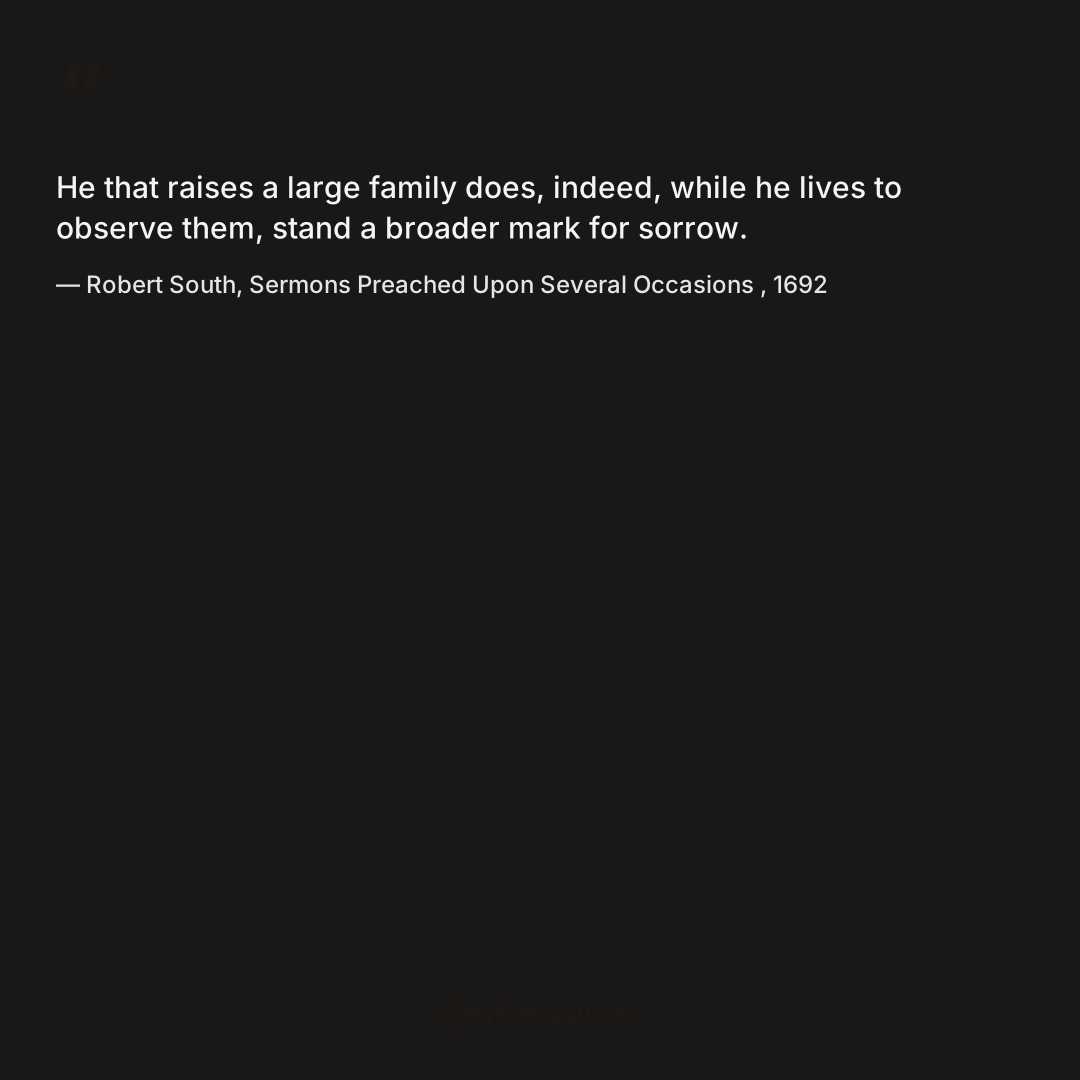
"He that raises a large family does, indeed, while he lives to observe them, stand a broader mark for sorrow." — Robert South, Sermons Preached Upon Several Occasions, 1692
The English clergyman delivered sermons that stripped away the sentimental gloss of seventeenth-century domesticity, acknowledging that expanding a bloodline exponentially increases the capacity for heartbreak.
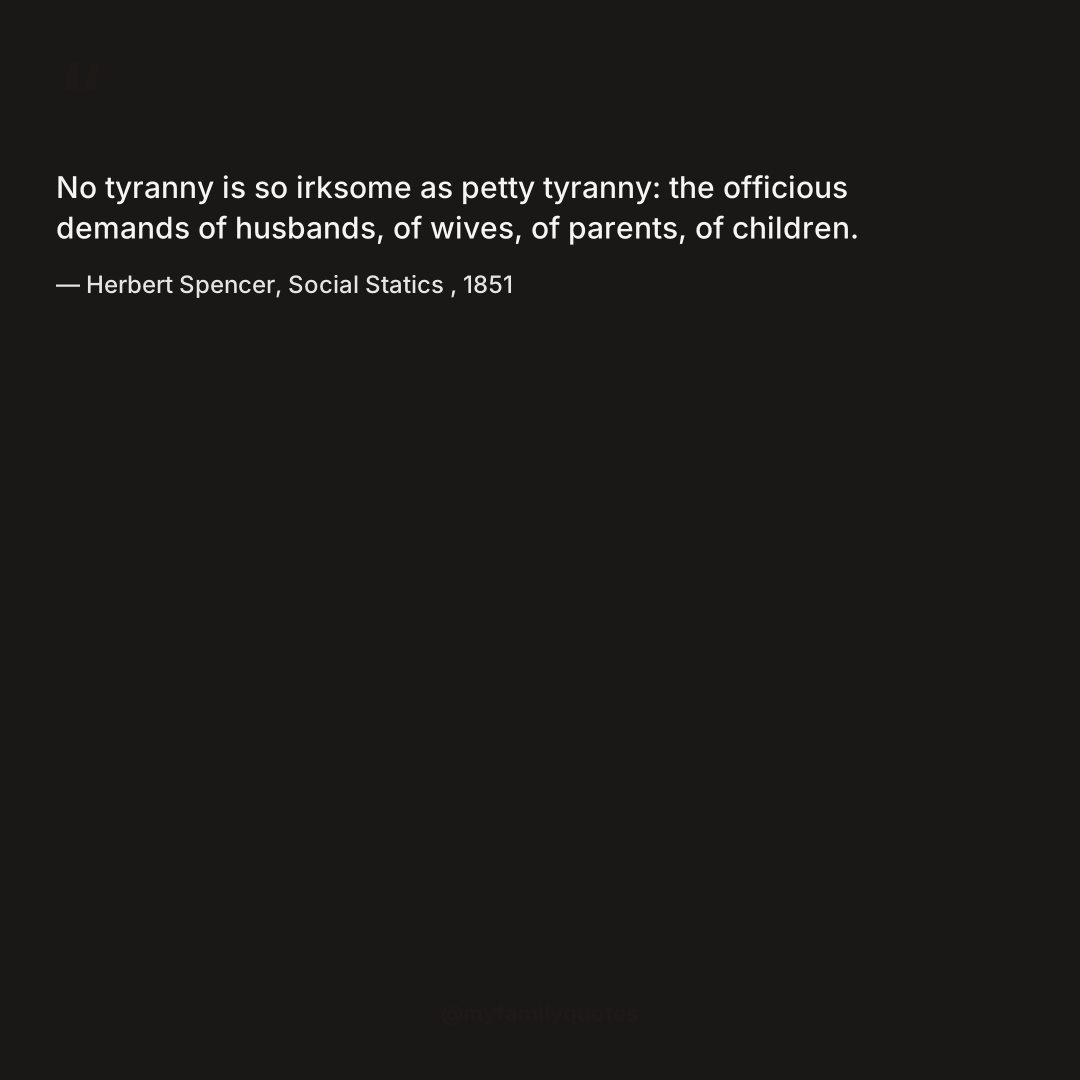
"No tyranny is so irksome as petty tyranny: the officious demands of husbands, of wives, of parents, of children." — Herbert Spencer, Social Statics, 1851
Spencer argued that grand political oppression is often far less soul-crushing than the daily, microscopic control exerted by parents over their adult offspring.
This dynamic clearly illustrates how maternal expectations often breed quiet resentment beneath the surface of polite gatherings.
"Parents are the last people on earth who ought to have children." — Samuel Butler, The Way of All Flesh, 1903
Published posthumously to avoid public outrage, Butler's semi-autobiographical novel systematically dismantled the Victorian ideal of the infallible patriarch.
"The cruelest lies are often told in silence." — Robert Louis Stevenson, Virginibus Puerisque, 1881
While not exclusively about kinship, Stevenson's observation strikes at the core of the toxic family dynamic, where unspoken resentments inflict far more damage than screaming matches.
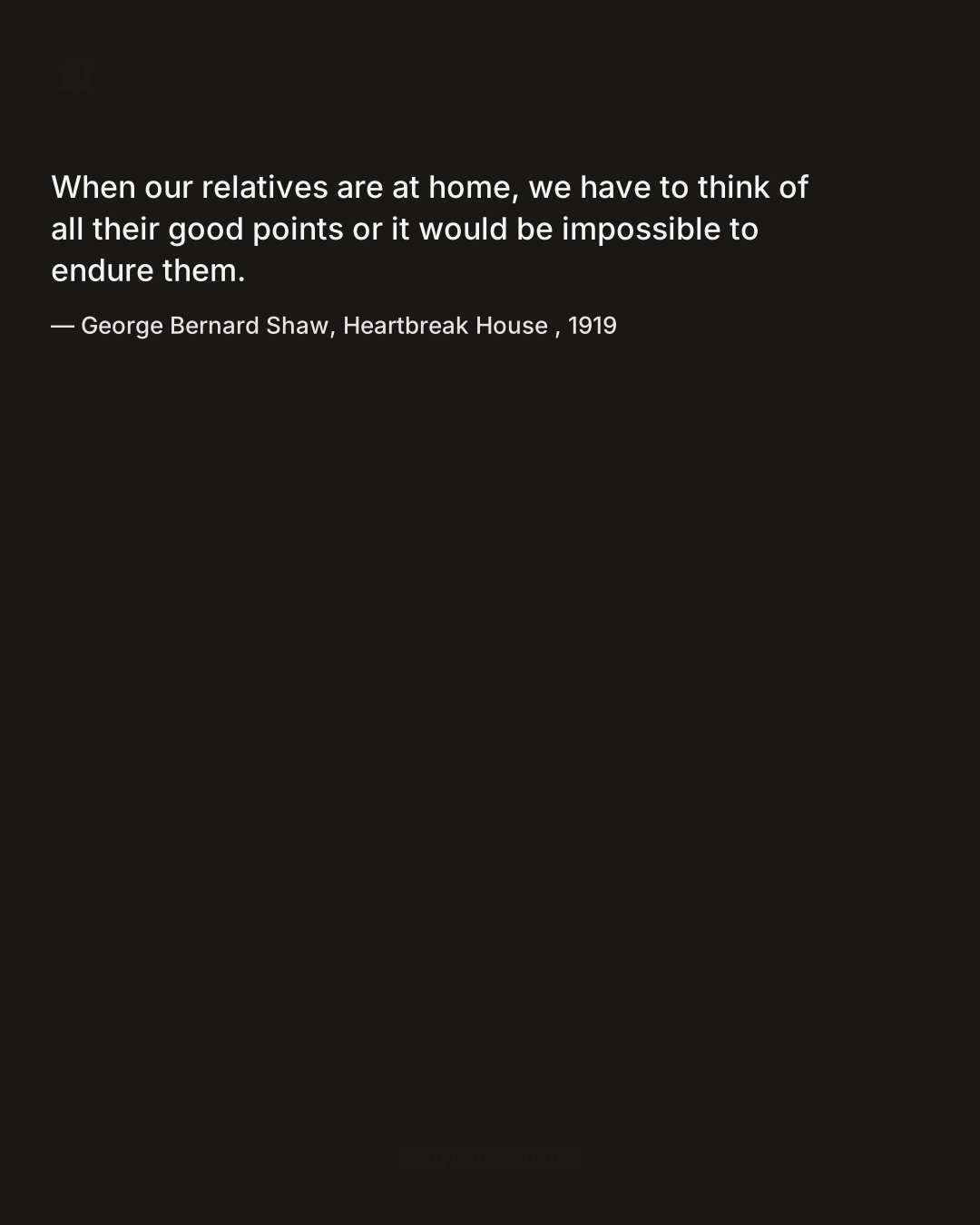
"When our relatives are at home, we have to think of all their good points or it would be impossible to endure them." — George Bernard Shaw, Heartbreak House, 1919
Written during the devastation of the First World War, this play used a chaotic country estate to mirror the exhausting mental gymnastics required to tolerate difficult kin.
Sibling Strife and Silent Betrayals
"A brother offended is harder to be won than a strong city." — Proverbs 18:19, King James Version, 1611
Ancient texts recognized early on that sibling estrangement builds fortresses of resentment that no amount of logic or time can easily breach.
For a different angle on childhood disputes, read our breakdown of how young minds process inevitable sibling rivalry.
"Relatives are the worst friends, said the fox as the dogs took after him." — Danish Proverb, Proverbs of All Nations, 1859
Folklore consistently uses animal allegories to warn us that sharing a genetic lineage does not prevent a brother or cousin from leading the hunting pack.
"The deepest wounds are those we receive from our own kindred." — Inspired by Sophocles, Antigone, 441 BC
The Greek tragedy centers entirely on the destruction caused when familial loyalty clashes violently with the rigid laws of the state.
"We are betrayed by what is false within." — George Meredith, Modern Love, 1862
Meredith's sonnet sequence chronicled the slow, agonizing dissolution of a marriage, proving that the most toxic elements of a home often stem from the lies we force ourselves to swallow.
"A toxic home requires its children to carry the weight of its secrets." — Inspired by Henrik Ibsen, Ghosts, 1881
Ibsen shocked European theatergoers by staging a drama where a mother's desperate attempt to hide her late husband's depravity ends up completely destroying her son's mind.
Addressing these hidden burdens is a crucial step when evaluating strategies for dismantling inherited generational trauma.
Grieving the loss of a supportive family structure requires immense energy. Moving past the initial shock of estrangement allows you to redirect that energy toward building a life that actually sustains you. The lineage you inherited does not have to dictate the environment you inhabit next. Tomorrow offers a blank slate, giving you the absolute authority to decide who gets a seat at your table this weekend.
If You Only Remember a Few Things
- Emotional cruelty from relatives often hides behind the guise of tradition or respect.
- Historical literature proves that familial toxicity is an ancient, universal human experience.
- Protecting your peace is a valid response to relentless domestic boundary violations.
- Silence in a dysfunctional household usually serves to protect the most volatile member.
- You hold no obligation to mend a relationship that demands the sacrifice of your mental health.