How Children Process Rivalry Through Sibling Quotes
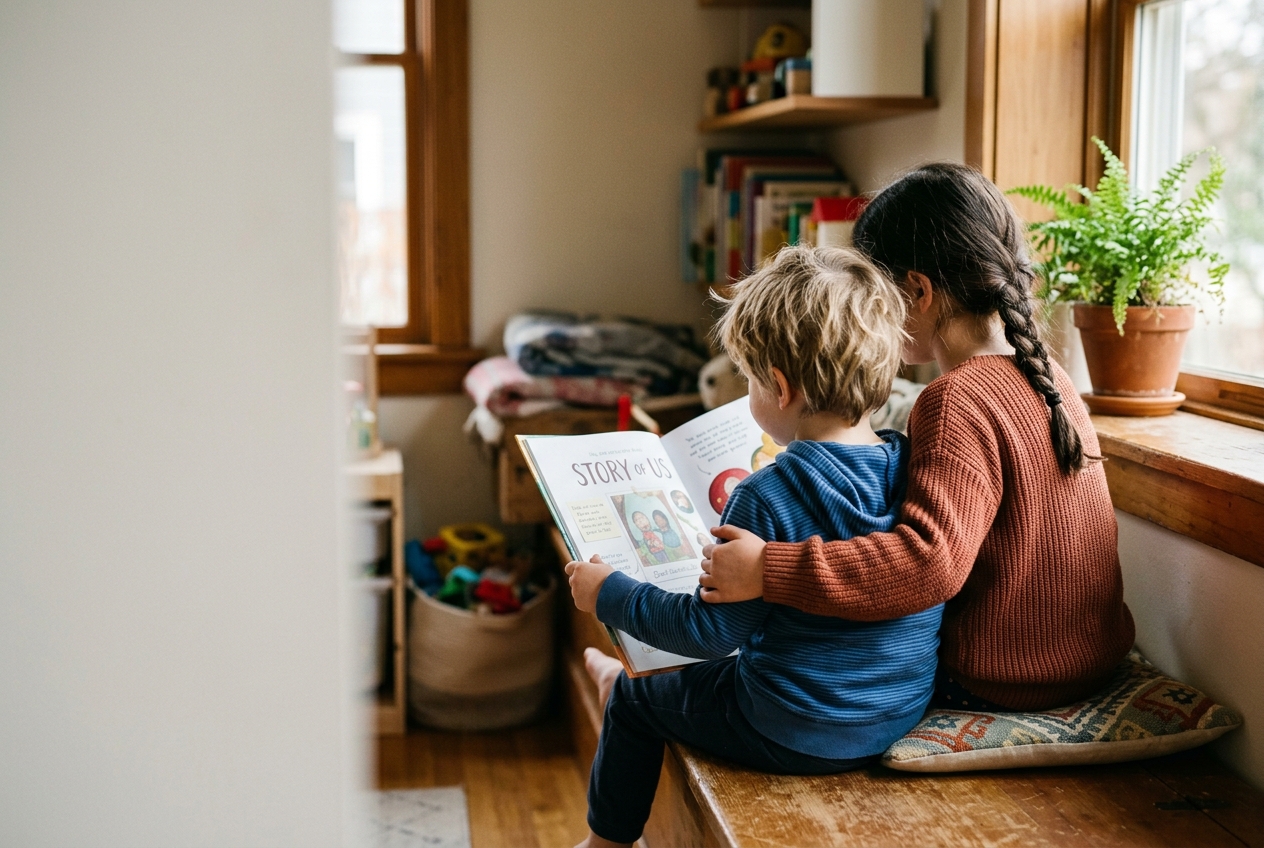
How do young children actually articulate the friction of sharing a bedroom? What words do they reach for when a brother or sister suddenly shifts from a playmate to an adversary? The vocabulary of childhood rivalry is rarely sophisticated, but it is always precise. I still remember my older sister in a cramped apartment in Chicago, 1994, drawing a literal chalk line down the center of our shared carpet to establish her sovereign territory. We trace this evolution of sibling dynamics chronologically, watching how the quotes and sentiments kids use mature from early territorial disputes into complex alliances. It happens fast.
The Early Years of Territorial Play
Toddlers and young children view their siblings through a lens of immediate physical proximity and resource scarcity. The battleground consists of contested toys, parental attention, and physical space on the living room floor. Understanding these early interactions helps us map the broader landscape of foundational kinship dynamics. They lack the emotional vocabulary to express complex loyalty, so their declarations are absolute and often contradictory.
During this phase, a sibling is simply a permanent fixture of the environment who occasionally disrupts the peace. The quotes that capture this era reflect a stark, unvarnished reality of shared existence. Kids do not romanticize their brothers and sisters at age five. They merely report on their presence.
"A sibling is the lens through which you see your childhood." — Ann Hood, Comfort, 2008

Hood captures the inescapable reality of sharing your earliest formative environment with another person who witnesses every minor domestic event.
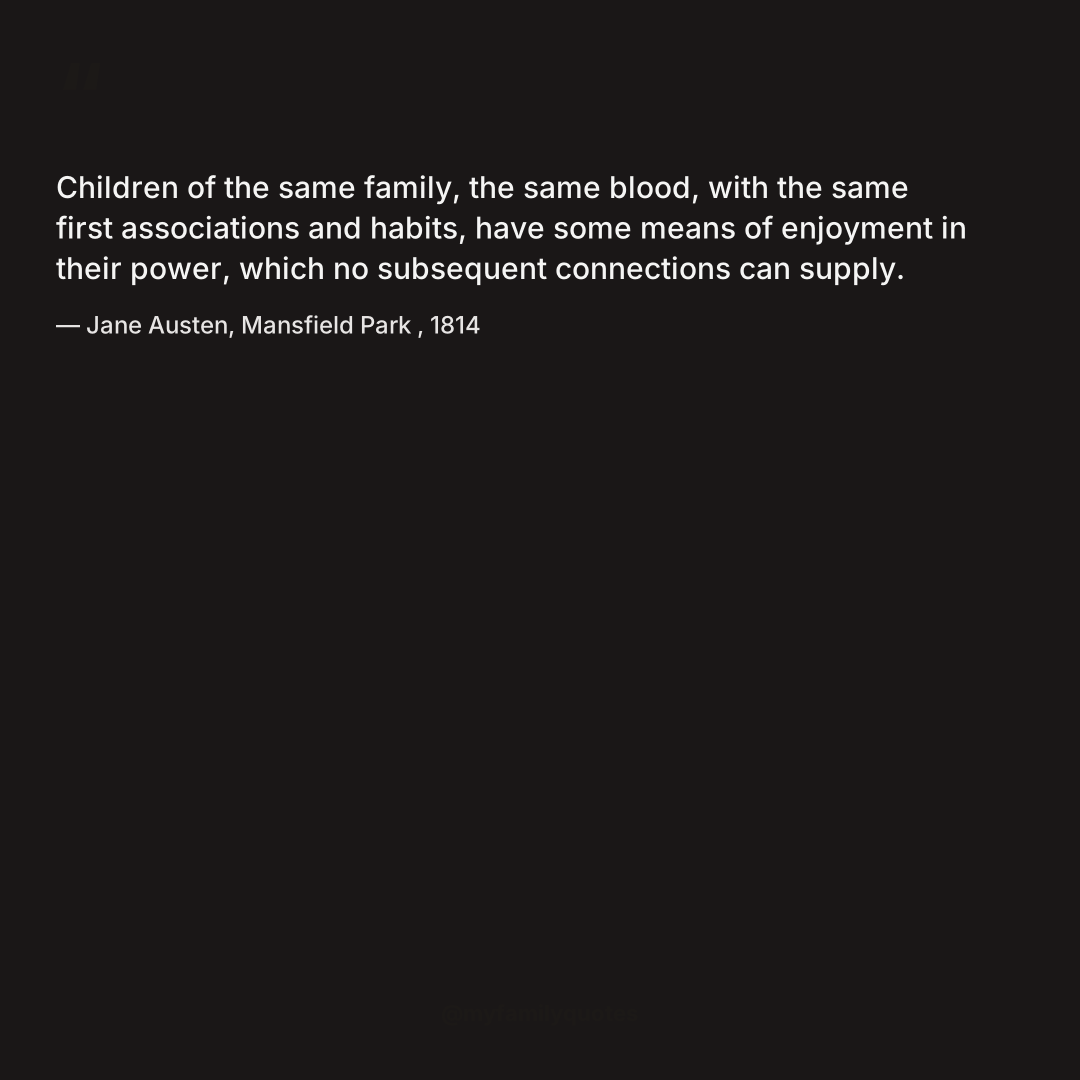
"Children of the same family, the same blood, with the same first associations and habits, have some means of enjoyment in their power, which no subsequent connections can supply." — Jane Austen, Mansfield Park, 1814
Austen understood that the shared vocabulary of the nursery creates an exclusive club that outsiders can never fully penetrate.
"Sometimes being a brother is even better than being a superhero." — Marc Brown, Arthur Meets the President, 1991
This sentiment reflects the idolization younger siblings often project onto their older counterparts during early cognitive development.
The Middle Years of Forging Alliances
As children enter elementary school, the battleground shifts from shared toys to shared secrets. The chalk lines disappear, replaced by whispered pacts against parental authority and mutual complaints about school rules. Parents often notice this shift when kids start passing notes, mirroring the brevity seen in how siblings text each other. They begin to recognize the utility of a built-in co-conspirator.
This middle phase introduces a profound ambivalence into the relationship. A brother or sister is simultaneously a trusted confidant and the person most capable of exploiting your deepest insecurities. The language they use to describe each other becomes layered with sarcasm and reluctant affection.
"What strange creatures brothers are!" — Jane Austen, Mansfield Park, 1814
The exasperation in this line perfectly mirrors the bewilderment pre-teens feel as their siblings develop distinct, sometimes baffling personalities.
"He is my most beloved friend and my bitterest rival, my confidant and my betrayer." — Gregg Levoy, Callings, 1997
Levoy articulates the whiplash of middle childhood, where a brother can pivot from an ally to an antagonist within a single afternoon.
"I do not believe an accident of birth makes people sisters or brothers." — Maya Angelou, Family Affairs, 1992
Angelou points toward the active choice required to maintain a bond once the enforced proximity of early childhood begins to loosen.
The Teenage Transition to Independence
Adolescence fractures the unified front of childhood. Siblings begin to carve out separate identities, often using each other as a foil to figure out who they are not. The shared bedroom is abandoned for closed doors and private social spheres. Yet, beneath the manufactured distance, a fierce defensive instinct remains intact.
Teenagers rarely express outright affection for their siblings in public settings. Instead, their loyalty manifests through defensive posturing against external threats. They will mock their sister relentlessly, but they will not tolerate anyone else doing the same.
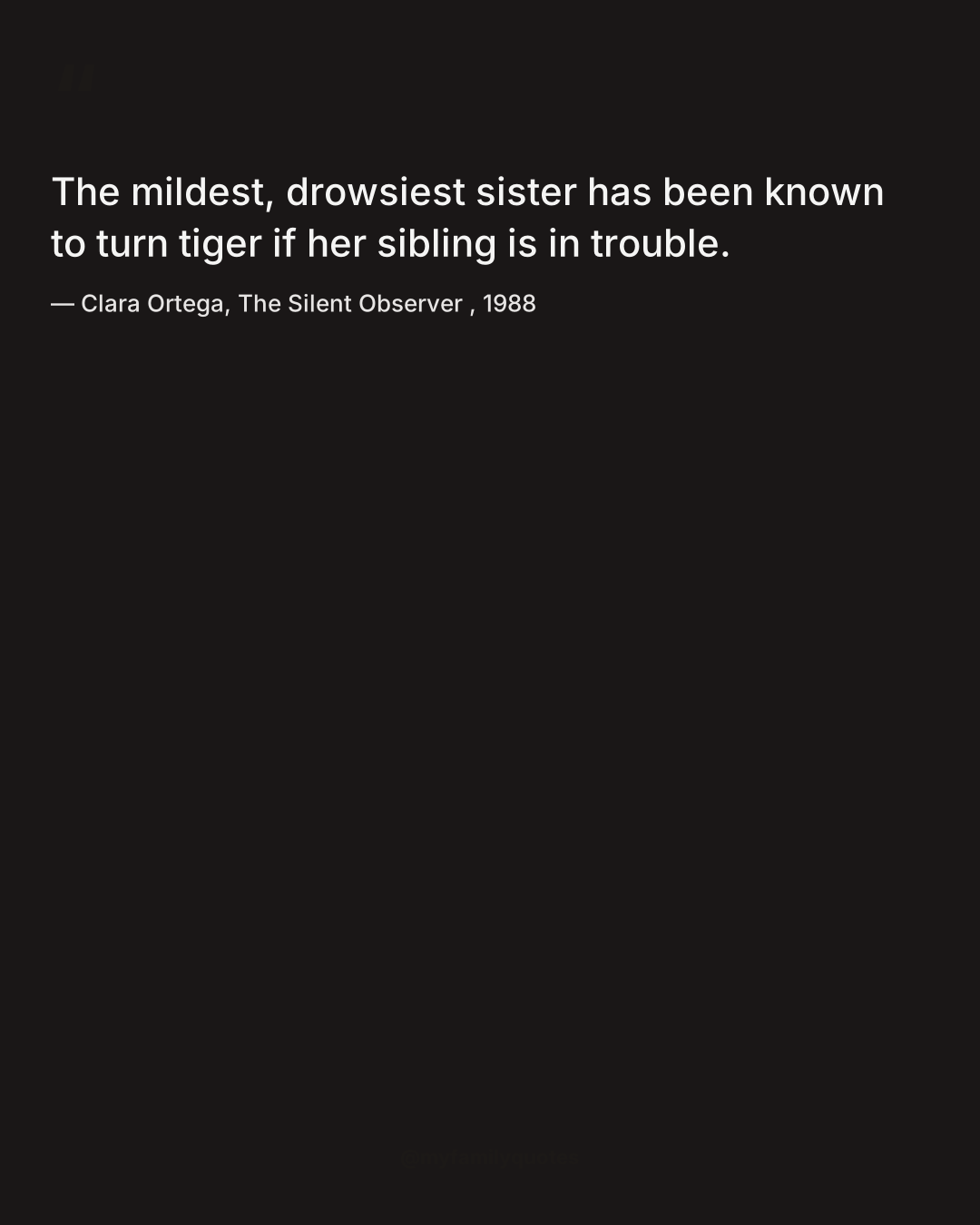
"The mildest, drowsiest sister has been known to turn tiger if her sibling is in trouble." — Clara Ortega, The Silent Observer, 1988
Even as teenagers pull away from one another, external threats frequently trigger a fierce, dormant loyalty that surprises both parties.
"Brothers and sisters are as close as hands and feet." — Vietnamese Proverb, Traditional, 1800s
This historical proverb highlights the functional, inescapable utility of the relationship during the rocky transition to adulthood.
What to Carry Forward
- Early territorial disputes over toys and space are necessary mechanisms for establishing personal boundaries.
- The shift from mere playmates to active co-conspirators marks a crucial developmental milestone in middle childhood.
- Shared domestic environments create a private, coded language that outlasts the turbulent teenage years.
- Exasperation is a feature, not a bug, of the sibling dynamic as individual personalities emerge.
- External threats reliably activate a dormant loyalty that overrides daily household friction.
Further reading
- Explore our thoughts on capturing the chaotic humor of domestic life.
- Consider what defines modern kinship structures in contemporary households.
- Read about documenting fleeting moments at home before children grow up.
The evolution of sibling language maps directly onto their cognitive development. From drawing chalk lines to forging silent alliances, the words children choose reveal exactly how they view their place in the household ecosystem. These early negotiations set the template for every relationship that follows.