30 Short Family Memories Quotes Capturing Fleeting Domestic Life
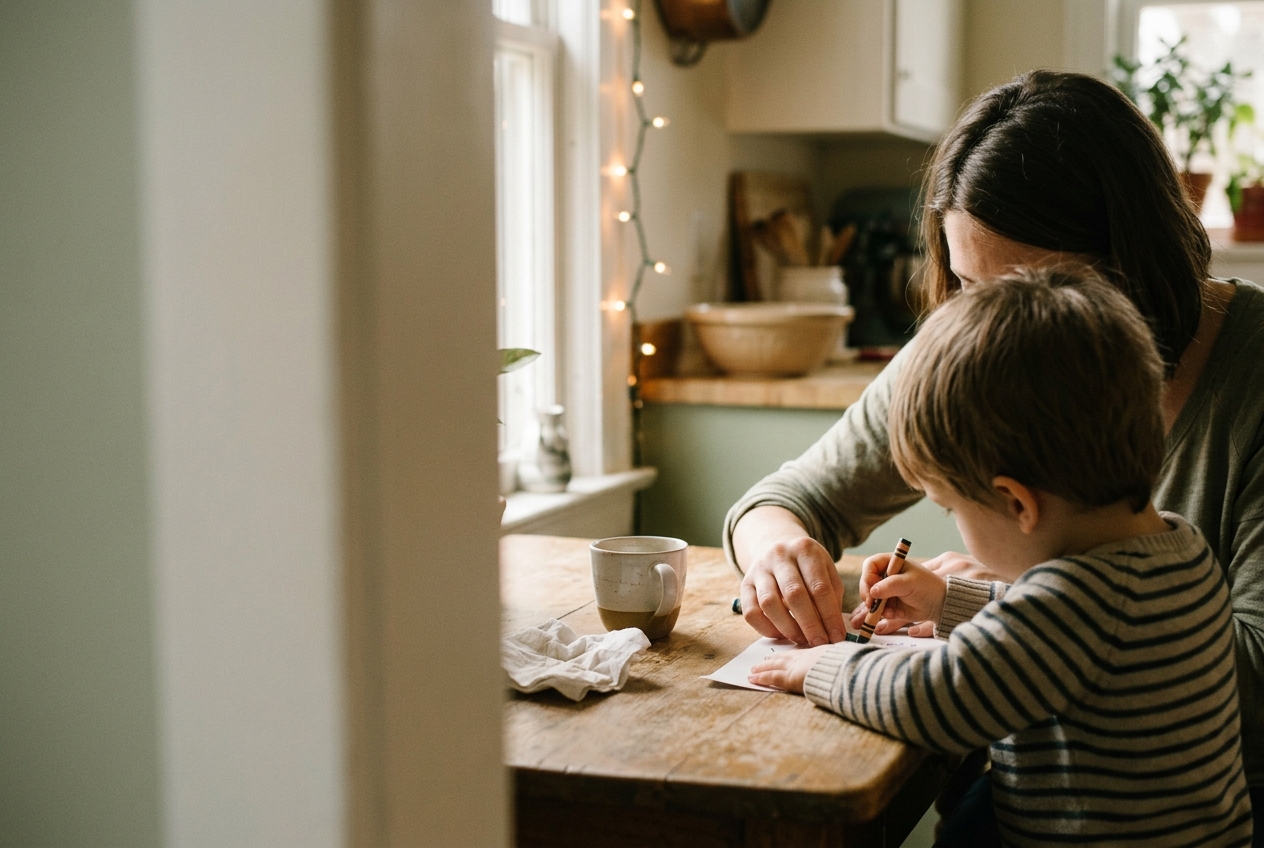
The smell of damp wool and roasted chestnuts always brings me back to a specific afternoon in the late nineties. In 1998, my grandfather stood by the open window of his Berlin apartment, pointing out the frost forming on the glass while my sister tried to catch the condensation. We did not take a photograph of that afternoon, nor did anything particularly monumental happen before the sun went down. The moment exists entirely in the fragile architecture of shared recollection. Memory does not require grand events to sustain itself. It clings to the ordinary details of the rooms we inhabit.
When we think about archiving shared family memories, we often default to thick photo albums or digital folders filled with holiday portraits. Spoken words, however, carry a different kind of weight. If you are framing these core moments for public display, a short phrase often speaks louder than a lengthy exposition. Brevity forces us to distill the emotion into its most potent form. A single sentence can evoke the exact temperature of a childhood kitchen.
Consider why brevity suits unsentimental reflection when we look back on our upbringing. We do not need a sprawling novel to describe the feeling of a Sunday morning spent reading the newspaper on the living room rug. A few sharp words from a favorite author can act as a mirror to our own experiences, capturing life's quiet core moments with startling precision. It is the texture of shared family time that remains long after the actual events have passed into history.
The Architecture of the Past
The human mind categorizes the past not by dates or times, but by the intensity of the emotional imprint left behind. We remember the cadence of a parent's voice calling us in from the yard long after we forget the address of the house itself. These first eight quotes explore how our internal archives are constructed from fragments of daily life.
- "We do not remember days, we remember moments." — Cesare Pavese, The Burning Brand (1952).
- "The past beats inside me like a second heart." — John Banville, The Sea (2005).
- "Things that were hard to bear are sweet to remember." — Seneca.
- "God gave us memory so that we might have roses in December." — J.M. Barrie.
- "Nothing is ever really lost to us as long as we remember it." — L.M. Montgomery, The Story Girl (1911).
- "Every man's memory is his private literature." — Aldous Huxley.
- "The heart's memory eliminates the bad and magnifies the good." — Gabriel García Márquez.
- "Our memories are the only paradise from which we can never be expelled." — Jean-Paul Richter.
Literature often attempts to map the invisible boundaries of the household, translating the chaos of raising children into something permanent. When writers look back on their own origins, they frequently strip away the sentimentality to reveal the raw mechanics of how we remember the people who shaped us.
Literary Reflections on Childhood Homes
Authors possess a unique ability to isolate the specific variables that make a house feel like a distinct universe. The dining table becomes a site of diplomacy, the hallway a conduit for secrets. The next eight quotes highlight the tension between the physical spaces we leave behind and the mental spaces we carry forward.
- "Take care of all your memories. For you cannot relive them." — Bob Dylan.
- "Leftovers in their less visible form are called memories." — Thomas McGuane.
- "Life is all memory, except for the one present moment that goes by you so quick you hardly catch it going." — Tennessee Williams, The Milk Train Doesn't Stop Here Anymore (1963).
- "The worst part of holding the memories is not the pain. It's the loneliness of it." — Lois Lowry, The Giver (1993).
- "Memories, even your most precious ones, fade surprisingly quickly." — Kazuo Ishiguro, Never Let Me Go (2005).
- "You can close your eyes to reality but not to memories." — Stanislaw Jerzy Lec.
- "Memory is the treasury and guardian of all things." — Cicero.
- "No matter how much suffering you went through, you never wanted to let go of those memories." — Haruki Murakami.
The transition from childhood to adulthood requires a deliberate sorting of these mental files. We decide which traditions to carry forward and which generational habits to leave at the door of our new homes. This curation process is entirely subjective, driven by the specific emotional resonance of our early environments.
The Ephemeral Nature of the Kitchen Table
If the living room is the public face of a family, the kitchen is its engine room. This is where the unvarnished truth of a household reveals itself over spilled milk and late-night conversations. The following seven quotes capture the fleeting, often unrecorded nature of the domestic sphere.
- "A happy memory is a hiding place for unforgotten treasures." — Paul L. Dunbar.
- "Memory is the diary that we all carry about with us." — Oscar Wilde.
- "What I like about photographs is that they capture a moment that’s gone forever, impossible to reproduce." — Karl Lagerfeld.
- "Memory is a way of holding on to the things you love, the things you are, the things you never want to lose." — Kevin Arnold, The Wonder Years (1988).
- "Sometimes you will never know the value of a moment until it becomes a memory." — Dr. Seuss.
- "A picture is a secret about a secret, the more it tells you the less you know." — Diane Arbus.
- "I have memories, but only a fool stores his past in the future." — David Gerrold.
Photographs provide a visual record of a split second, but they rarely tell the whole story of the hour that preceded the flash. The tension in a jawline or the genuine laughter erupting off-camera remains hidden from the lens. Words, conversely, can describe the invisible atmosphere of the room.
Generational Echoes in Brief Words
As we age, our relationship with our personal history shifts dramatically. The events that seemed monumental at fifteen often shrink in significance, while a quiet afternoon spent repairing a bicycle with a parent suddenly looms large in the mind. The final seven quotes illustrate this shifting perspective.
- "There is a magic in that little world, home; it is a mystic circle that surrounds comforts and virtues never known beyond its hallowed limits." — Robert Southey.
- "We are our memories." — Chita Rivera.
- "Memory is a complicated thing, a relative to truth, but not its twin." — Barbara Kingsolver, Animal Dreams (1990).
- "The town was paper, but the memories were not." — John Green, Paper Towns (2008).
- "Memories are bulletproof." — Gerard Way.
- "A memory without the emotional charge is called wisdom." — Joe Dispenza.
- "I can only note that the past is beautiful because one never realises an emotion at the time." — Virginia Woolf.
As Monday morning approaches and the house fills with the noise of another routine week, pay attention to the small exchanges happening in the hallway. The hurried breakfasts and the lost keys are the raw materials of tomorrow's recollections. You are building the archive right now.
Reader Questions
Why do we remember mundane family moments over major milestones?
Human memory often anchors to sensory details rather than scheduled events. The smell of coffee or the sound of a specific laugh triggers the hippocampus more reliably than the abstract concept of a graduation day. The brain prioritizes the emotional texture of an environment over the calendar date.
How can short quotes help preserve family history?
Brief phrases act as shorthand for complex emotional landscapes. When we attach a specific literary quote to a photograph or a journal entry, it provides a thematic framework for the raw data of our lives. It gives the memory a structure that outlasts the fading details of the actual event.
Are memories of childhood homes usually accurate?
Neurological studies suggest that every time we recall an event, we actually reconstruct it, meaning our memories are heavily influenced by our current emotional state. The accuracy of the physical details matters less than the emotional truth the memory preserves. We remember how the house made us feel, rather than the exact color of the wallpaper.