How Do Hispanic Authors Frame Kinship? 12 Family Quotes in Spanish
The Cultural Weight of Language
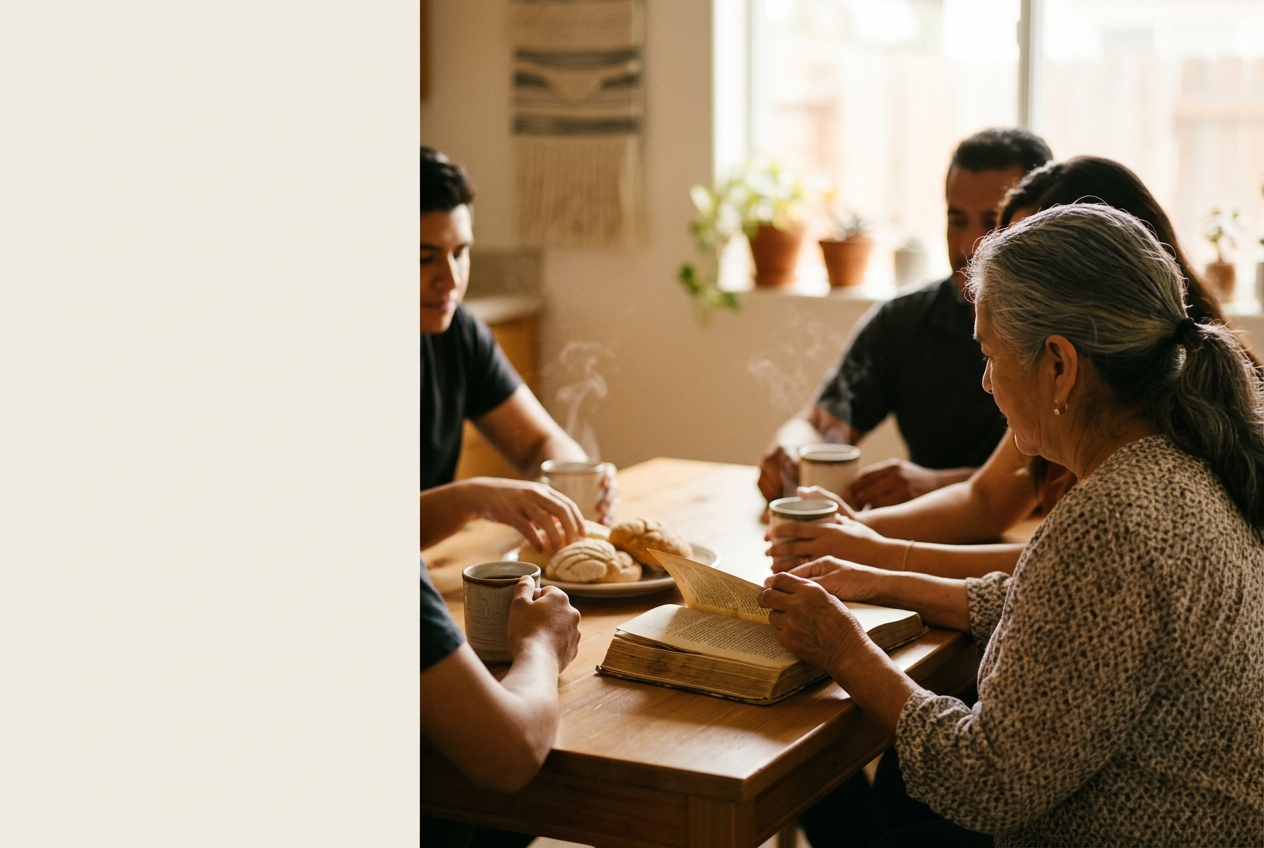
Watching my aunt navigate a crowded Sunday dinner in a cramped kitchen in East Los Angeles, 2005, I realized that translation often fails to convey the true weight of a shared language. The rhythm of Spanish carries an inherent warmth that English sometimes struggles to replicate. Vocabulary shifts the atmosphere of a room. When elders speak about their lineage, they rarely use clinical terms. They speak of bloodlines, deep roots, and the unavoidable gravity of a shared past.
When exploring foundational family bonds, Spanish literature offers a distinct emotional vocabulary. Authors from Gabriel García Márquez to Isabel Allende have documented the fierce loyalty required to maintain a household across generations. The phrases they leave behind become permanent fixtures in living rooms across the globe. Language shapes the memory of the home.
Related — read more about capturing the fleeting domestic moments that define our daily routines.
12 Family Quotes in Spanish
"La vida no es la que uno vivió, sino la que uno recuerda y cómo la recuerda para contarla." — Gabriel García Márquez, Vivir para contarla, 2002
The Colombian Nobel laureate framed memory not as an objective archive, but as a narrative tool used to keep a lineage alive through storytelling.
"No hay verdadera separación hasta que no hay olvido." — Isabel Allende, Paula, 1994
Written during her daughter's fatal illness, Allende's memoir explores how physical absence is ultimately conquered by relentless remembrance within a household.
"La sangre tira." — Common Idiom, Castilian Oral Tradition, 1700s
This ancient colloquialism describes the inescapable pull of biological ties, asserting that relatives will inevitably gravitate toward one another during crises.
For a different angle, consider historical texts scholars often analyze regarding ancient kinship rules.
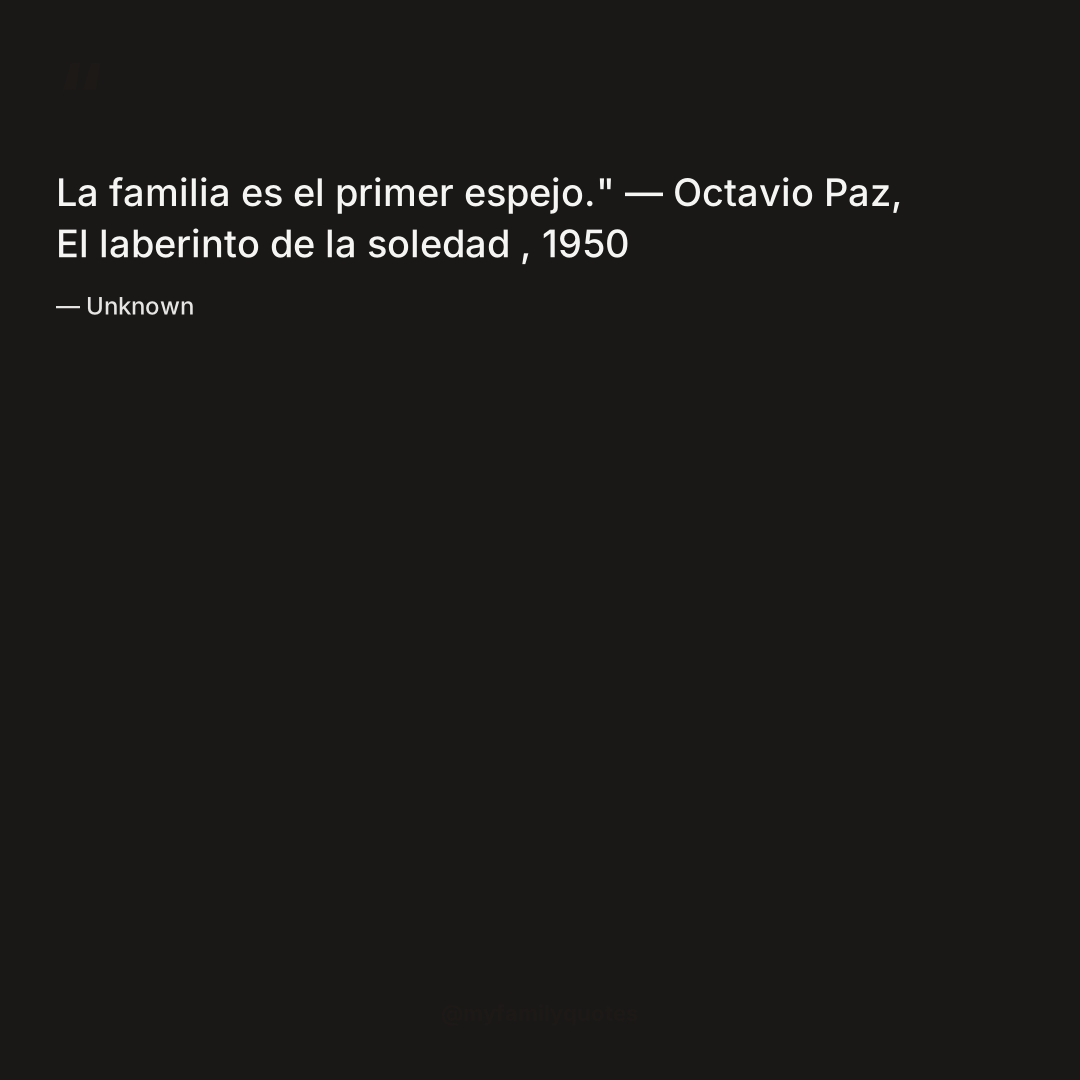
"La familia es el primer espejo." — Octavio Paz, El laberinto de la soledad, 1950
Paz argued that identity formation begins entirely within the domestic sphere, making our relatives the first reflections of our own cultural anxieties.
"De tal palo, tal astilla." — Pedro Sánchez de Viana, Anotaciones a Ovidio, 1589
First recorded in formal Renaissance commentaries, this proverb mirrors the English "like father, like son" but emphasizes the physical splintering of wood from a singular tree.
"El amor de la madre no se envejece." — Traditional Proverb, Mexican Oral Tradition, 1900s
Passed down through rural communities, this phrase highlights the enduring nature of maternal affection across decades of hardship.
The literature surrounding complex maternal relationships frequently relies on these exact idioms.
"En cada niño nace la humanidad." — Jacinto Benavente, Los Intereses Creados, 1907
The Spanish playwright used this line to remind audiences that the future of society rests entirely within the cradle of the immediate family.
"La sangre no tiene voz, pero grita." — Federico García Lorca, Bodas de sangre, 1932
Lorca captured the violent, undeniable instincts of ancestral loyalty in this rural tragedy set in the arid landscapes of Andalusia.
A longer take on this lives in our piece on how the oldest generation shapes us through oral histories.
"El que se apoya en su familia nunca cae." — Traditional Proverb, Andalusian Folklore, 1912
This regional saying serves as a pragmatic reminder that biological networks provide the only reliable safety net in unpredictable economic climates.
"Yo no hablo de venganzas ni perdones, el olvido es la única venganza y el único perdón." — Jorge Luis Borges, Ficciones, 1944
While often applied to political adversaries, Borges’s meditation on forgetting is frequently cited by Hispanic psychologists treating generational estrangement.
"La sangre se hereda, y el vicio se apega." — Miguel de Cervantes, Don Quijote de la Mancha, 1605
Cervantes warned his readers that while biology is an inescapable inheritance, destructive behaviors are learned directly from the household environment.
This sentiment often masks deeper cultural anxieties about separation and independence.
"Una familia es un mundo entero bajo un mismo techo." — Julia Álvarez, En el tiempo de las mariposas, 1994
Álvarez encapsulates the claustrophobic yet profoundly rich ecosystem of sisters navigating political tyranny in the Dominican Republic.
Where Conventional Wisdom Slips
Popular reading: Spanish family quotes are universally dramatic.
On closer look: Many idioms actually focus on quiet endurance rather than explosive emotion. Proverbs from the Iberian Peninsula frequently emphasize practical survival and economic cooperation over romanticized notions of endless affection.
Popular reading: Translation carries the exact same emotional weight.
On closer look: Certain words lack a direct English equivalent, shifting the tone entirely. The word "cariño" encompasses a specific type of tender affection that English words like "care" or "love" fail to adequately map.
Popular reading: Folk proverbs originate from modern television.
On closer look: The vast majority of these phrases were codified in 16th-century literature. Writers like Cervantes and Lope de Vega cemented regional slang into the formal lexicon, ensuring these maxims survived centuries of political upheaval.
Write down one of these phrases in a journal or send it to an elder who still speaks the language of their childhood home.