Quotes About Family Modern Households Need
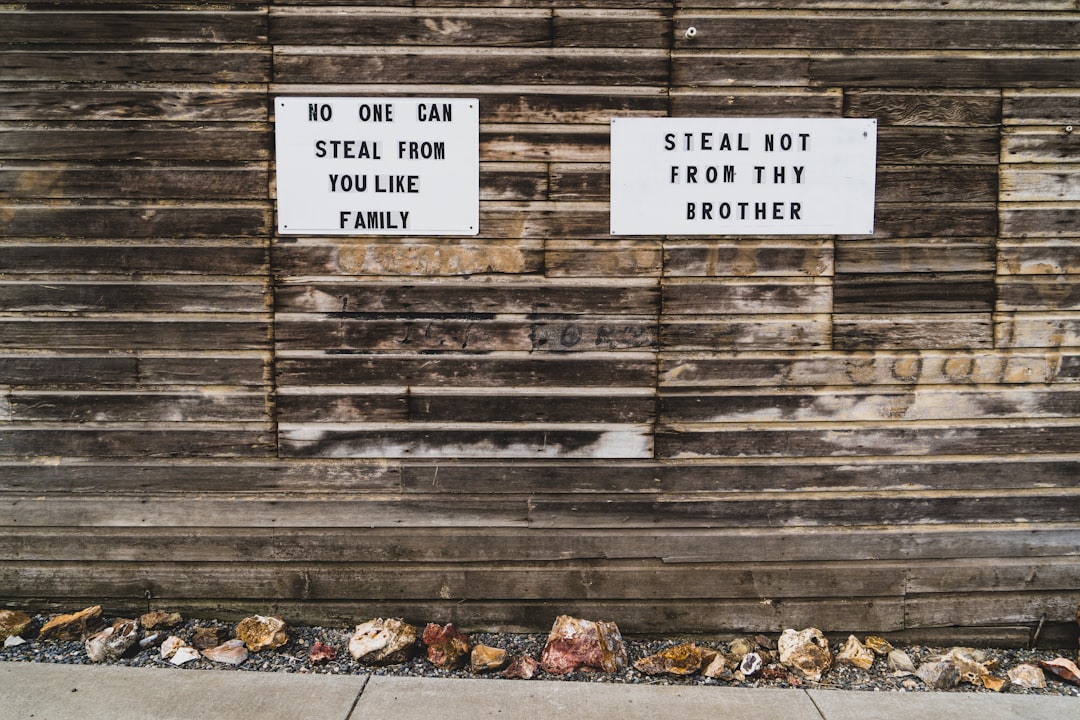
Most people assume quotes about family exist solely to decorate farmhouse signs purchased at big-box craft stores. They envision cursive lettering celebrating flawless harmony, baked goods, and endless patience. The truth runs much deeper. Real kinship involves navigating clashing egos, burnt dinners, and unspoken resentments over the holidays, requiring a level of endurance that greeting cards rarely capture. Literature provides a far more accurate reflection of this reality than any mass-produced wooden plaque ever could.
If we could sit down with history's sharpest observers today, the conversation would quickly pivot from polite platitudes to honest confessions. We invited the ghosts of playwrights, novelists, and civil rights leaders to our hypothetical table. Their collected thoughts read like a survival guide for anyone sharing a roof with relatives.
On Domestic Friction
This tension naturally brings up how playwrights handled domestic absurdity behind closed doors.
George Bernard Shaw understood the claustrophobia of the Victorian household better than most critics of his era. He offered a rather pragmatic approach to dealing with inherited baggage.
If you cannot get rid of the family skeleton, you may as well make it dance.
Shaw debuted this philosophy long before modern therapy made generational trauma a common talking point. He recognized that humor diffuses what shame tries to hide.
Author Mary Karr built her entire literary career on excavating the chaotic reality of her Texas upbringing. Her perspective strips away the illusion of the perfectly balanced home.
A dysfunctional family is any family with more than one person in it.
Karr leveled the playing field for everyone who ever felt alienated by their own relatives. Perfection is a myth manufactured by advertising agencies in the 1950s.
On Unbreakable Connections
Exploring these connections requires examining navigating complex interpersonal connections across vast geographical distances.
Nobel Peace Prize laureate Desmond Tutu witnessed humanity at its absolute worst during apartheid, yet he maintained a profound reverence for the people who anchor us. He framed the household as an unalterable assignment.
You don't choose your family. They are God's gift to you, as you are to them.
Tutu delivered this sentiment not as a naive wish, but as a weighty responsibility. His worldview demanded that we find grace for the people sitting across our own kitchen tables.
Mother Teresa frequently redirected ambitious activists back to their own front doors when they asked how to change the world. She believed grand societal shifts required intimate beginnings.
What can you do to promote world peace? Go home and love your family.
Her instruction remains devastatingly simple and incredibly difficult to execute. Loving abstract humanity is easy, but loving a brother who refuses to wash his coffee mug requires actual discipline.
On Chosen Kinship
Sometimes blood relations fall short, which raises questions about the invisible threads keeping households intact despite biology.
Armistead Maupin revolutionized the concept of the logical family in his groundbreaking 1978 serial Tales of the City. He gave voice to outsiders who had to build their own support systems from scratch in San Francisco.
Biological family is something you're born into. Logical family is the one you create for yourself.
Maupin validated the deep bonds formed in shared apartments and crowded diners. He proved that loyalty relies on shared values rather than shared DNA.
Richard Bach explored the spiritual dimension of these chosen ties in his metaphysical writings. He stripped away the legal definitions of kinship entirely.
The bond that links your true family is not one of blood, but of respect and joy in each other's life.
Bach reminds us that obligation breeds resentment, while mutual respect breeds genuine attachment. The best relationships require active participation.
On Generational Wisdom
Looking backward provides scriptural foundations for modern households and secular guidance alike.
Alex Haley spent twelve years researching his ancestry to write Roots in 1976. His exhaustive search for his origins solidified his belief in the continuum of human existence.
In every conceivable manner, the family is link to our past, bridge to our future.
Haley understood that knowing where you come from dictates where you are capable of going. We are all simply carrying the baton for a brief, breathless sprint.
Gabriel García Márquez wove the heavy, inescapable weight of ancestry through every page of his magical realism. He saw the household as a recurring loop of inherited traits and repeated mistakes.
Human beings are not born once and for all on the day their mothers give birth to them, but life obliges them over and over again to give birth to themselves.
Márquez captured the tension between the identities we inherit and the identities we forge. Breaking a generational cycle requires deliberate, exhausting effort.
On the Modern Record
Today, we find ourselves capturing digital memories over physical albums to preserve these exact moments.
Nora Ephron treated her own life as material, advising a generation of writers to do the same. She knew that whoever controls the narrative controls the memory.
Everything is copy.
Ephron inherited this ruthless, brilliant mantra from her own mother. It transforms painful holiday dinners into excellent cocktail party anecdotes by the following week.
Writer Barbara Kingsolver observes the quiet, daily rhythms that actually define a shared life. She focuses on the mundane rituals that slowly fuse people together over decades.
The very least you can do in your life is figure out what you hope for. And the most you can do is live inside that hope.
Kingsolver grounds our lofty expectations in daily practice. A household survives by showing up for breakfast every single morning.
On the Final Word
Our panel of writers, activists, and observers leaves us with a fractured, realistic, and ultimately hopeful portrait of kinship. They confirm that the screaming matches and the quiet moments of grace carry equal weight in the long run. We do not need perfect harmony to build a meaningful life together. We only need the willingness to keep trying. Take a moment today to write down one ridiculous thing your sibling or parent said this week and tuck it into a book they left on the coffee table.