7 Funny Toxic Family Quotes to Ease Holiday Gathering Tension

Finding Comedy in Kinship Chaos
Relatives possess an uncanny ability to push our exact buttons because they installed them in the first place. I first witnessed the sheer power of deflecting criticism through humor from my aunt in a cramped kitchen in Portland, Oregon, 1994, as she loudly narrated her own mother's passive-aggressive pie-slicing techniques like a sports broadcaster. Her comedic timing instantly disarmed the crushing tension in the room. Sometimes, a sharp laugh provides the only viable exit strategy when a holiday dinner turns into an unscripted courtroom drama over past slights. Finding humor in difficult kinship moments creates a vital buffer between their chaos and your peace. If you want a different angle on validating your necessary personal boundaries, wit is often a highly effective first step.
Sarcastic Observations on Difficult Relatives
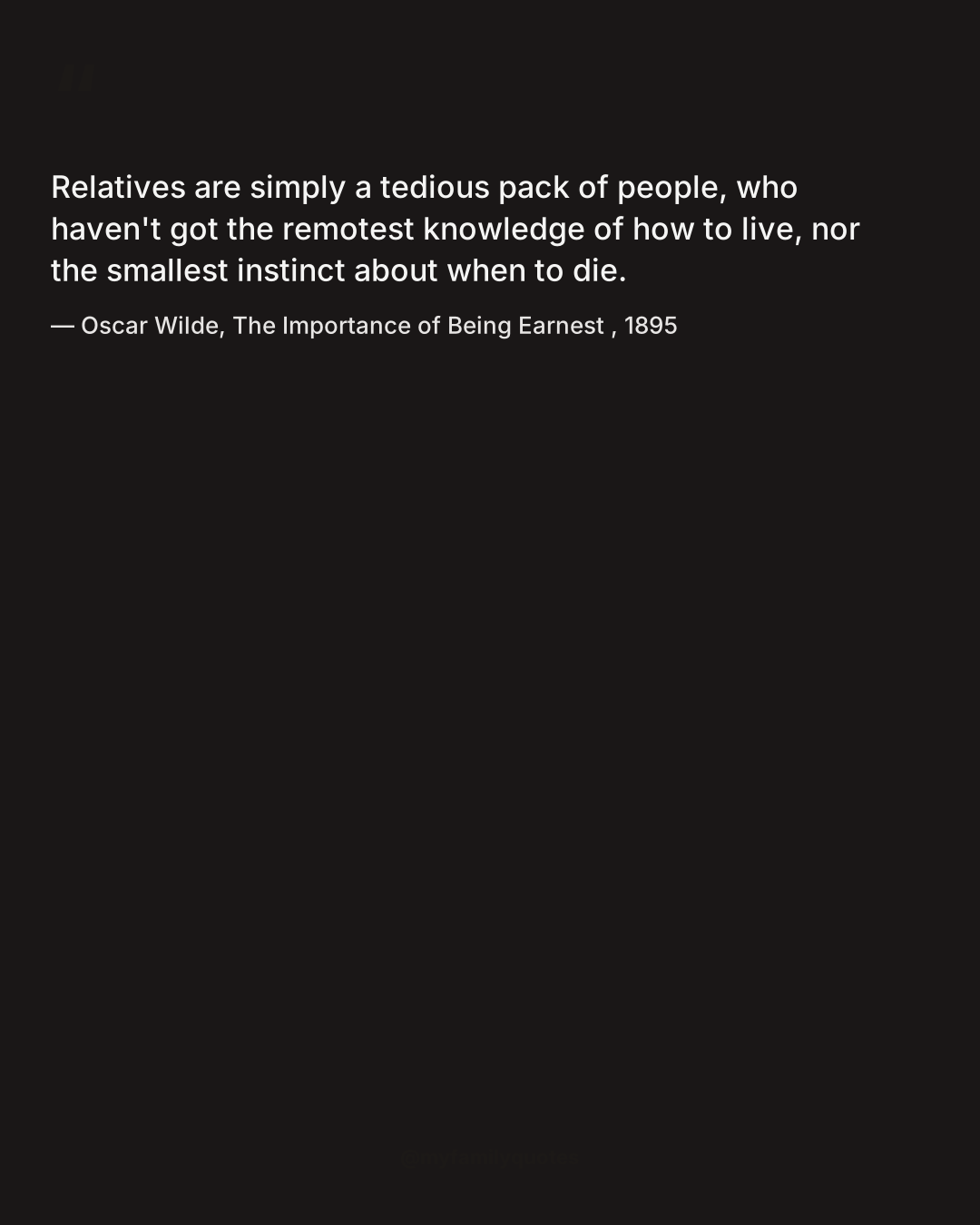
"Relatives are simply a tedious pack of people, who haven't got the remotest knowledge of how to live, nor the smallest instinct about when to die." — Oscar Wilde, The Importance of Being Earnest, 1895
Victorian high society harbored the exact same interpersonal grievances we face today, proving that interpersonal annoyance transcends centuries.
"Insanity runs in my family; it practically gallops." — Joseph Kesselring, Arsenic and Old Lace, 1941
The classic Broadway play captured the absurdity of inherited eccentricity perfectly, turning dark secrets into comedic gold. People seeking absurd observations on chaotic kinship frequently reference this specific line.
"I don't have to look up my family tree, because I know that I'm the sap." — Fred Allen, Radio Broadcasts, 1940s
Self-deprecation serves as a brilliant defense mechanism when interacting with relatives who constantly seek to highlight your flaws.
"After a good dinner one can forgive anybody, even one's own relations." — Oscar Wilde, A Woman of No Importance, 1893
We often tolerate unacceptable behavior simply because the food is nostalgic, a dynamic many understand all too well. If you are dealing with harsh relatives at events, holding onto the irony makes the meal bearable.
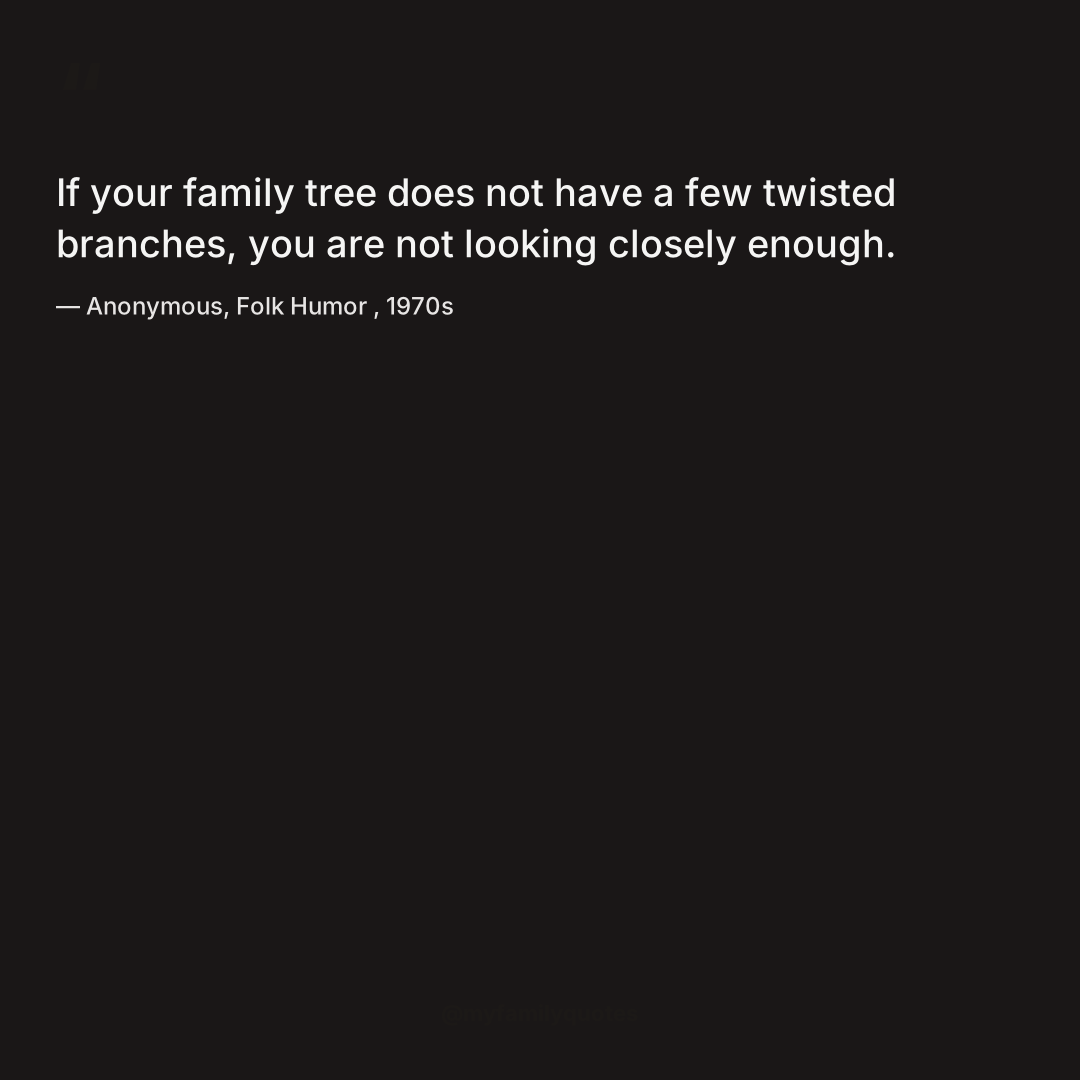
"If your family tree does not have a few twisted branches, you are not looking closely enough." — Anonymous, Folk Humor, 1970s
Visualizing the ancestral line as a fragile, chaotic structure helps reduce the pressure to maintain a picture-perfect image for outsiders.
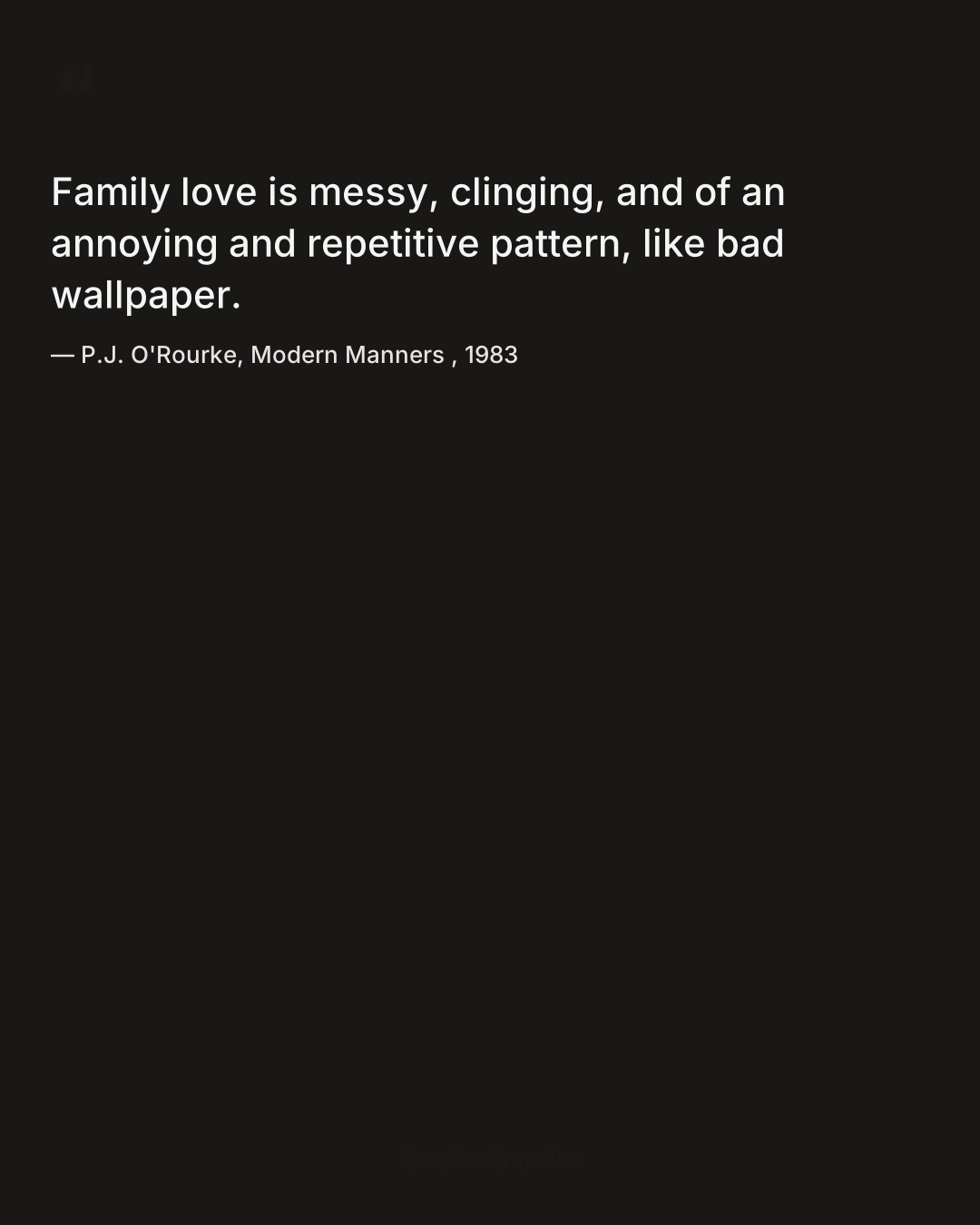
"Family love is messy, clinging, and of an annoying and repetitive pattern, like bad wallpaper." — P.J. O'Rourke, Modern Manners, 1983
The visual comparison to outdated decor perfectly illustrates how we outgrow certain relationships while remaining stuck staring at them during holidays.
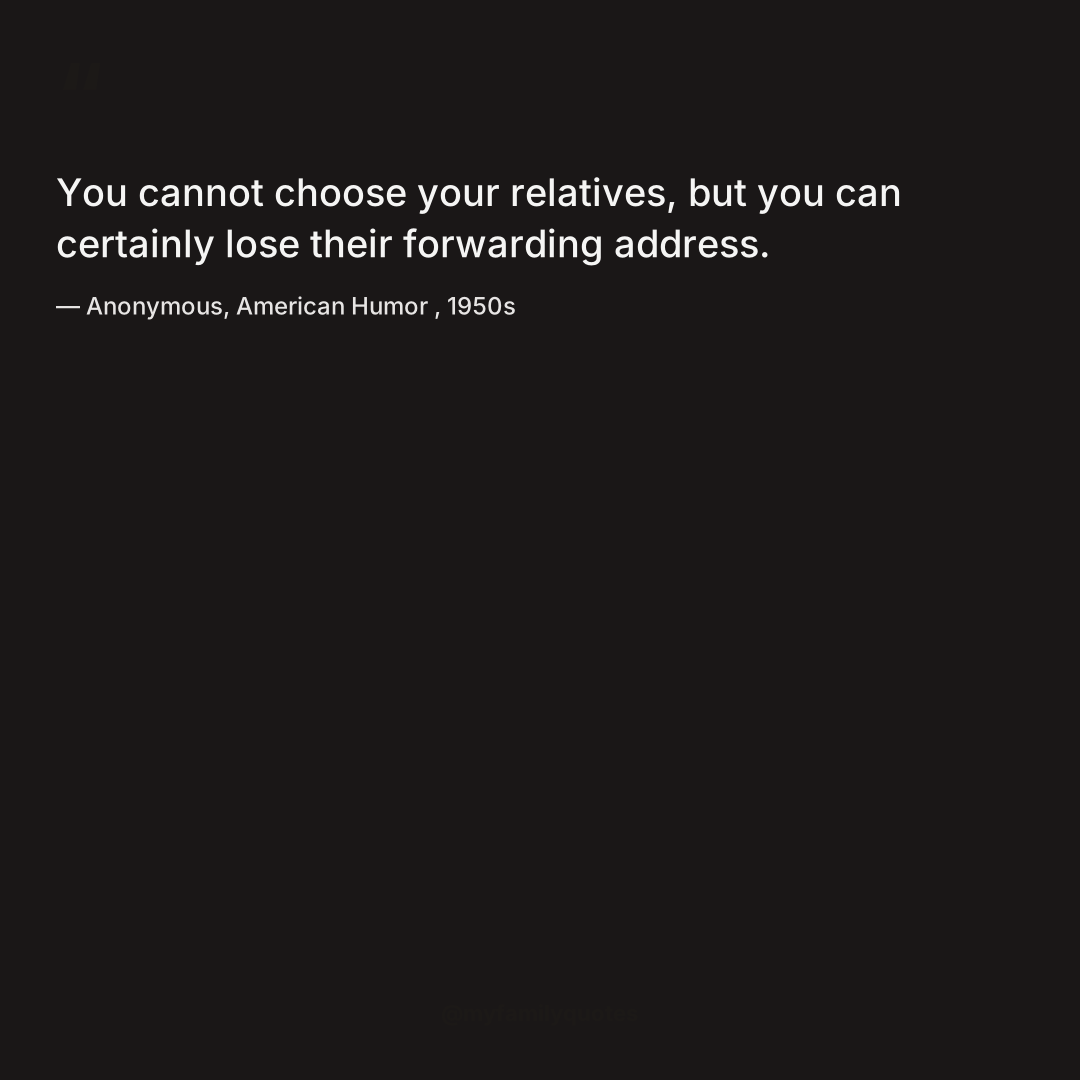
"You cannot choose your relatives, but you can certainly lose their forwarding address." — Anonymous, American Humor, 1950s
Physical distance often serves as the most effective remedy for relational friction. Reviewing concise sayings about family dynamics reveals how universal this avoidance strategy actually is.
Common Questions, Straight Answers
Why do we use humor to cope with toxic relatives?
Laughter releases endorphins and creates an immediate psychological barrier between their negativity and your emotional state. It disrupts predictable arguments by introducing an unexpected reaction.
Can making jokes escalate family tension?
Yes, poorly timed sarcasm can easily ignite further conflict if the target feels directly attacked or humiliated in front of an audience. The safest comedic approach focuses on the absurdity of the situation rather than mocking a specific person.
When should you stop joking and just leave?
Humor ceases to be effective when the conversation shifts from annoying quirks to outright emotional abuse or threats. At that point, prioritizing your safety requires physical removal from the environment. Those asking why certain family relationships permanently fracture often trace the turning point to these exact unmanageable moments.
Jot down your favorite sarcastic comeback in the notes app on your phone to read silently the next time someone asks about your life choices over an overcooked ham.