Why the Best Courage Quotes for Women Avoid the Warrior Trope

Historically, literature framed female bravery as an anomaly requiring physical armor and theatrical martyrdom. Sitting at the scarred Formica table in my aunt's cramped kitchen in South Boston, 1992, I realized that true grit rarely looks like a battlefield. She was balancing a checkbook while staring down a foreclosure notice, quietly muttering a line from a Maya Angelou poem under her breath. The modern lexicon has finally caught up to this domestic reality. We no longer demand that women mimic the stoicism of ancient generals to prove their mettle in boardrooms or living rooms. Instead, contemporary readers actively seek out phrasing that acknowledges the friction of ordinary survival, searching for ideas about where bravery begins without the prerequisite of bloodshed.
When mapping out the complex language of female relationships, the demand for perfection often overshadows the quiet necessity of endurance. The words that actually resonate do not command us to banish fear entirely. They ask us to carry that fear in our pockets while we do the work anyway.
Reclaiming the Definition of Fear
The most lasting sentiments concerning female determination strip away the mythology of fearlessness. They position anxiety not as a moral failing, but as a biological reality to be managed.
"I have learned over the years that when one's mind is made up, this diminishes fear." — Rosa Parks, Quiet Strength, 1994
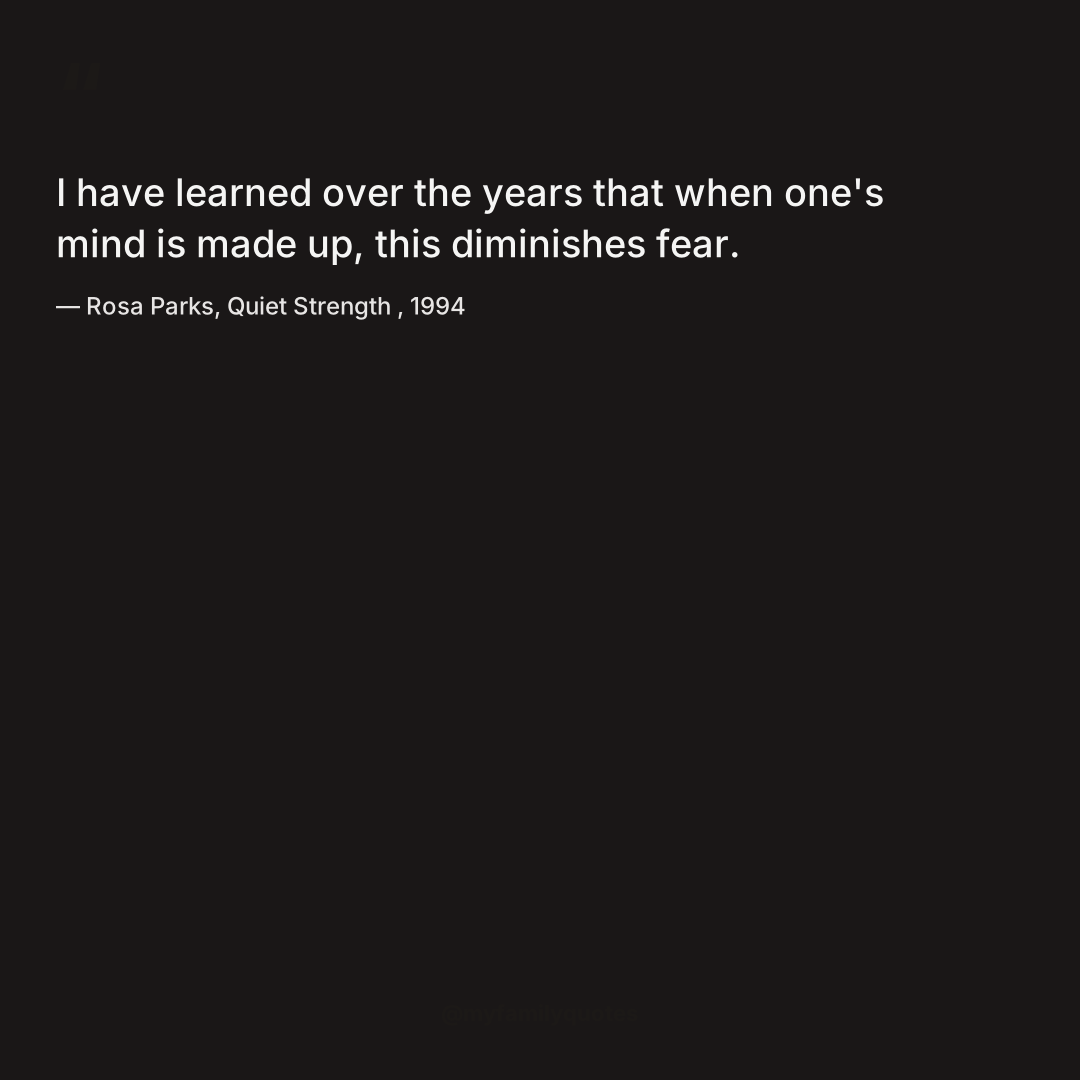
Parks published this reflection decades after the Montgomery bus boycott, framing her historic defiance as a calculated decision rather than a spontaneous burst of heroism.
"Courage is the price that life exacts for granting peace." — Amelia Earhart, Courage, 1928
Earhart wrote this line in a poem published years before her final flight, stripping away the glamour of aviation to document the psychological toll of her transatlantic ambitions.
"You gain strength, courage and confidence by every experience in which you really stop to look fear in the face." — Eleanor Roosevelt, You Learn by Living, 1960
Roosevelt's advice to postwar America remains deeply pragmatic, focusing on incremental exposure to anxiety rather than sudden, cinematic displays of valor.
Moving Away From Armor
For centuries, women were taught that vulnerability was synonymous with weakness. Literature eventually provided a counter-narrative, suggesting that establishing boundaries and claiming emotional space requires immense fortitude. Readers looking for words for facing sudden adversity often find more comfort in these quiet assertions of self than in traditional battle cries.
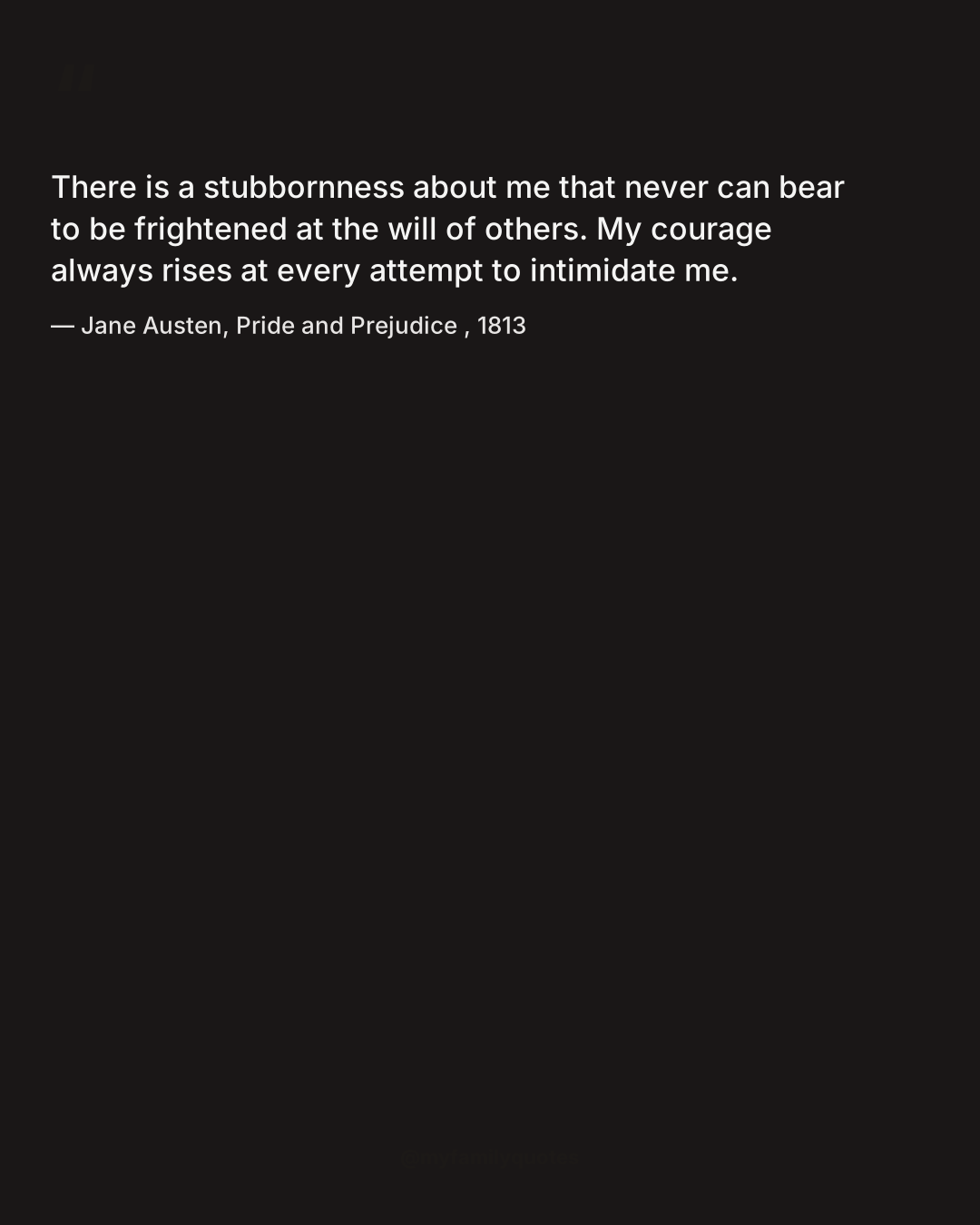
"There is a stubbornness about me that never can bear to be frightened at the will of others. My courage always rises at every attempt to intimidate me." — Jane Austen, Pride and Prejudice, 1813
Through Elizabeth Bennet, Austen articulated a radical form of self-advocacy in Georgian England, proving that social noncompliance requires its own distinct brand of steel.
"Life shrinks or expands in proportion to one's courage." — Anaïs Nin, The Diary of Anaïs Nin, Vol. 3, 1969
Nin tied bravery directly to the scale of a woman's existence, suggesting that fear literally confines physical and emotional geography if left unchecked.
"Nothing in life is to be feared, it is only to be understood. Now is the time to understand more, so that we may fear less." — Marie Curie, Our Precarious Habitat, 1970
Curie approached her groundbreaking and ultimately fatal research with clinical detachment, transforming terror into a mere problem requiring further data collection.
Sustaining Action Without Applause
The shift away from the warrior trope also acknowledges that most female bravery happens in private. There are no medals for leaving a toxic dynamic, fighting for a medical diagnosis, or starting over in a new city.
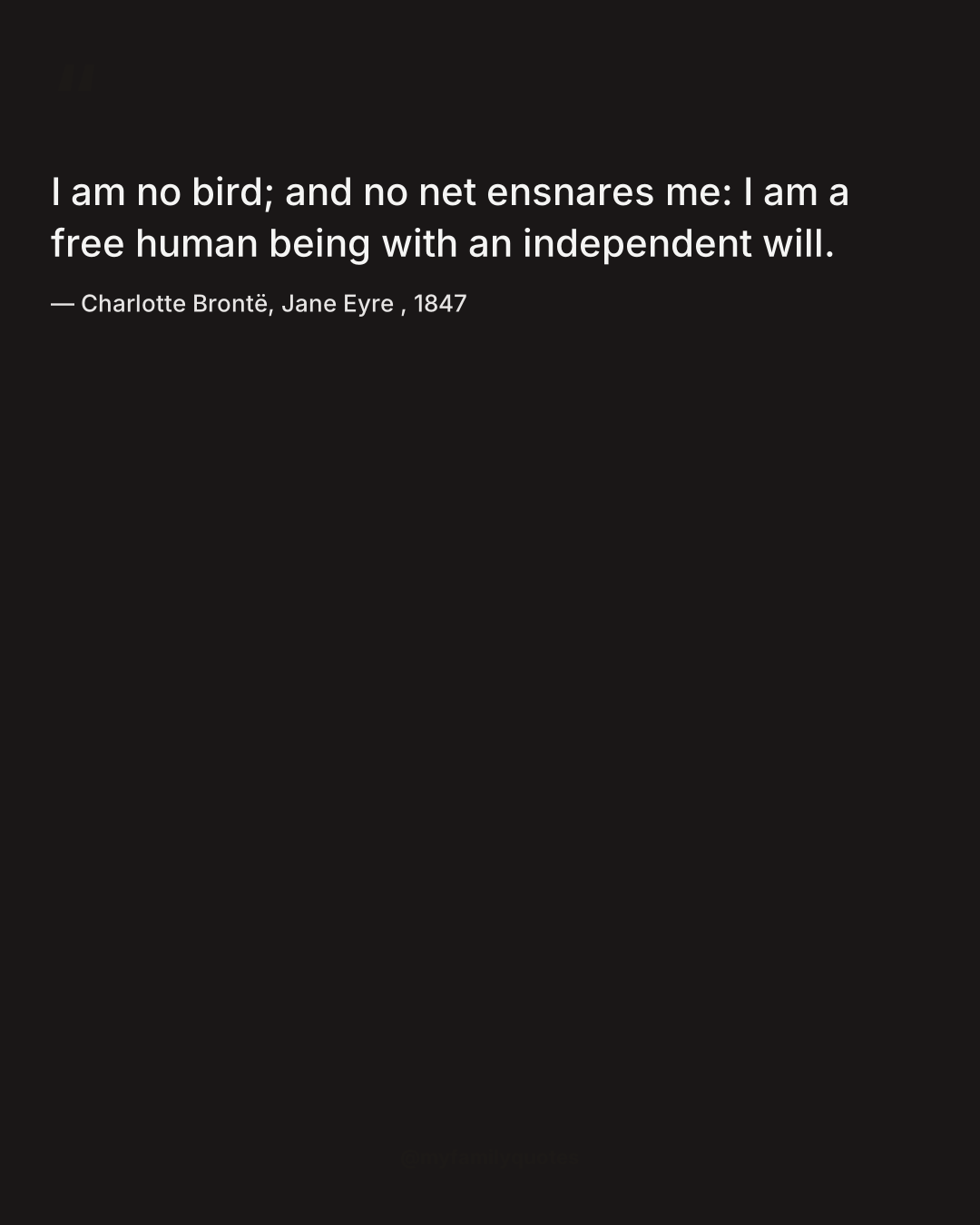
"I am no bird; and no net ensnares me: I am a free human being with an independent will." — Charlotte Brontë, Jane Eyre, 1847
Brontë gave Victorian readers a protagonist who refused to romanticize her own subjugation, framing basic autonomy as an act of profound rebellion against the class structures of 1840s Britain.
"Above all, be the heroine of your life, not the victim." — Nora Ephron, Wellesley College Commencement Address, 1996
Ephron delivered this line to graduating students as a direct challenge to the passive narratives often inherited by young women entering the workforce during the late twentieth century.
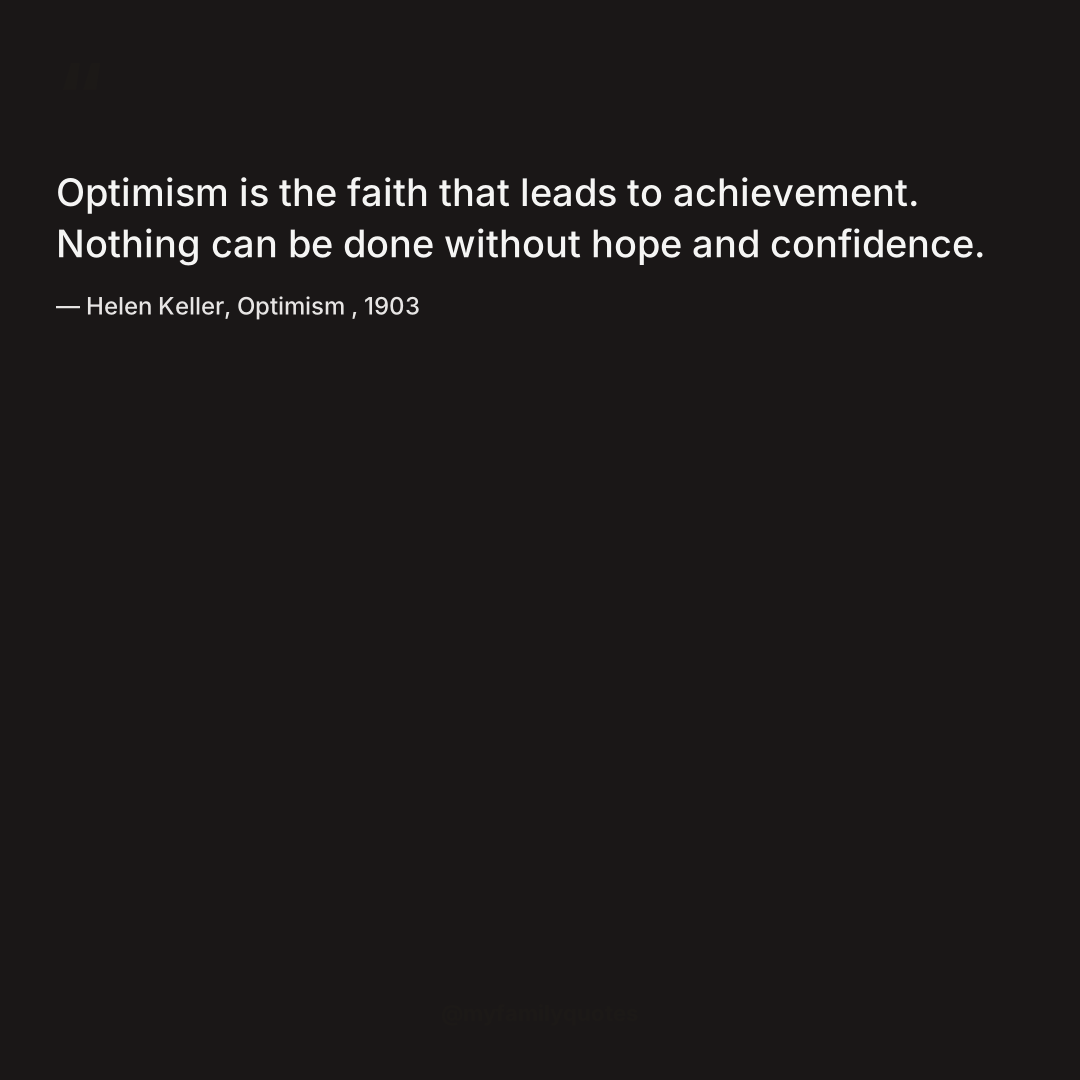
"Optimism is the faith that leads to achievement. Nothing can be done without hope and confidence." — Helen Keller, Optimism, 1903
Keller rejected the pity of her contemporaries, insisting that her capacity to shape her own future relied heavily on an active, disciplined maintenance of hope.
A Few Honest Corrections
Popular reading: True bravery requires the absence of fear.
On closer look: Most historical diaries from frontier women and early twentieth-century suffragists document intense, paralyzing anxiety right alongside their legislative and physical achievements.
Popular reading: The most famous lines were spoken from stages.
On closer look: Countless enduring sentiments about female grit were actually lifted from private correspondence, marginalia, and unedited journals never intended for public consumption.
Popular reading: Stoicism is the ultimate goal.
On closer look: Modern psychological understanding reframes emotional suppression as a liability, elevating vulnerability and boundary-setting as the true metrics of psychological resilience.