12 Strong and Brave Quotes for Facing Adversity

"Courage is the price that life exacts for granting peace." Amelia Earhart wrote those words long before her final flight, capturing a truth that transcends aviation. Bravery rarely looks like the cinematic triumphs we expect. It usually resembles a quiet refusal to yield when the odds turn hostile. I learned this watching my aunt in a cramped kitchen in Chicago, 2005, as she sorted medical bills with a steady hand and a terrifying diagnosis looming. She did not weep or shout. She simply made the next necessary phone call, demonstrating a fortitude that many scholars analyzing how modern society processes collective fear often overlook.
Why Do We Misunderstand the Nature of Bravery?
We frequently confuse fearlessness with true bravery, assuming that heroes simply do not feel terror. In reality, courage requires the presence of fear as a prerequisite for action. Without the visceral threat of failure or loss, stepping forward is merely a reflex rather than a deliberate choice to endure.
"Courage is resistance to fear, mastery of fear—not absence of fear." — Mark Twain, Pudd'nhead Wilson, 1894
Twain understood that the biological response to danger cannot be erased, only managed through sheer force of will during critical moments.
"Have courage for the great sorrows of life and patience for the small ones." — Victor Hugo, Letter to Paul Meurice, 1867
The French novelist recognized that daily irritations require a different kind of stamina than catastrophic grief, separating the monumental from the mundane.
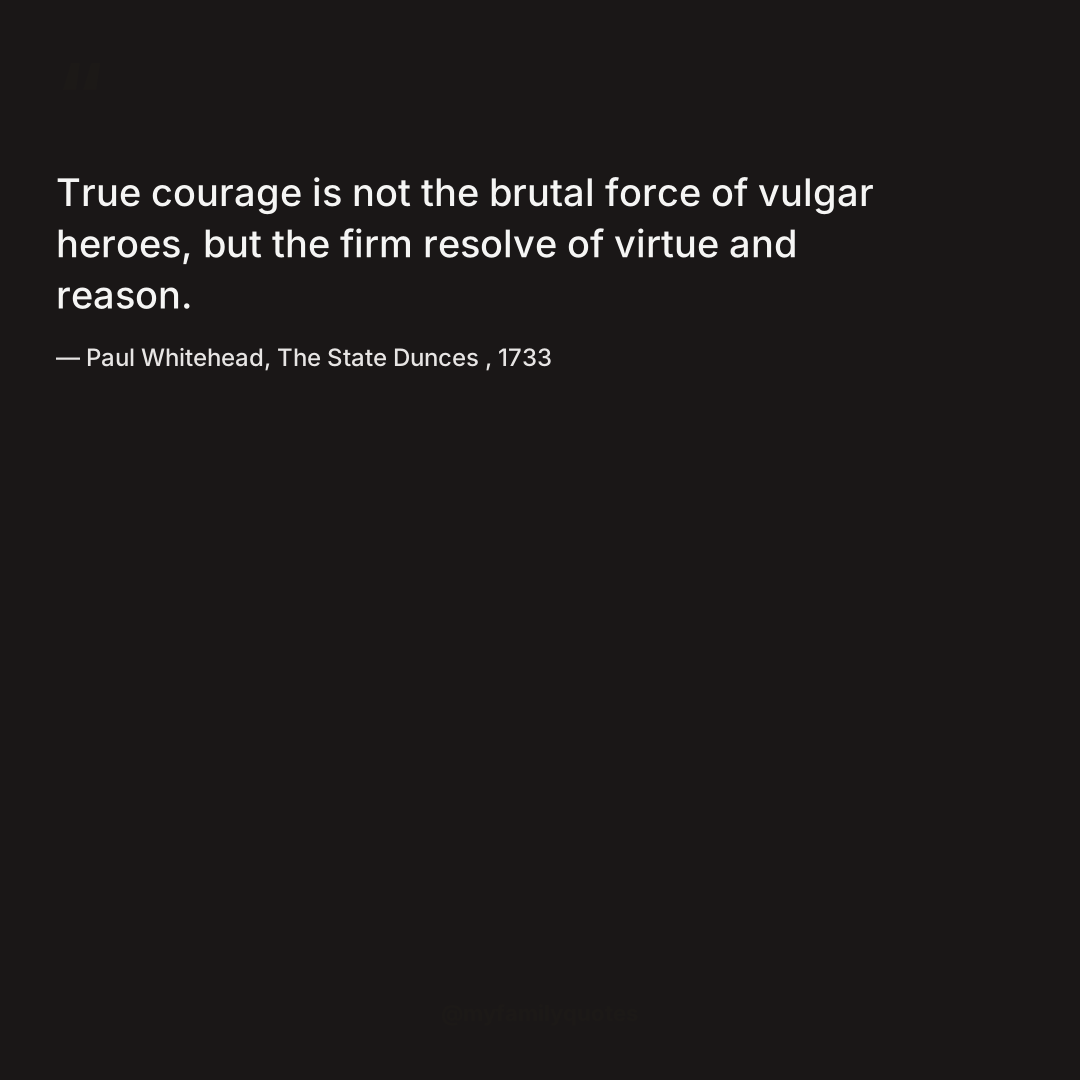
"True courage is not the brutal force of vulgar heroes, but the firm resolve of virtue and reason." — Paul Whitehead, The State Dunces, 1733
Whitehead challenged the militaristic definitions of his era, arguing that intellectual and moral steadfastness outranks physical aggression on the battlefield.
"A hero is no braver than an ordinary man, but he is brave five minutes longer." — Ralph Waldo Emerson, Journals, 1860
Emerson quantified the margin of victory in human struggles, suggesting that endurance matters far more than initial bursts of enthusiasm. This perspective aligns closely with faith-based approaches to uncertainty that prioritize long-term spiritual resilience.
How Does Courage Manifest in Daily Hardships?
Daily fortitude often involves mundane persistence rather than grand public gestures of defiance. It appears in the quiet maintenance of household stability during financial crises or the emotional labor required to support grieving relatives. This sustained effort demands far more stamina than a single moment of adrenaline-fueled heroism.
"The secret of happiness is freedom, and the secret of freedom is courage." — Thucydides, History of the Peloponnesian War, 431 BC
Writing during a devastating conflict, the Greek historian linked personal liberty directly to the willingness to defend one's boundaries against external pressure.
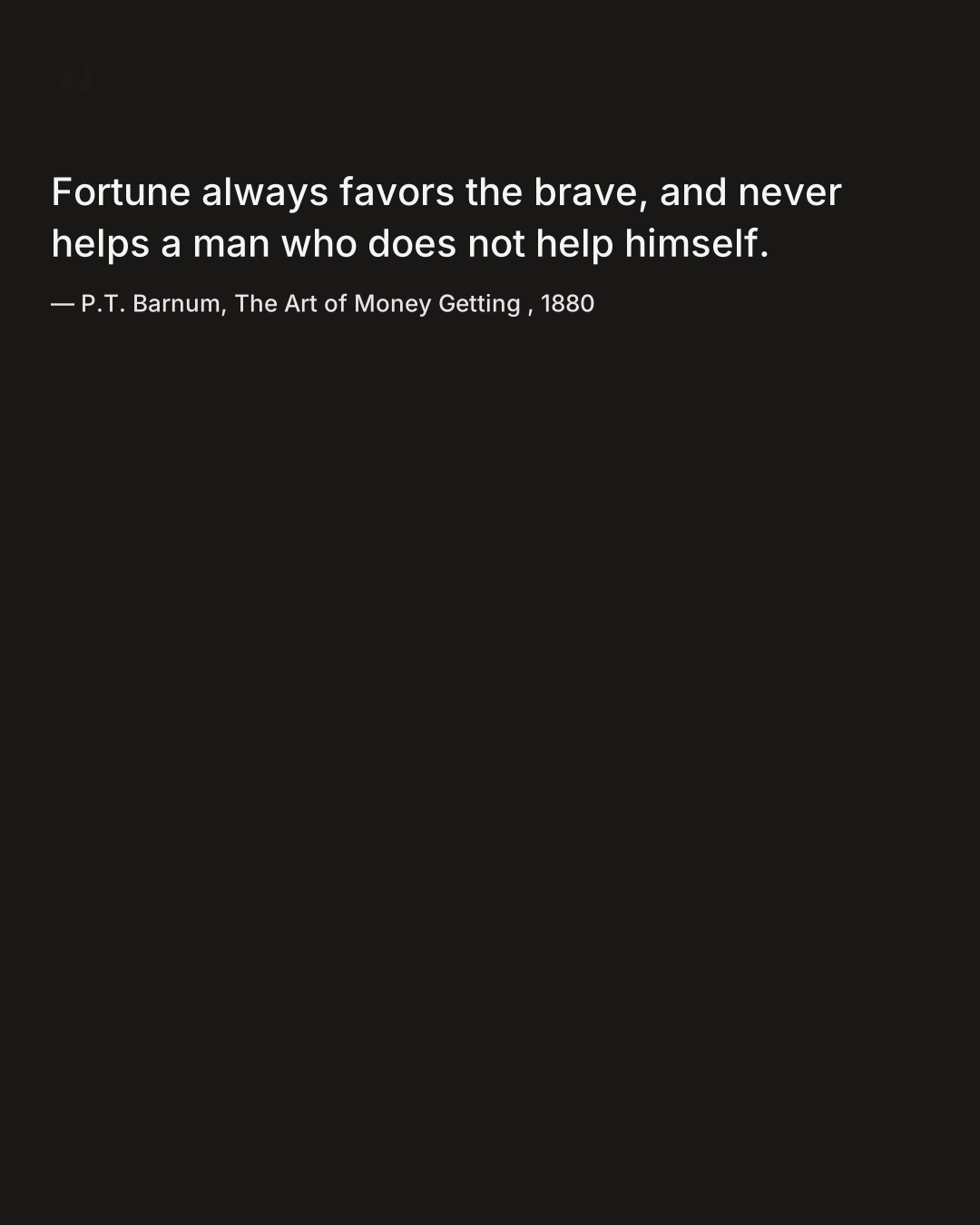
"Fortune always favors the brave, and never helps a man who does not help himself." — P.T. Barnum, The Art of Money Getting, 1880
Barnum applied ancient maxims to nineteenth-century commerce, insisting that economic survival requires an aggressive willingness to risk capital and reputation.
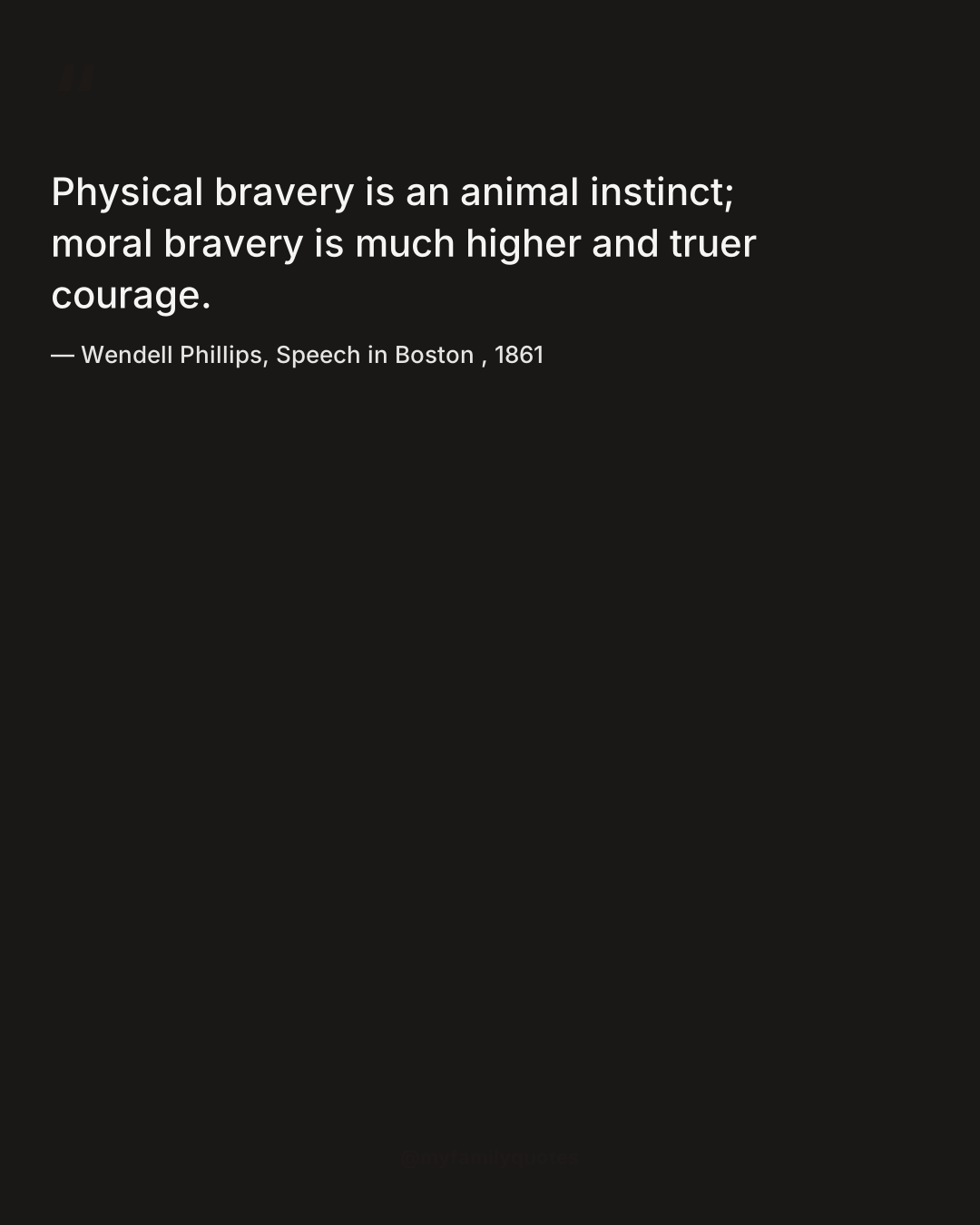
"Physical bravery is an animal instinct; moral bravery is much higher and truer courage." — Wendell Phillips, Speech in Boston, 1861
The abolitionist orator delivered this distinction to audiences facing the outbreak of the American Civil War, elevating ethical stances above mere combat readiness.
"There is no courage without fear." — Inspired by Seneca
Stoic philosophy consistently frames bravery as an operational tactic used to navigate terror, rather than a magical shield that prevents emotional distress. Such stoicism often underpins shared endurance during difficult seasons when entire households face external threats.
What Can Historical Figures Teach Us About Resolve?
Leaders from the past demonstrate that resolve is cultivated through repeated exposure to adversity over decades. Their letters and speeches reveal a pragmatic approach to hardship, treating obstacles as inevitable conditions rather than surprising injustices. Studying their words provides a blueprint for navigating our own contemporary crises.
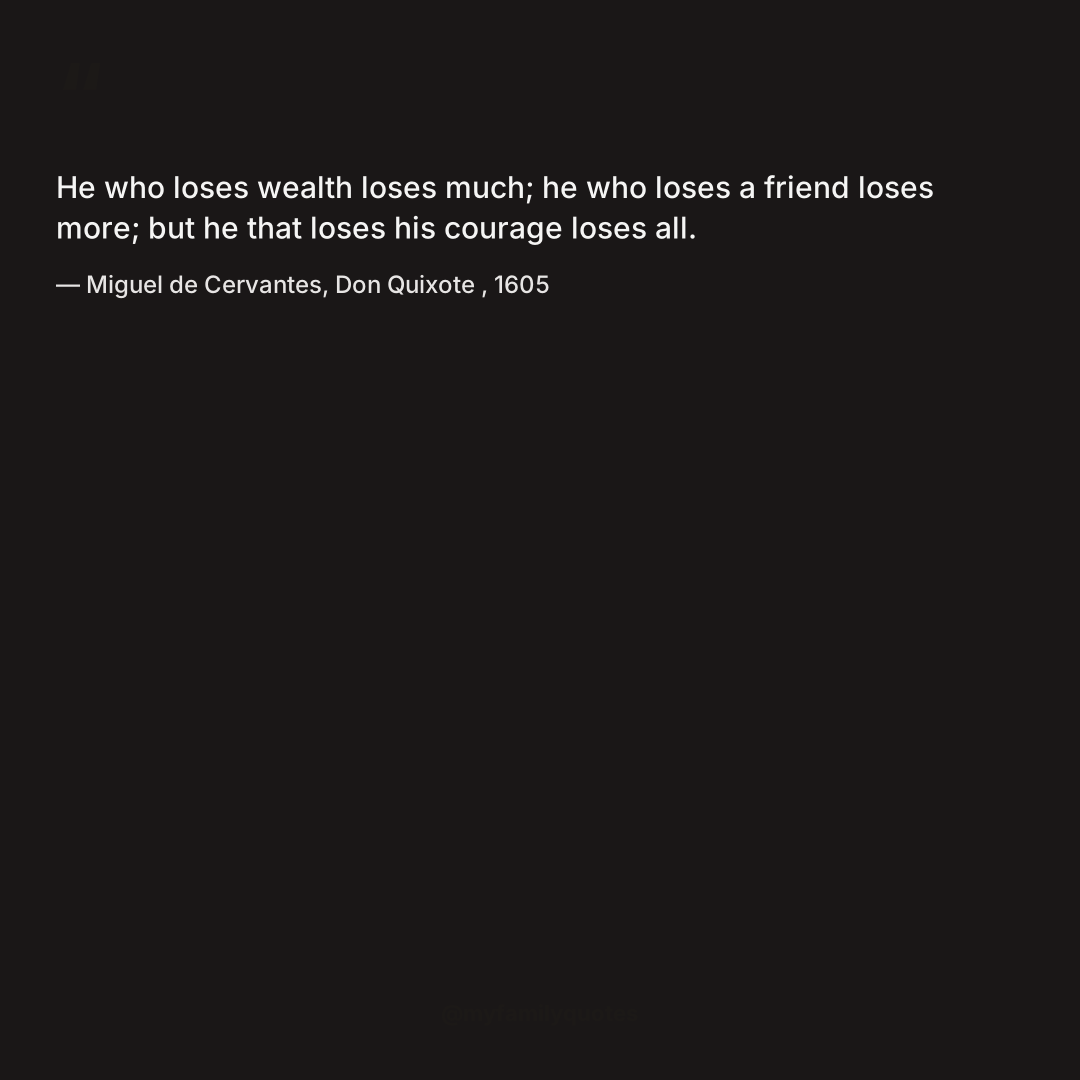
"He who loses wealth loses much; he who loses a friend loses more; but he that loses his courage loses all." — Miguel de Cervantes, Don Quixote, 1605
Cervantes wrote these words after surviving years of captivity in Algiers, embedding his own hard-won survival tactics into his fictional knight's worldview.
"Courage is a peculiar kind of fear." — Charles Rann Kennedy, The Terrible Meek, 1912
Kennedy's controversial play reframed the crucifixion narrative, suggesting that the highest forms of bravery look indistinguishable from absolute vulnerability.
"Courage is the ladder on which all the other virtues mount." — Clare Boothe Luce, Europe in the Spring, 1940
Observing the collapse of European democracies, Luce concluded that honesty, compassion, and justice cannot function if the people holding those values refuse to defend them. This sentiment mirrors the necessity of the ties that hold households together under immense societal strain.
"It takes courage to grow up and become who you really are." — E.E. Cummings, Attributed
Though scholars debate the exact origin of this phrasing within Cummings's body of work, the sentiment perfectly captures the psychological bravery required for authentic self-actualization. Readers seeking brief expressions of profound kinship often gravitate toward these concise psychological truths.
Earhart's assertion that peace requires a price remains the most accurate assessment of human struggle. We do not summon bravery to conquer the world, but to secure a quiet space within it. The aunt sorting bills in a Chicago kitchen and the historian documenting a war in ancient Greece share the exact same resolve.
Questions Readers Send In
How do I find quotes about bravery that avoid toxic positivity?
Look for historical sources written during actual conflicts or periods of personal loss, such as letters from the American Civil War or Stoic philosophy. These texts acknowledge the reality of suffering rather than simply demanding a cheerful attitude.
Why are so many modern quotes about courage misattributed?
Social media platforms incentivize short, punchy text overlaid on aesthetic images, which strips away historical context and original authorship. Always verify a quote by searching for the specific book title and publication year before using it in a formal speech or dedication.
Can reading about historical bravery actually change my mindset?
Studying the specific, documented hardships of figures like Cervantes or Lincoln provides a realistic baseline for human endurance. Recognizing that historical icons felt terror and uncertainty helps normalize our own psychological responses to modern crises.