Why Shared Language Helps Children Navigate Sibling Chaos
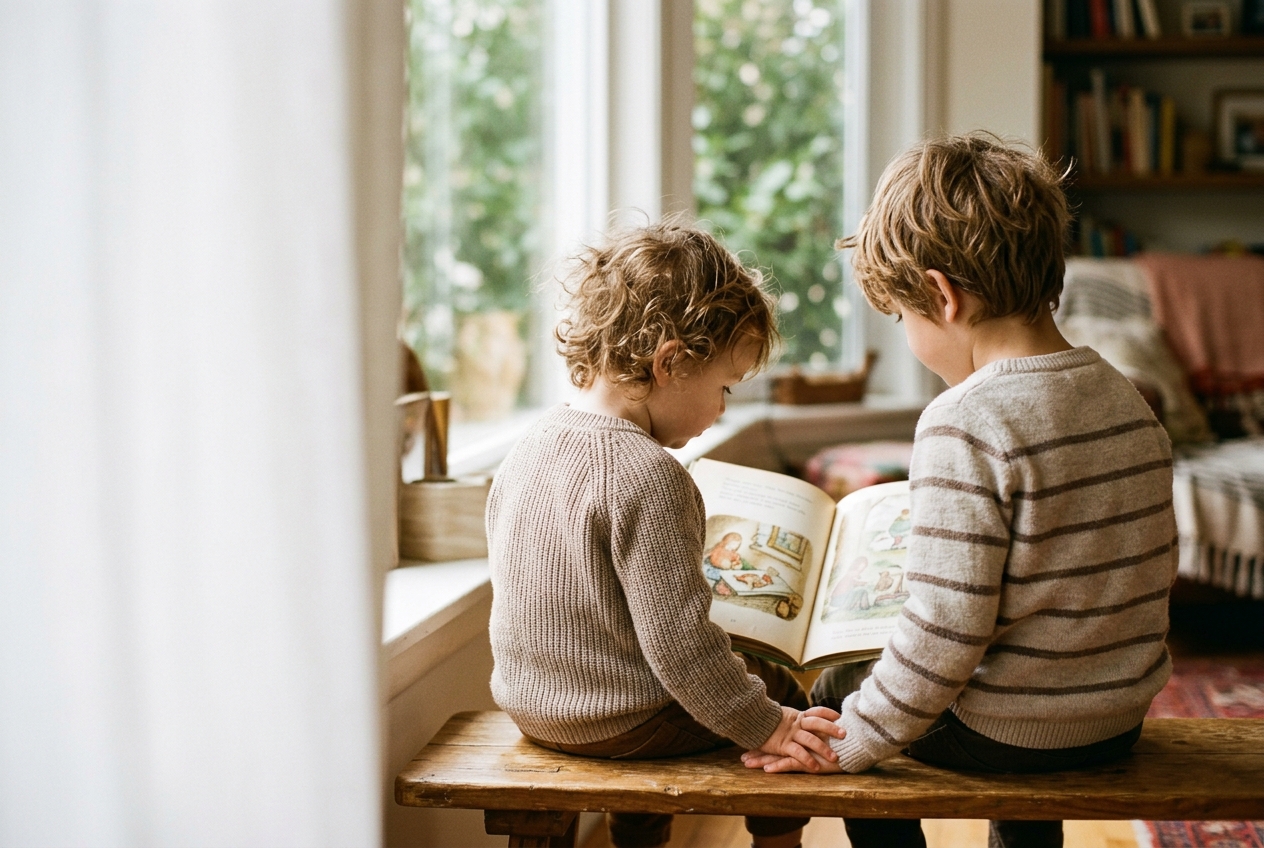
Do children actually understand the weight of the words they hurl at their brothers and sisters? Can a simple phrase borrowed from a book or a cartoon shift a bitter standoff into a moment of shared understanding? Watching my younger sister dictate the rules of a makeshift fort in our basement in Evanston, Illinois, 1994, I realized how quickly siblings develop their own dialect. They construct a private language out of half-remembered television lines, parental scoldings, and sheer invention. This linguistic sandbox is where they first test the boundaries of empathy and retaliation.
Children experience intense emotions long before they possess the neurological hardware to articulate them clearly. A stolen toy or a perceived slight at the dinner table feels like a catastrophic injustice. Providing them with a structured vocabulary gives them a proxy for their overwhelming feelings. They borrow phrases to shield themselves from vulnerability while still communicating their exact level of outrage or devotion to the person sharing their bedroom.
The Mechanics of Borrowed Vocabulary
A child cannot easily say they feel overshadowed by an older sibling's achievements. They can, however, deploy a memorized line from a favorite storybook to express their frustration. This borrowing of language acts as an emotional buffer. It allows children to communicate complex relational dynamics without having to invent the terminology from scratch. They rely on the words of others to map the confusing territory of their own homes.
"A sibling is the lens through which you see your childhood." — Ann Hood, Comfort, 2008
Hood captures the inescapable reality that a brother or sister shapes the primary narrative of our early years, acting as both a mirror and a rival.
When parents introduce specific literature or sayings into the household, they are essentially handing their children a toolkit for conflict resolution. Instead of resorting to physical retaliation, a child armed with the right words can articulate their boundary. This transition from physical expression to verbal negotiation marks a critical developmental milestone. You can see ways kids handle competitive feelings shift dramatically once they realize a sharp sentence holds as much power as a shoved shoulder.
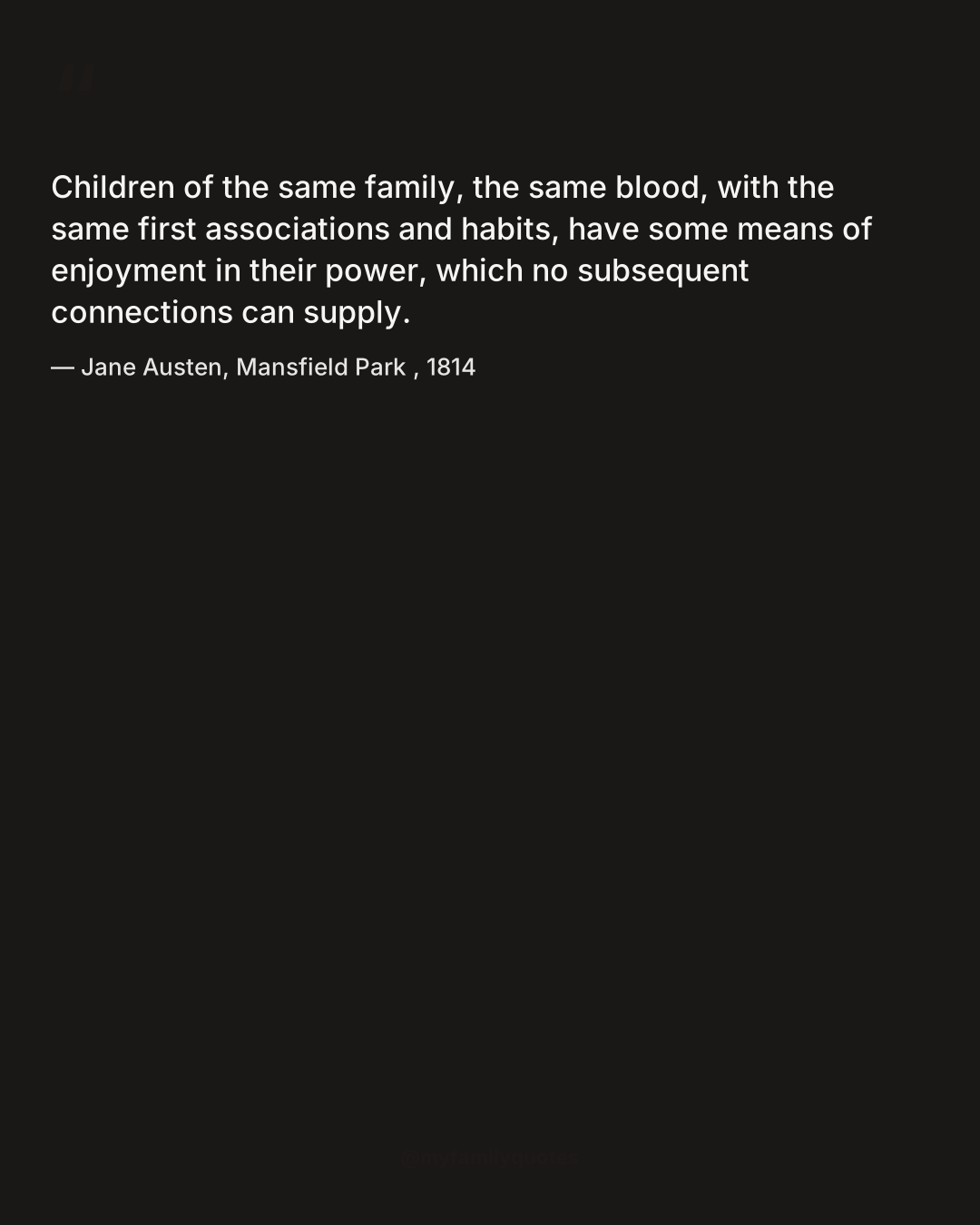
"Children of the same family, the same blood, with the same first associations and habits, have some means of enjoyment in their power, which no subsequent connections can supply." — Jane Austen, Mansfield Park, 1814
Austen recognized the unique, irreplaceable nature of the sibling bond long before modern developmental psychology formalized the concept of peer attachment.
Defusing Tension Through Predictable Scripts
The daily friction of shared living spaces requires a pressure valve. Siblings often fall into predictable patterns of argument, repeating the same disputes over television remotes or front-seat privileges. Introducing a humorous or grounding quote interrupts this cycle. It forces a pause. When children recognize a familiar phrase, the immediate tension often breaks, giving way to shared moments of household humor.
"Half the time when brothers wrestle, it's just an excuse to hug each other." — James Patterson, I Funny, 2012
Patterson frames physical roughhousing as a disguised form of affection for children who lack the direct vocabulary for tenderness.
These scripts also serve as a form of social glue. When siblings quote the same movie or repeat a specific family saying, they reinforce their membership in an exclusive club. Parents are excluded from this specific micro-culture. The shared language becomes a fortress that keeps the adult world at bay, solidifying the alliance between the children even when they are actively annoyed with one another.
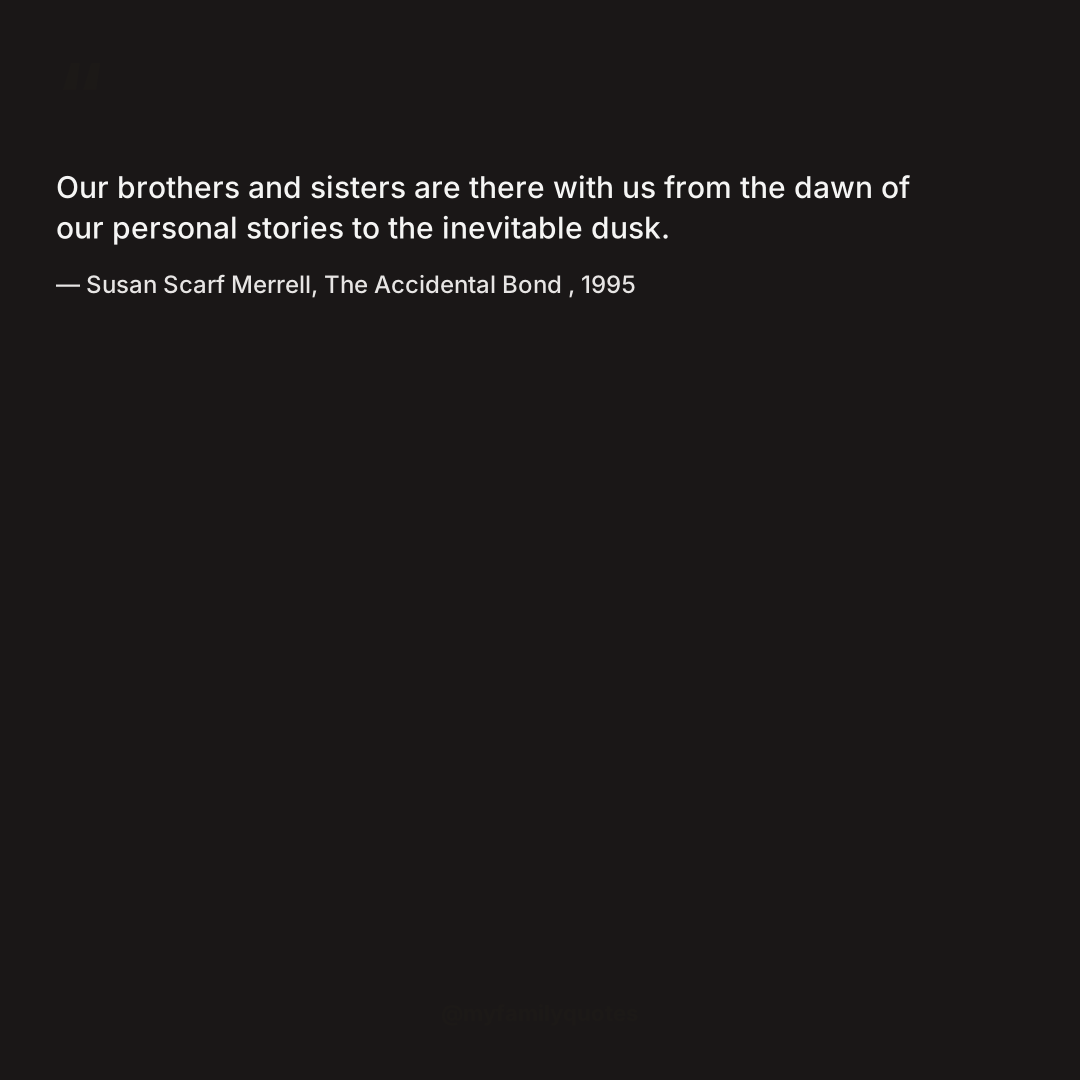
"Our brothers and sisters are there with us from the dawn of our personal stories to the inevitable dusk." — Susan Scarf Merrell, The Accidental Bond, 1995
Merrell highlights the sheer longevity of the sibling relationship, noting that it almost always outlasts the physical presence of the parents who created it.
Building a Private Micro-Culture
The words children choose to repeat to each other eventually form the foundation of their adult relationship. The inside jokes developed at age seven often survive into their forties. By observing which phrases resonate with them, we gain insight into how they view their place within the family hierarchy. The older sibling might gravitate toward quotes about leadership and responsibility, while the youngest might adopt language that emphasizes independence and rebellion.
"Sometimes being a brother is even better than being a superhero." — Marc Brown, Arthur Meets the President, 1991
Brown uses a familiar childhood archetype to elevate the everyday, often tedious role of a sibling into something aspirational and heroic.
Encouraging this linguistic development requires paying attention to the media they consume and the stories they tell. It is not about forcing them to recite profound poetry, but rather acknowledging the validity of their chosen expressions. When they find a phrase that perfectly encapsulates their sibling experience, it validates their reality. They learn that their specific brand of domestic chaos is a universal experience, documented and understood by others.
What to Carry Forward
- Children use borrowed phrases to articulate emotions that exceed their current neurological development.
- Shared quotes act as a buffer, allowing siblings to negotiate boundaries without resorting to physical conflict.
- A private vocabulary creates an exclusive micro-culture that strengthens the sibling alliance against the adult world.
- The specific language children adopt often reflects their perceived role and status within the family hierarchy.
- Humorous scripts can interrupt repetitive arguments by breaking the tension and forcing a cognitive pause.
Further reading
- brief messages for siblings
- discussions about developing early courage
- understanding when family dynamics fracture
- concise sayings for daily reflection
The language siblings build together outlasts the childhood bedrooms where those words were first spoken. By giving them access to a broader vocabulary of connection and frustration, we equip them to handle the complexities of their longest-lasting relationships. They carry these borrowed scripts into adulthood, relying on them whenever the old dynamics resurface.