18 Short Funny Sibling Quotes Highlighting Rivalries
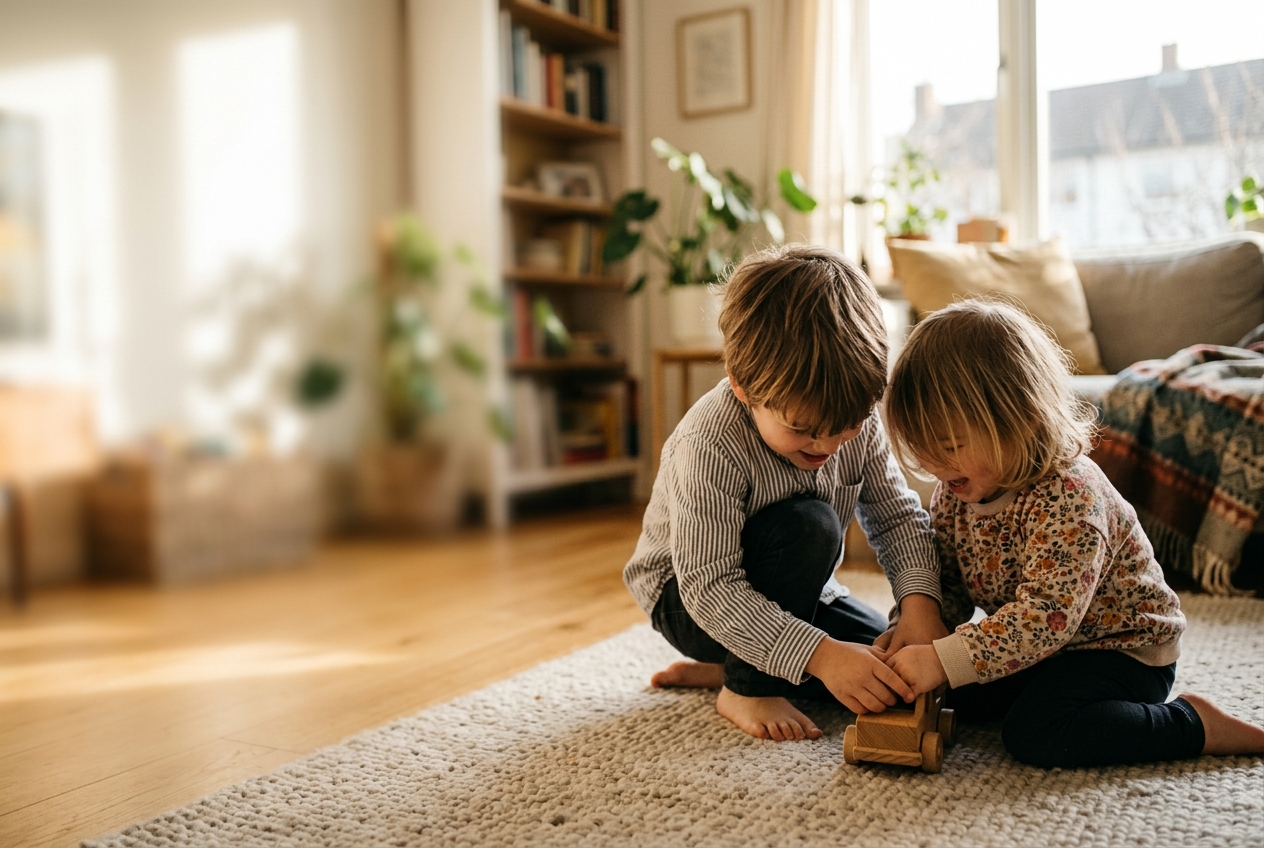
I still remember the standoff with my older brother in our cramped kitchen in Albany, 2009, over a single remaining slice of cold pizza. We both had our hands on the cardboard box, neither willing to concede defeat, employing a silent communication system built entirely on glaring and slight elbow movements. That specific brand of stubbornness exists only between people who have shared a bathroom for a decade. If we could sit down with authors, comedians, and cultural observers today to discuss this peculiar bond, the conversation would likely skip past the sentimental platitudes and head straight for the grievances. The dialogue that follows explores the territorial disputes, the forced proximity, and the bizarre alliances that define growing up under the same roof.
On Territorial Disputes
We begin the discussion by addressing the physical and psychological boundaries that brothers and sisters constantly test. Comedian Sam Levenson captures the essence of this early training ground for conflict resolution.
"Siblings are the people we practice on, the people who teach us about fairness and cooperation and kindness and quite a lot about pangs of jealousy." — Sam Levenson, In One Era and Out the Other, 1973
Levenson points out that the home is essentially a laboratory where children test the limits of human patience. Author Linda Sunshine takes this a step further, noting the surveillance aspect of living with a sister.
"More than Santa Claus, your sister knows when you've been bad and good." — Linda Sunshine, Mom Loves Me Best, 1990
Sunshine highlights the impossibility of maintaining a pristine reputation when someone else has witnessed every childhood transgression. This constant observation naturally leads to shared laughter among relatives, even when the jokes are at each other's expense. The conversation shifts to the protective, yet highly critical nature of older siblings.
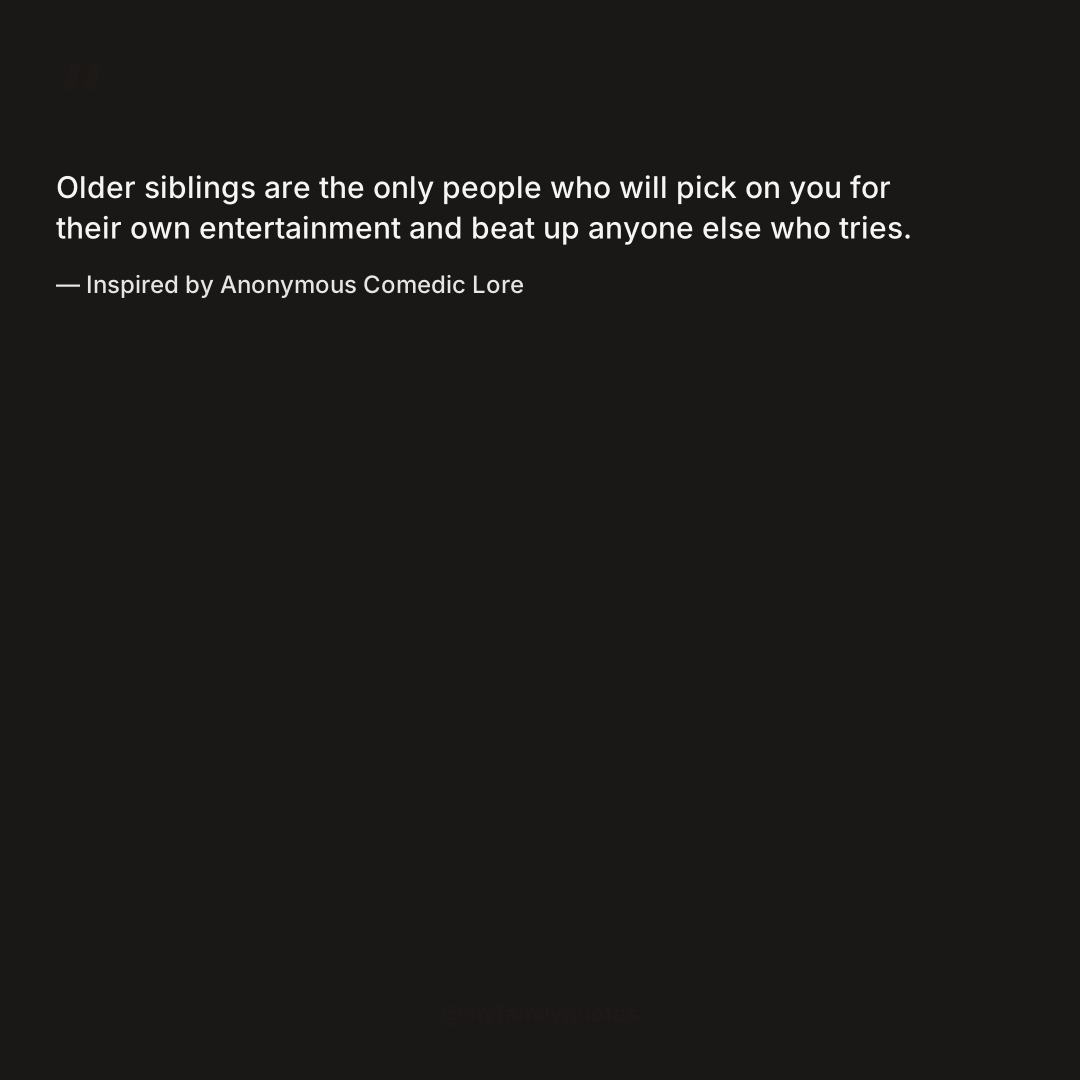
"Older siblings are the only people who will pick on you for their own entertainment and beat up anyone else who tries." — Inspired by Anonymous Comedic Lore
This duality—acting as both tormentor and bodyguard—is a hallmark of the sibling experience. Novelist Jane Austen, writing over two centuries ago, observed these strange dynamics with her characteristic sharp wit.
"What strange creatures brothers are!" — Jane Austen, Mansfield Park, 1814
Austen's brief exclamation through the character Mary Crawford remains entirely relevant to anyone who has watched a brother attempt a poorly planned household stunt. The frustration is universal, transcending eras and social classes.
On Forced Proximity
Moving the dialogue toward the reality of shared living spaces, we examine how constant contact breeds a unique brand of humor. Writer Charlotte Gray remarks on the futility of deception within the family unit.
"You can kid the world, but not your sister." — Charlotte Gray, The Sisterhood, 2000
Gray understands that sisters possess an internal lie detector calibrated specifically to your voice. This inability to hide one's true nature often highlights the inherent absurdity of kinship, where pretenses are dropped at the front door. Garrison Keillor offers a more physiological memory of this forced proximity.
"The highlight of my childhood was making my brother laugh so hard that food came out his nose." — Garrison Keillor, Lake Wobegon Days, 1985
Keillor grounds the sibling relationship in visceral, slightly gross physical comedy that adults rarely replicate. The humor often arises from a desire to disrupt the peace, a sentiment echoed by author Patricia Fleming.
"The rule of siblings: If your sibling gets something you want, you try to take it, break it, or say it's no good." — Patricia Fleming, Sibling Rivalry, 1998
Fleming distills the economic theory of childhood down to its most petty, destructive impulses. When these impulses clash with parental authority, the resulting friction often mirrors the humor found in generational chaos, as parents try to mediate disputes over borrowed sweaters.
"Half the time when brothers wrestle, it's just an excuse to hug each other." — James Patterson, I Funny, 2012
Patterson suggests that physical altercations are often just poorly disguised displays of affection. This physical communication is necessary when emotional vocabulary is still developing.
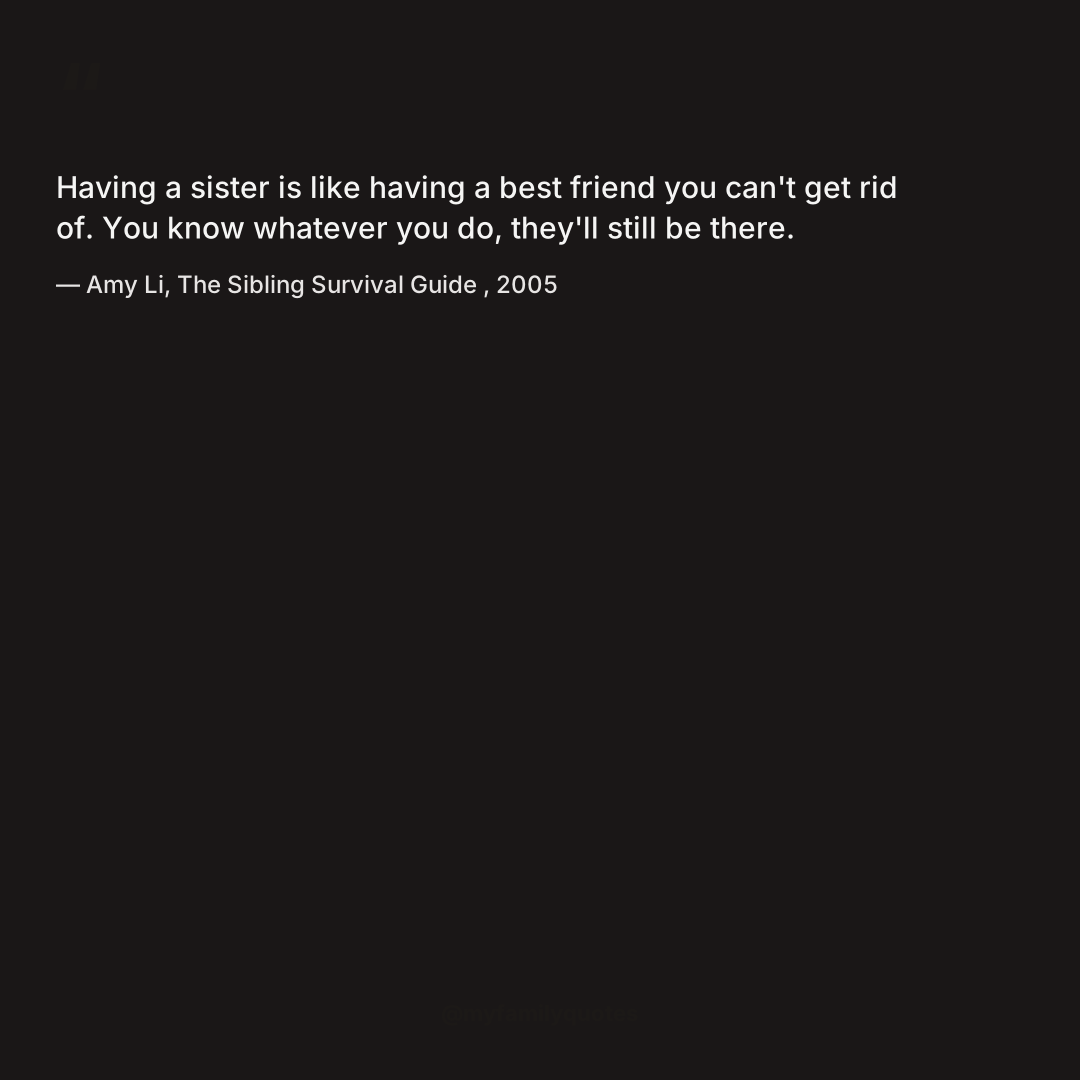
"Having a sister is like having a best friend you can't get rid of. You know whatever you do, they'll still be there." — Amy Li, The Sibling Survival Guide, 2005
Li summarizes the claustrophobic comfort of knowing someone is legally bound to associate with you for life. The realization that you cannot easily escape these relationships forces a certain level of begrudging acceptance.
On Shifting Alliances
Our hypothetical panel turns to the political maneuvering required to survive a multi-child household. The alliances formed against parents or neighborhood rivals are legendary, though highly unstable.
"I smile because you're my sister. I laugh because there's nothing you can do about it." — Anonymous
This common piece of folklore captures the smug satisfaction of knowing your sister is trapped in the family tree with you. The humor serves as a defense mechanism, especially easing tension during holiday gatherings when old rivalries flare up over dinner seating arrangements.
"If you want to know how your girl will treat you after marriage, just listen to her talking to her little brother." — Sam Levenson, Everything But Money, 1966
Levenson returns to offer a warning to future spouses, suggesting that the unfiltered impatience directed at a younger brother is the truest measure of character. The mask of politeness simply does not exist in the presence of a younger sibling.
"I grew up with a younger brother, so I know what it's like to be a dictator." — Inspired by Stand-up Comedy Tropes
The absolute power wielded by an older sibling over the television remote is a corrupting force. This dynamic shifts only when the younger sibling learns how to effectively leverage parental sympathy.
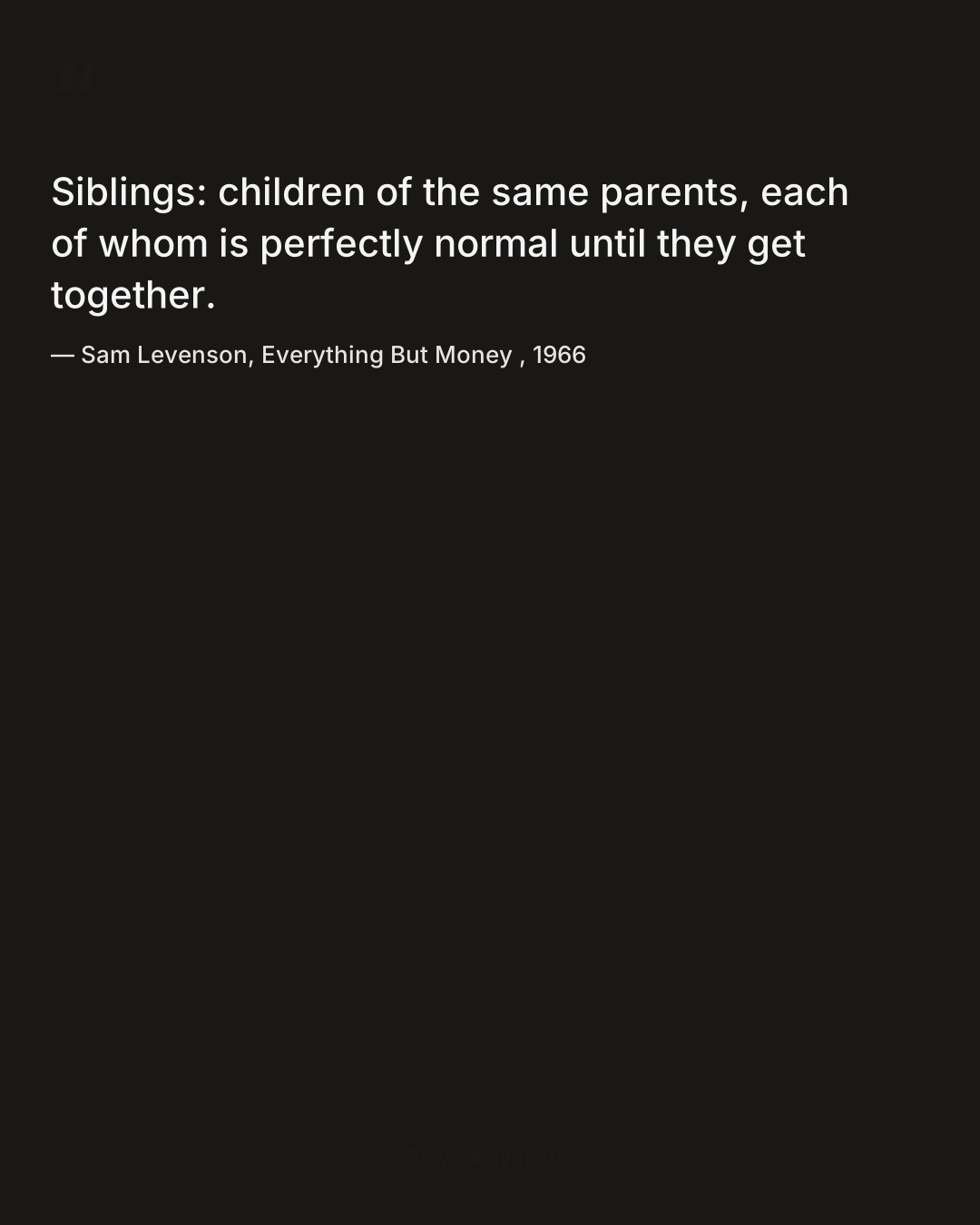
"Siblings: children of the same parents, each of whom is perfectly normal until they get together." — Sam Levenson, Everything But Money, 1966
Levenson accurately diagnoses the phenomenon where perfectly rational adults regress into bickering teenagers the moment they cross the threshold of their childhood home. The chemical reaction of their combined presence overrides years of maturity.
"Children of the same family, the same blood, with the same first associations and habits, have some means of enjoyment in their power, which no subsequent connections can supply." — Jane Austen, Mansfield Park, 1814
Austen reminds the panel that despite the constant irritation, the shared foundational memories create an exclusive, impenetrable club. No outsider can ever fully decode the inside jokes built over decades of shared breakfasts.
On Unspoken Truces
As the conversation winds down, we look at the quiet moments of solidarity that punctuate the endless teasing. These truces are rarely spoken aloud, but they form the bedrock of the relationship.
"A sister is a little bit of childhood that can never be lost." — Marion C. Garretty, A Little Spoonful of Chicken Soup for the Soul, 1996
Garretty leans into the sentimentality, but the truth remains that siblings serve as the physical archives of our early years. When memory fails, a brother or sister is there to correct the historical record, usually to make you look worse.
"My sister and I are so close that we finish each other's sentences and often wonder whose memories belong to whom." — Shannon Celebi, Small Family Truths, 2011
Celebi describes the blurring of identity that happens when you spend your formative years breathing the exact same air as another person. This enmeshment can be terrifying, which is when familial bonds fracture if boundaries are not eventually established.
"A sibling may be the keeper of one's identity, the only person with the keys to one's unfettered, more fundamental self." — Marian Sandmaier, Original Kin, 1994
Sandmaier elevates the sibling role from mere housemate to the guardian of your authentic personality. They are the only people who know exactly how ridiculous you looked in middle school and love you anyway.
"There is no love like the love for a brother. There is no love like the love from a brother." — Astrid Alauda, Family Ties, 2008
Alauda closes the dialogue with a simple, symmetrical truth about the durability of this specific affection. The standoff over the cold pizza in Albany eventually ended not with a fight, but with a reluctant compromise and a shared joke about our father's terrible cooking.
What People Usually Get Wrong
Common claim: Sibling humor is always rooted in deep-seated resentment.
Closer to the evidence: While some jokes touch on actual grievances, developmental psychologists note that teasing between brothers and sisters is primarily a safe mechanism for testing social boundaries. The humor acts as a pressure valve, allowing children to express frustration without causing permanent damage to the relationship structure.
Common claim: Older siblings outgrow the urge to prank their younger counterparts.
Closer to the evidence: Observational data from family reunions shows that regression to childhood roles is almost instantaneous. A fifty-year-old executive is just as likely to hide a younger sibling's keys today as they were to hide their toys in 1985, proving that the comedic dynamic rarely matures past adolescence.
Common claim: Short, funny quotes about siblings lack emotional depth.
Closer to the evidence: Brevity often requires a sharper understanding of the subject matter. A comedian summarizing the sibling experience in ten words usually relies on universally recognized truths about shared trauma and forced loyalty, packing complex psychological observations into a single punchline.