Why Courage Quotes for Women Defy the Softness of Self-Care

Modern commercial empowerment often frames resilience as a spa day. Sitting on a hand-me-down sofa in a cramped studio apartment in Chicago, 2012, I realized that the pastel-colored posters telling me to "stay strong" lacked the teeth I actually needed to survive a failing career. Historical records and literary archives tell a decidedly different story about what it costs to stand one's ground. The archival language of female bravery is rarely soft, gentle, or primarily concerned with internal healing. It is entirely focused on friction.
When historians catalog how resilience transfers between generations, the resulting text reveals an ongoing negotiation with power structures, societal expectations, and legal disenfranchisement. The rhetoric of bravery in these contexts serves as a tactical manual rather than a therapeutic exercise. Women speaking on the record about fear usually do so while actively dismantling a barrier in front of them.
The Rejection of Passive Endurance
Early feminist literature frequently separates the concept of suffering from the concept of courage. Enduring terrible conditions was an expected baseline for women in the nineteenth century; actively changing those conditions required a specific vocabulary of defiance.
"I am not afraid of storms, for I am learning how to sail my ship." — Louisa May Alcott, Little Women, 1868
Delivered by the relentlessly pragmatic Amy March, this line strips away the romanticization of victimhood to center technical competence over emotional endurance.
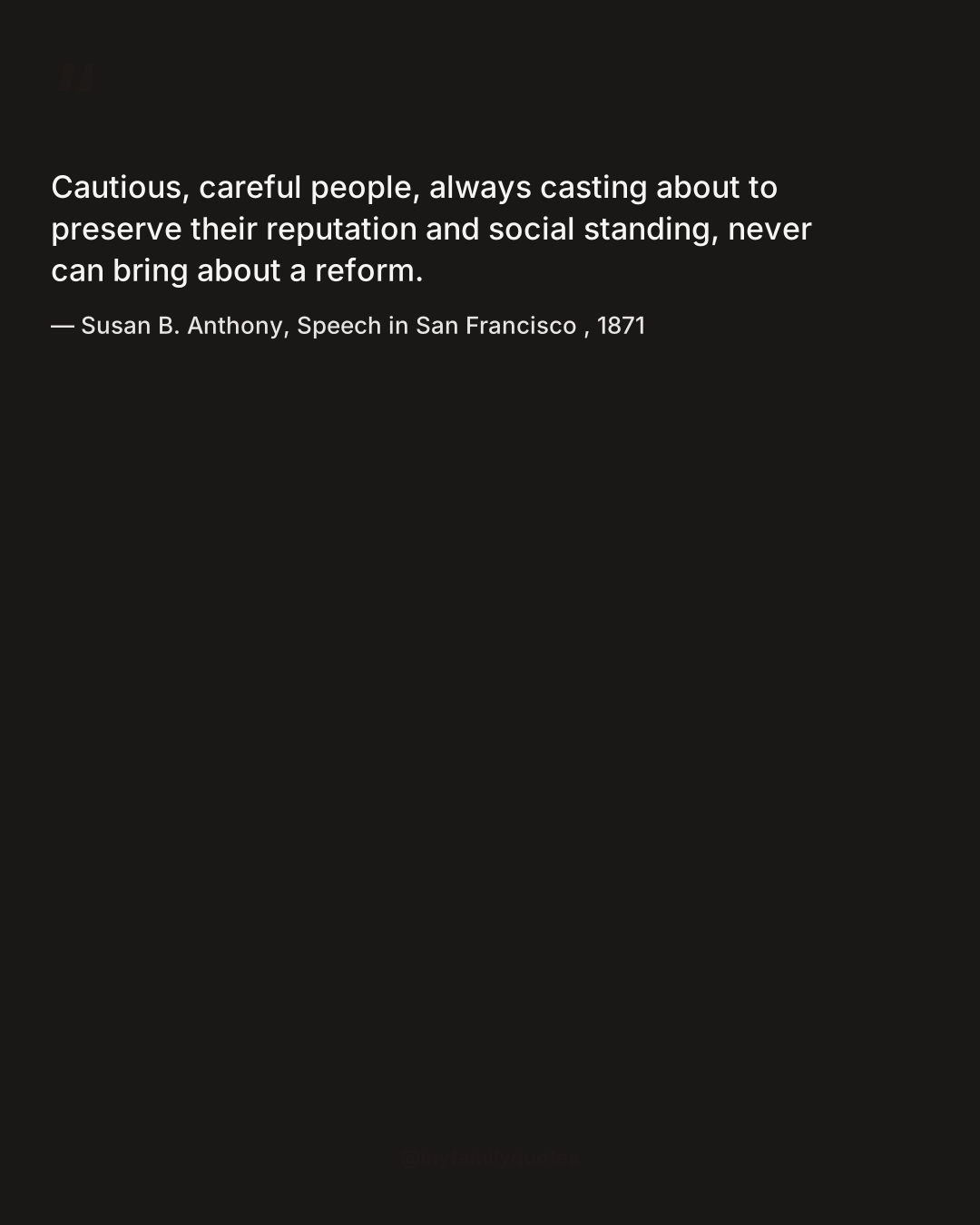
"Cautious, careful people, always casting about to preserve their reputation and social standing, never can bring about a reform." — Susan B. Anthony, Speech in San Francisco, 1871
Anthony addressed these words directly to suffragettes who feared public backlash, explicitly identifying social polite behavior as the enemy of political progress.
The distinction Anthony draws forces a choice between respectability and effectiveness. You cannot maintain a spotless reputation while upending the social order that governs that reputation. Understanding why maintaining peace often requires conflict remains a central theme in organizing movements.
The Mechanics of Taking Up Space
By the mid-twentieth century, the language shifted from acquiring basic legal rights to the psychological warfare of existing in hostile professional and public spaces. The battleground moved from the ballot box to the boardroom, the canvas, and the microphone.
"No one can make you feel inferior without your consent." — Eleanor Roosevelt, This Is My Story, 1937
Written as she reflected on her transformation from a painfully shy aristocrat into a highly visible political operator, Roosevelt places the locus of control squarely within the individual mind.
"Life shrinks or expands in proportion to one's courage." — Anaïs Nin, The Diary of Anaïs Nin, Vol. 3, 1969
Nin recorded this observation while navigating the male-dominated avant-garde literary circles of Paris, linking physical and intellectual freedom directly to the willingness to risk embarrassment.
These brief assertions of autonomy recognize that marginalized groups are frequently trained to self-police. Breaking that conditioning requires conscious, daily insubordination.
Quiet Defiance and Systemic Friction
The civil rights era demanded a form of courage that combined profound physical risk with strategic stoicism. The rhetoric from this period rarely bothers with the abstract concept of fearlessness; it focuses entirely on the necessity of action despite terror.
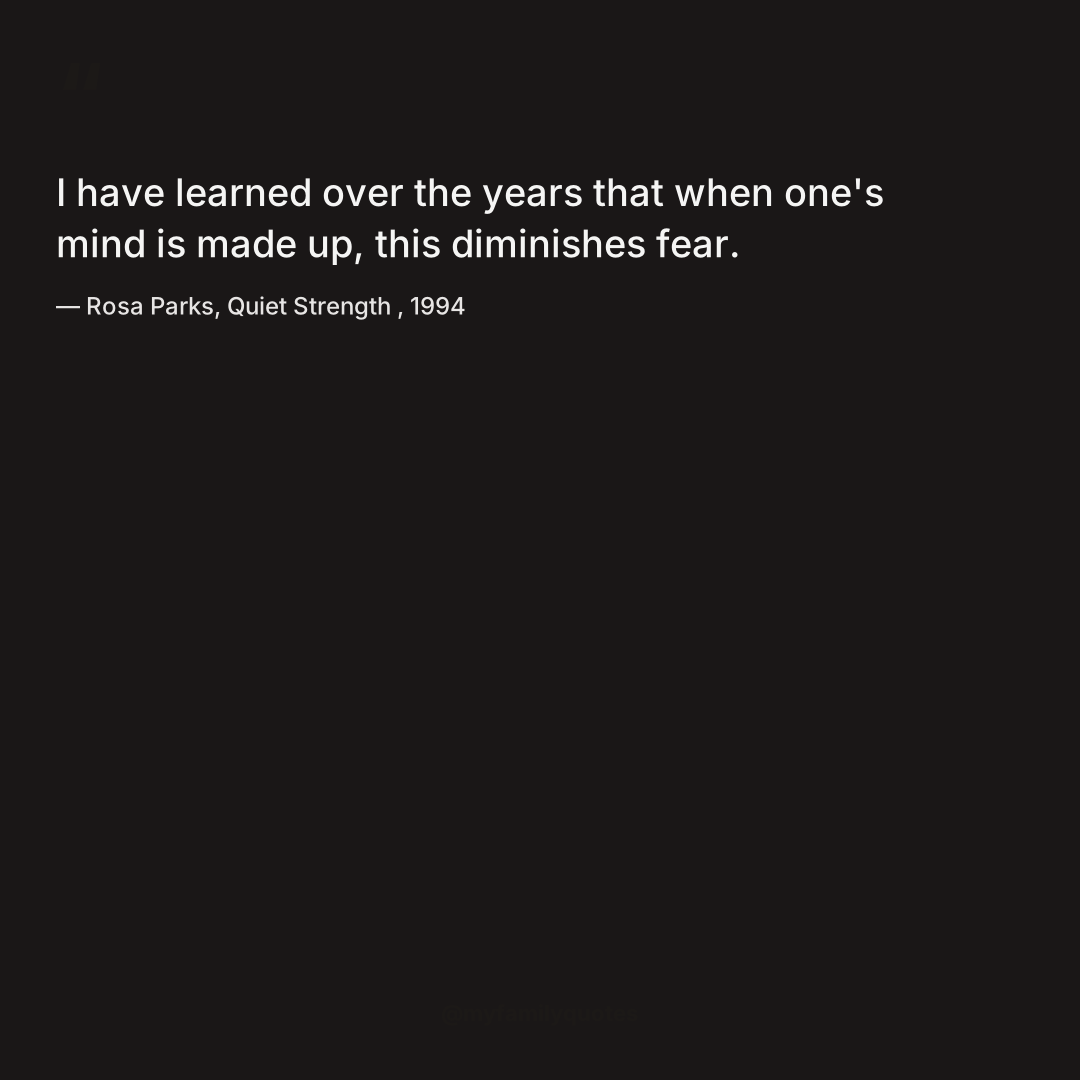
"I have learned over the years that when one's mind is made up, this diminishes fear." — Rosa Parks, Quiet Strength, 1994
Parks wrote this decades after the Montgomery bus boycott, stripping the mythology of sudden inspiration away from her actions to reveal a cold, calculated commitment to a specific outcome.
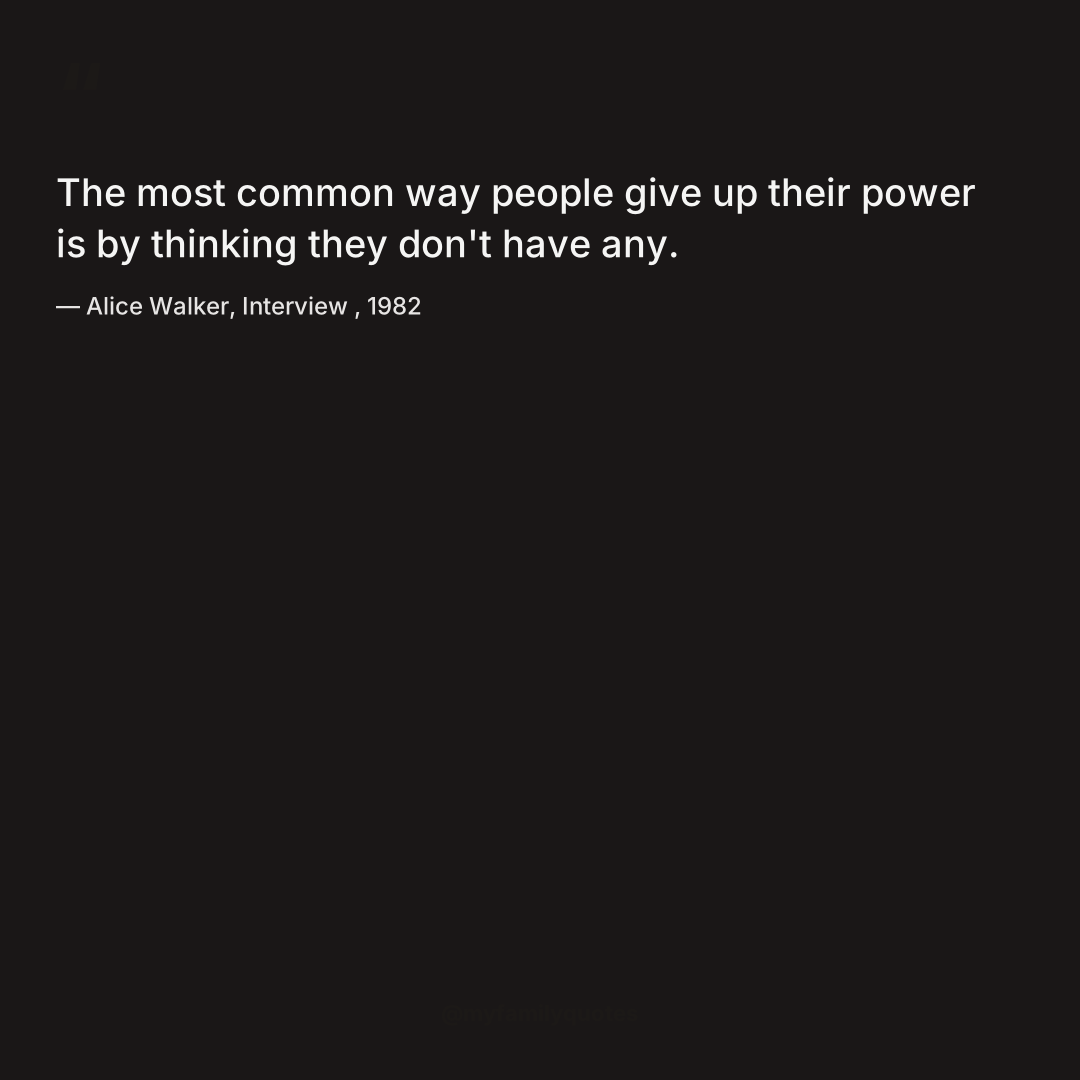
"The most common way people give up their power is by thinking they don't have any." — Alice Walker, Interview, 1982
Walker articulated this dynamic while discussing the intersection of race and gender, pinpointing how systemic oppression relies on the victims voluntarily surrendering before the fight begins.
Studying the foundations of internal resolve reveals that the most effective activists viewed courage as an administrative task. It was simply the work required to get the job done on a Tuesday.
A Few Honest Corrections
Popular reading: Historical women spoke in soft platitudes about inner light.
On closer look: The diaries and public speeches of reform-minded women from 1850 to 1950 are overwhelmingly aggressive. They routinely mock social conventions, criticize male leadership directly, and demand systemic overhaul rather than internal peace.
Popular reading: Courage requires the absence of fear.
On closer look: Almost every major autobiographical account from women in the civil rights and suffrage movements explicitly documents physical illness, insomnia, and terror leading up to major public actions. The defining characteristic was proceeding while terrified.
Popular reading: These quotes were written for general motivation.
On closer look: Very few of these lines were intended as broad affirmations. They were highly specific tactical advice delivered to other organizers, warning them about the social and financial ruin they were about to invite into their lives.