How Does Blood Bind Us? 12 Unconditional Sibling Love Quotes
Shared Histories and Shared Scars
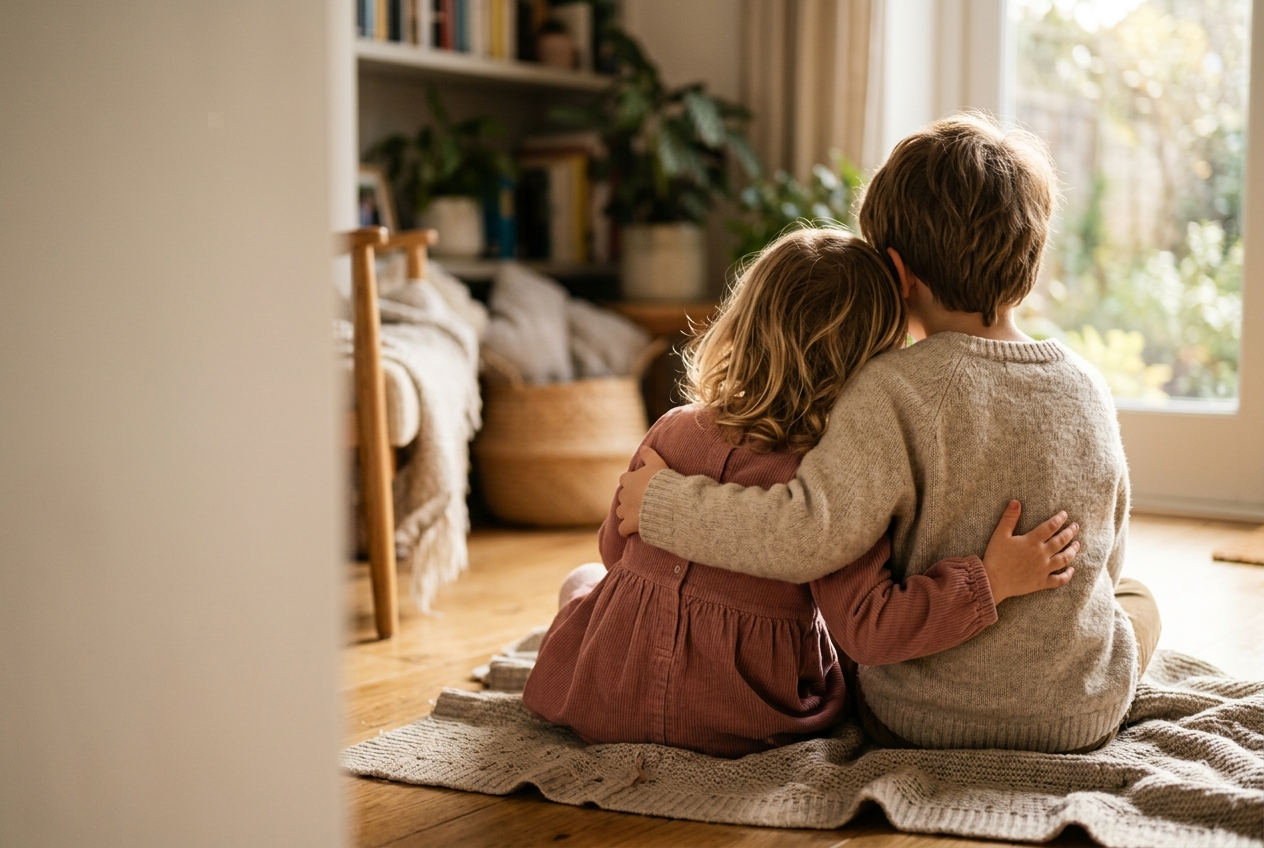
We learn the rough mechanics of grace by fighting over the front seat of a station wagon. I understood this fully only when I watched my sister on the porch steps of our rental in Albany, 1986, fiercely defending a terrible haircut I had given her. Siblings act as the earliest witnesses to our evolving personalities. They see the awkward phases, the misguided rebellions, and the private fears long before the world demands a polished exterior. This proximity breeds a loyalty that rarely requires logic. Adulthood forces us into endless negotiations, but the sibling bond operates on a foundational bedrock established before we even knew how to speak.
"Children of the same family, the same blood, with the same first associations and habits, have some means of enjoyment in their power, which no subsequent connections can supply." — Jane Austen, Mansfield Park, 1814
Austen captures the unique geography of childhood memory that siblings occupy together.
Related — how sisters articulate their shared survival of childhood.
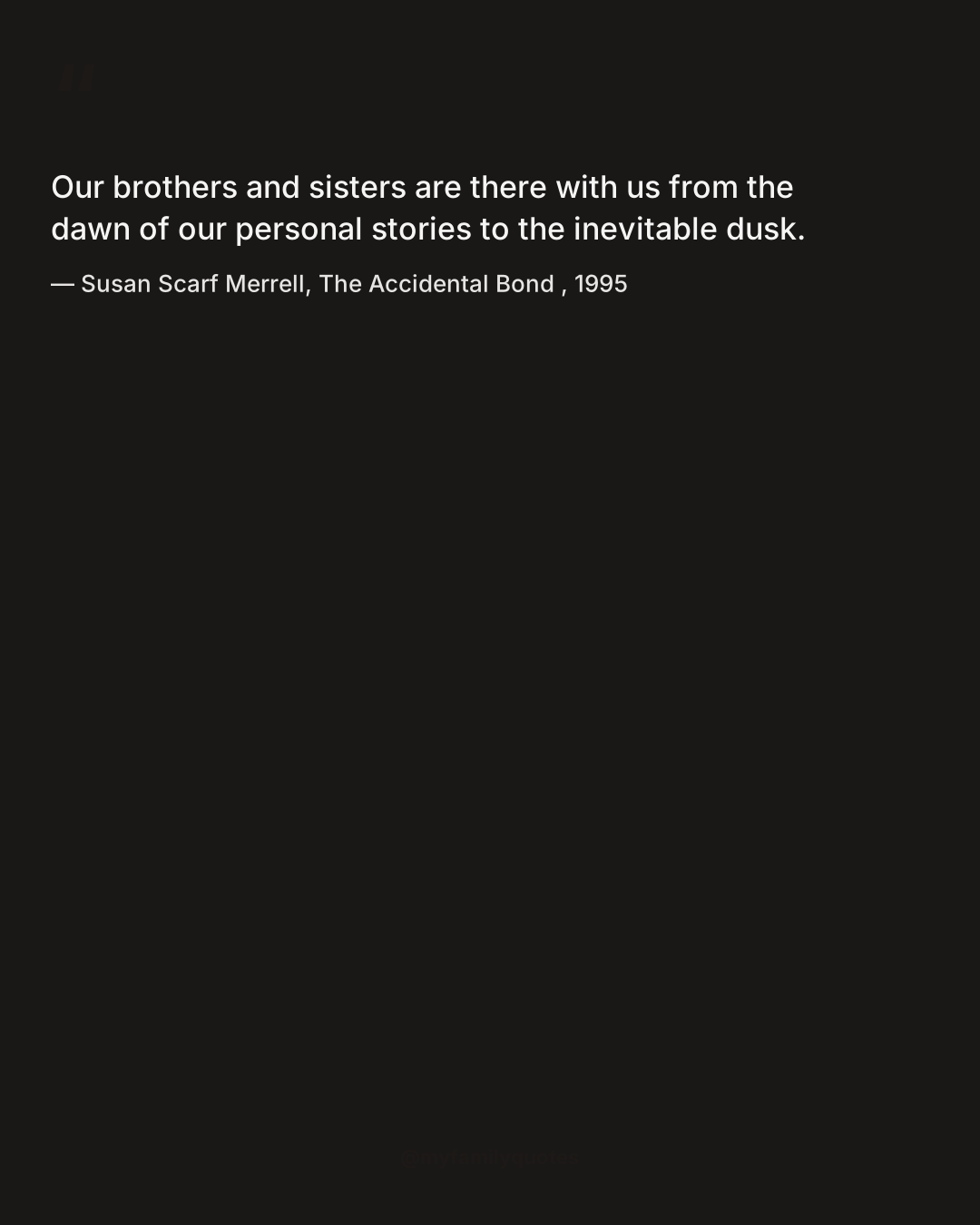
"Our brothers and sisters are there with us from the dawn of our personal stories to the inevitable dusk." — Susan Scarf Merrell, The Accidental Bond, 1995
Merrell anchors the sibling relationship as the longest continuous thread in most human lives.
"Half the time when brothers wrestle, it's just an excuse to hug each other." — James Patterson, I Funny, 2012
Physical roughhousing often masks an underlying need for reassurance among younger boys.
Guardians of the Original Self
Adulthood forces compromise upon everyone. We adapt our vocabularies for corporate environments, soften our opinions for new acquaintances, and carefully curate our public grief. Siblings bypass these constructed personas entirely. They possess the original blueprints of who we were before society intervened. When a brother calls out a pretension, he does so not out of malice, but from a deeply rooted understanding of the unvarnished truth. They hold the keys to our most fundamental instincts.
"A sibling may be the keeper of one's identity, the only person with the keys to one's unfettered, more fundamental self." — Marian Sandmaier, Original Kin, 1994
Sandmaier identifies the specific psychological relief of being known without needing to explain oneself.
A deeper look at enduring familial attachments lives in our archive of enduring family connection statements.
"To the outside world, we all grow old. But not to brothers and sisters. We know each other as we always were." — Clara Ortega, Family Dynamics, 1999
Ortega highlights the temporal distortion that happens when sitting across from someone who knew you at seven.
"For there is no friend like a sister in calm or stormy weather." — Christina Rossetti, Goblin Market, 1862
Rossetti wrote these lines to close a poem specifically exploring temptation and the fierce rescue mounted by kin.
Forgiveness Without Asking
The rules of engagement between siblings defy ordinary social contracts. Friends would abandon us over the insults we hurl at brothers during adolescence. Yet, unconditional sibling love quotes reveal a profound elasticity within these specific relationships. We rupture the bond in the morning over borrowed clothes and repair it by dinner over a shared joke. The forgiveness operates silently, embedded in the simple act of passing the salt across a crowded dining table.
"Your parents leave you too soon and your kids and spouse come along late, but your siblings know you when you are in your most inchoate form." — Jeffrey Kluger, The Sibling Effect, 2011
Kluger examines the chronological math that makes sibling relationships uniquely resilient.
For those tracking the broader shift toward brief declarations of affection, the brevity often mirrors the ease of the relationship.
"What brothers say to tease their sisters has nothing to do with what they really think of them." — Esther Friesner, Nobody's Princess, 2007
Friesner separates the performative antagonism of youth from the bedrock affection underneath it.
"There is a little boy inside the man who is my brother... Oh, how I hated that little boy. And how I love him too." — Anna Quindlen, Lots of Candles, Plenty of Cake, 2012
Quindlen articulates the dual reality of loving the adult while remembering the infuriating child they used to be.
This dynamic counters the narrative found in framing the sudden noise of daily domesticity.
The Longest Companionship
As parents age and eventually depart, siblings become the sole remaining custodians of the family lore. They are the only people who remember the specific smell of your grandmother's kitchen in 1992 or the exact tone of your father's disciplinary voice. This shared archive transforms into a lifeline during midlife crises and sudden bereavements. We turn to them because they require no backstory to understand the depth of our losses.
"You can kid the world, but not your sister." — Charlotte Gray, The Sisters, 1999
Gray touches on the impossibility of pretending around someone who shares your foundational DNA.
"A brother is a friend given by Nature." — Jean Baptiste Legouvé, Moral Sayings, 1798
Legouvé frames the relationship as a biological inheritance rather than a chosen affiliation.
The contrast to chosen kinship is examined in the eventual pivot to peer friendship.
"Siblings are the people we practice on, the people who teach us about fairness and cooperation and kindness and caring, quite often the hard way." — Pamela Dugdale, Family Studies, 2001
Dugdale positions the nursery and the playroom as the primary battlegrounds for emotional intelligence.
Where Conventional Wisdom Slips
Popular reading: Unconditional love means the absence of conflict.
On closer look: The deepest sibling bonds often feature intense friction. The unconditional aspect is not the lack of arguments, but the absolute certainty that the relationship will survive the disagreement without permanent damage.
Popular reading: Siblings must be best friends in adulthood.
On closer look: Geographic distance and divergent life paths often dilute the daily intimacy. The connection frequently shifts from active best-friendship to a quiet, load-bearing pillar that only becomes visible during major life transitions.
Popular reading: Birth order dictates the emotional dynamic forever.
On closer look: While older siblings often play caretakers early on, aging levels the playing field. By the time siblings reach their fifties, the original hierarchy dissolves into a flat structure of mutual support.
The bloodline does not automatically guarantee harmony, but it does provide a stubborn tether. We carry our brothers and sisters in our cadence, in our inherited anxieties, and in the sudden laughter that echoes across crowded rooms. They remain the inescapable mirrors of our past and the quiet steadying hands for our future.