12 Touching Short Mother Daughter Quotes That Will Anchor Your Perspective

"The mother's heart is the child's schoolroom." — Henry Ward Beecher, Life Thoughts, 1858
Henry Ward Beecher understood that maternal instruction rarely requires long lectures or formal declarations to shape a developing mind.
I remember sitting with my mother in a cramped kitchen in Portland, 2014, realizing that our most profound conversations rarely exceeded ten words. Brevity distills decades of maternal devotion into a few sharp syllables. Long letters certainly have their place in family archives. Yet, the sharpest truths arrive in fragments, delivered across countertops or whispered during brief embraces before long departures.
The Architecture of Brief Maternal Wisdom
Language strips away its decorative elements when emotion runs high. Mothers and daughters often communicate through a specialized shorthand that outsiders struggle to decode. This linguistic efficiency relies on years of shared context, allowing a single sentence to carry the weight of an entire personal history.
"A mother's arms are made of tenderness and children sleep soundly in them." — Victor Hugo, Les Misérables, 1862
Victor Hugo captured the physical reality of maternal comfort in a novel otherwise defined by sprawling social commentary.
"Mother is a verb. It's something you do. Not just who you are." — Cheryl Lacey Donovan, The Ministry of Motherhood, 2008
This modern redefinition shifts the focus from biological status to the daily, relentless actions required to sustain a family.
"Youth fades; love droops; the leaves of friendship fall; A mother's secret hope outlives them all." — Oliver Wendell Holmes Sr., The Mother's Secret, 1860
Holmes employs natural decay to contrast the enduring, stubborn nature of a mother's quiet expectations for her child.
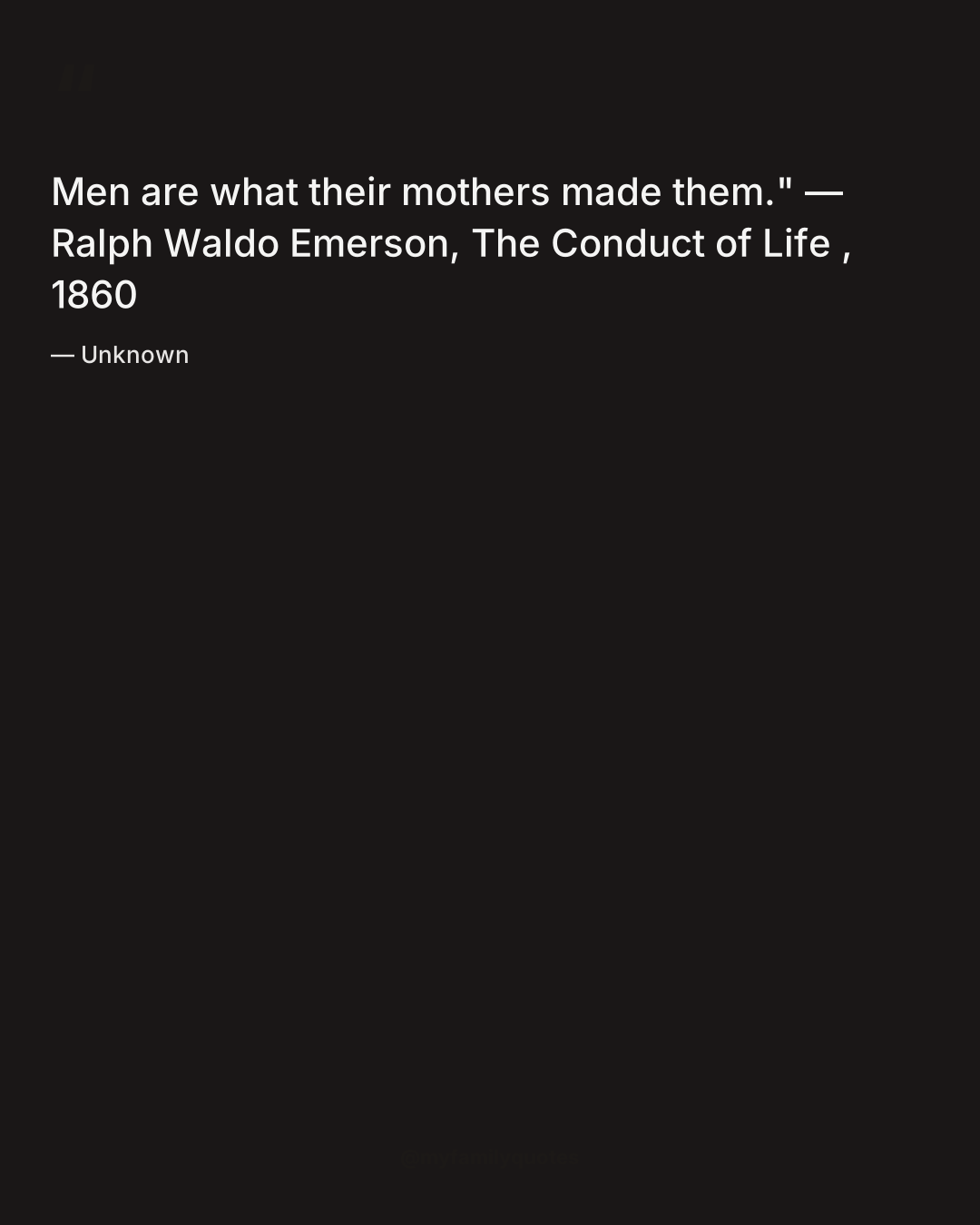
"Men are what their mothers made them." — Ralph Waldo Emerson, The Conduct of Life, 1860
Emerson delivers a blunt assessment of maternal influence that applies equally to daughters navigating their inherited traits.
Try next: how lifelong maternal bonds endure
Distilling Decades Into Syllables
Short phrases survive the erosion of memory far better than lengthy paragraphs. When a daughter leaves home, she carries a mental index of her mother's most repeated maxims. These compact sentences function as emotional anchors during periods of extreme stress or sudden joy.
"All that I am, or hope to be, I owe to my angel mother." — Abraham Lincoln, Attributed Statement, circa 1865
Often cited by biographers, this concise tribute underscores how foundational maternal support remains for those who achieve public greatness.
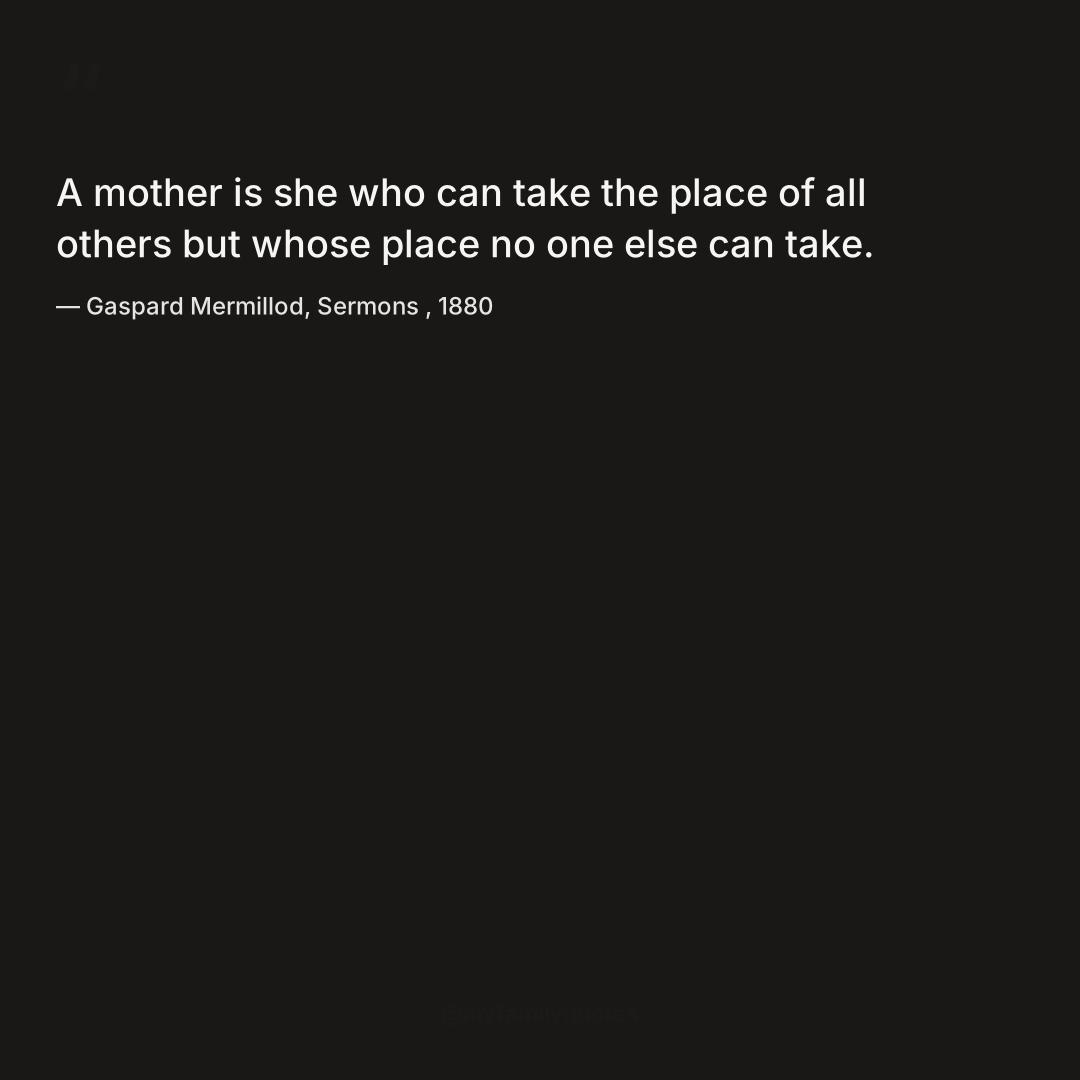
"A mother is she who can take the place of all others but whose place no one else can take." — Gaspard Mermillod, Sermons, 1880
Mermillod articulates the irreplaceable nature of the maternal role through a perfectly balanced rhetorical contrast.
"There is no velvet so soft as a mother's lap." — Thomas Carlyle, Sartor Resartus, 1836
Carlyle grounds the abstract concept of safety in a highly tactile, immediate sensory detail.
"Mother is the name for God in the lips and hearts of little children." — William Makepeace Thackeray, Vanity Fair, 1848
Thackeray examines the absolute authority and reverence a mother commands in the earliest stages of human development.
Try next: beautiful bond expressions
The Silent Vocabulary of Generational Ties
Silence often surrounds the most potent maternal quotes. The pause before a mother speaks a difficult truth carries as much meaning as the words themselves. Daughters eventually learn to read this rhythm, recognizing that brief statements usually signal a boundary being drawn or a profound affection being offered.
"No language can express the power and beauty and heroism of a mother's love." — Edwin Hubbell Chapin, Duties of Young Women, 1848
Chapin admits the limitations of his own medium, acknowledging that words inevitably fail to capture the full scope of maternal sacrifice.
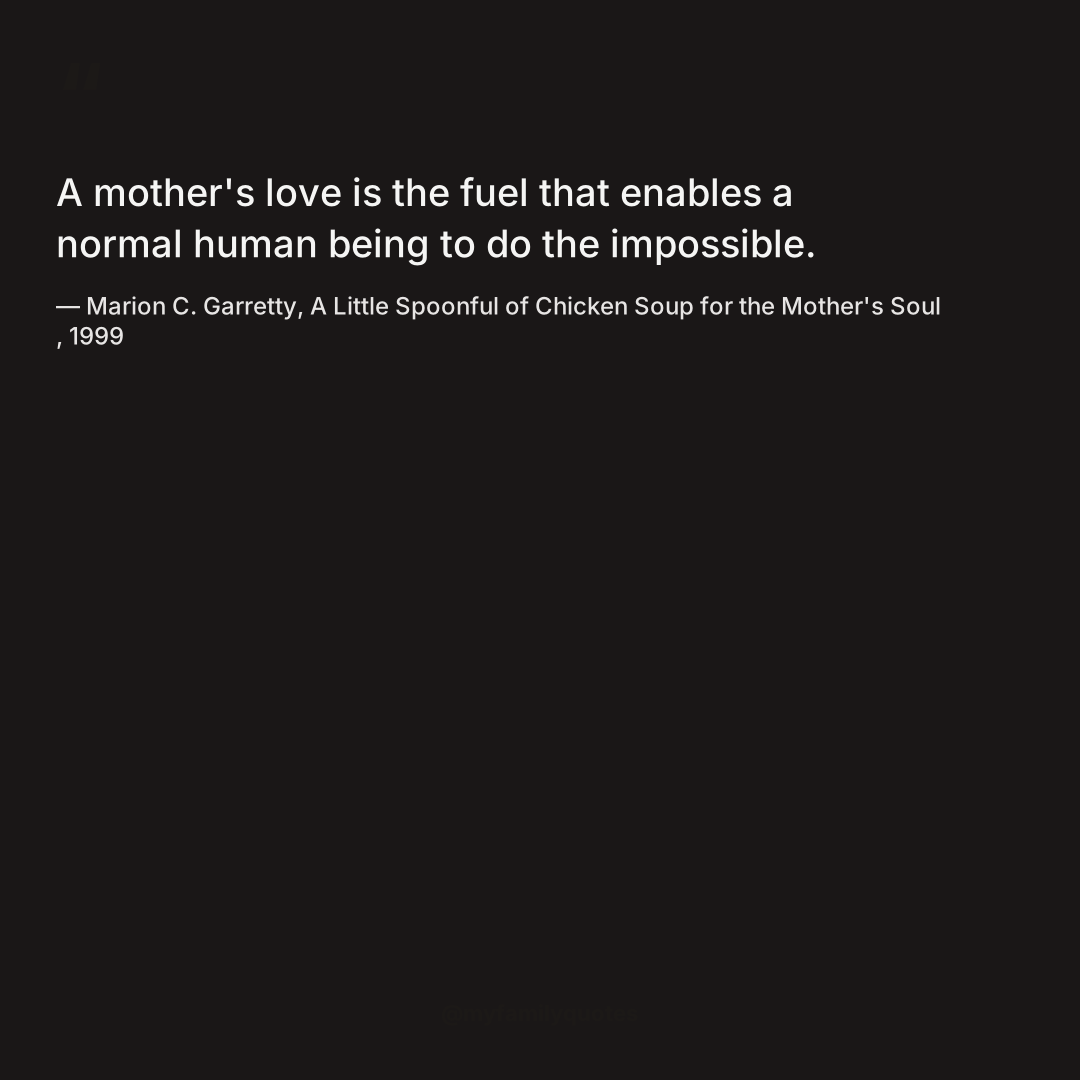
"A mother's love is the fuel that enables a normal human being to do the impossible." — Marion C. Garretty, A Little Spoonful of Chicken Soup for the Mother's Soul, 1999
This pragmatic metaphor frames maternal affection not as a static emotion, but as an active, propulsive energy source.
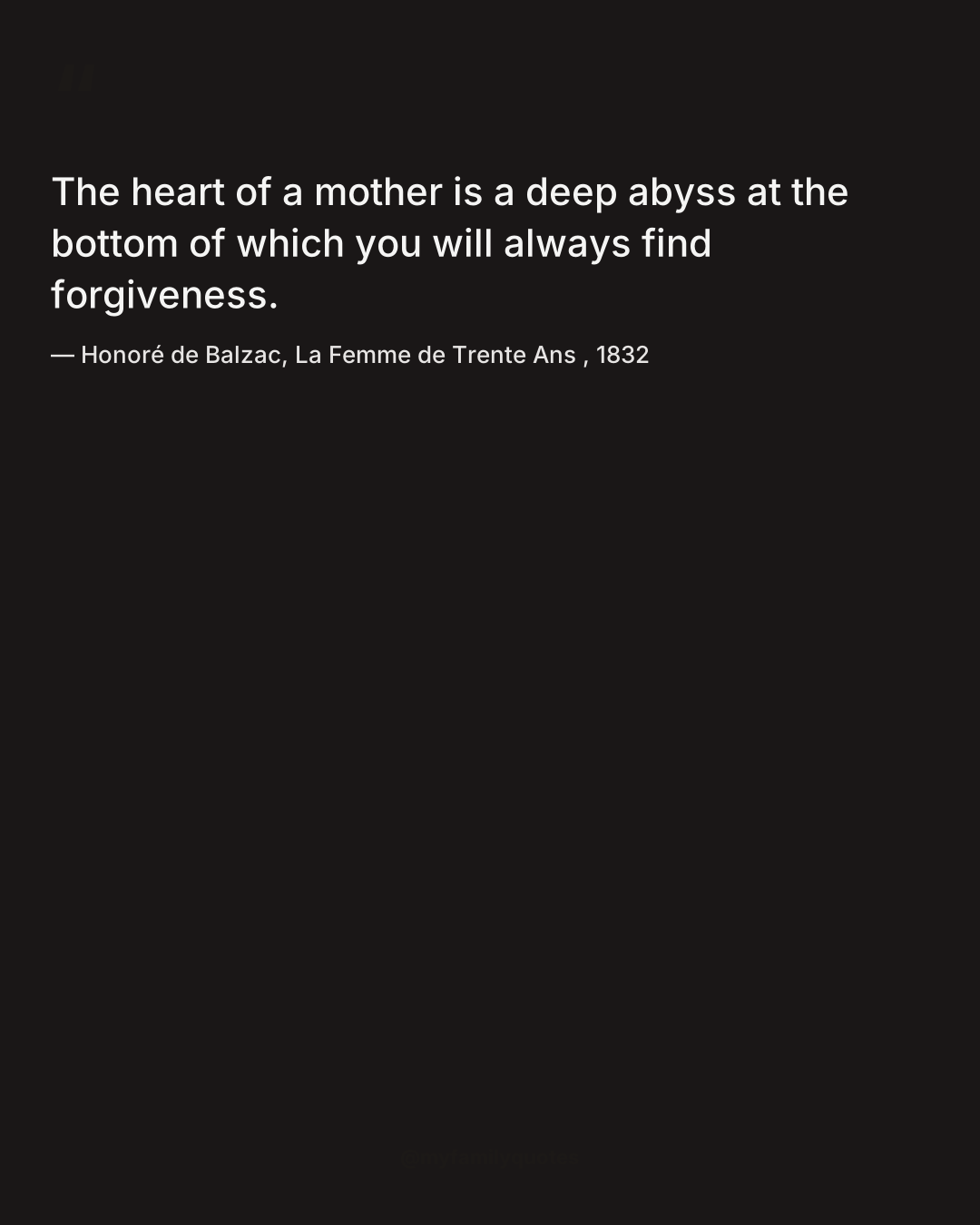
"The heart of a mother is a deep abyss at the bottom of which you will always find forgiveness." — Honoré de Balzac, La Femme de Trente Ans, 1832
Balzac uses the terrifying imagery of an abyss to illustrate the boundless, sometimes overwhelming capacity for maternal grace.
"We are born of love." — Inspired by Christina Rossetti, Selected Poems, 1890
Distilled from Victorian poetic traditions, this fragment serves as a fundamental reminder of human origins.
Try next: one-word literary captions regarding kinship
Questions Readers Send In
Why do shorter quotes often feel more impactful than longer passages?
Brevity forces the speaker to eliminate filler and focus entirely on the core emotion. When a mother or daughter uses fewer words, the resulting sentence demands immediate attention and is significantly easier to recall during moments of crisis.
How can I use these brief quotes in daily communication?
Short quotes fit naturally into text messages, the margins of greeting cards, or quick morning notes left on a counter. They serve as low-pressure touchpoints that maintain the connection without requiring a lengthy emotional exchange.
Do historical quotes still apply to modern mother-daughter dynamics?
The specific social contexts have shifted dramatically since the 19th century, but the underlying psychological need for maternal approval and comfort remains static. A quote from 1860 about a mother's enduring hope translates seamlessly to contemporary anxieties.