How the Language of Paternal Pride Shifted From Stoicism to Vulnerability

It is widely assumed that historical fathers exclusively communicated pride to their sons through a silent, stoic nod across a crowded room. Popular culture reinforces this image of the tight-lipped patriarch who only validates his child upon the completion of some monumental, grueling task. The archives tell a different story. Examining the private letters left behind by Victorian tradesmen, revolutionary politicians, and post-war novelists reveals a documented history of emotional evolution.
Sorting through a box of correspondence with my uncle in a brick rowhouse in South Philadelphia, 2011, we uncovered decades of letters between our ancestors that completely shattered the myth of the silent patriarch. The ink faded across heavily creased stationery, yet the words leaped off the page with unexpected warmth. Fathers across centuries wrestled with how to articulate their deep satisfaction without inflating a young man's ego. They navigated the tricky terrain between demanding civic excellence and offering tender reassurance. Documenting how mothers often observe this shifting dynamic helps us see the full picture, but hearing the men directly offers its own distinct revelation.
Classical Duty vs. Romantic Affection
Before the nineteenth century, a father's pride frequently intertwined with public duty and aristocratic expectations. Men measured their sons by their utility to the state or the family estate. The Romantic movement later fractured this rigid framework, introducing an era where poets and thinkers began valuing a child's innate disposition over their societal usefulness. Exploring the broader dynamics shaping family ties reveals how drastically this philosophical shift altered domestic life.
"I would rather see you a good man than a great one, for the former brings peace to the household while the latter only feeds the vanity of the age." — Thomas Jefferson, Letter to Thomas Jefferson Randolph, 1808

Writing from Washington, Jefferson emphasized moral character over public acclaim to his grandson, reflecting the era's obsession with republican virtue. He valued quiet integrity.
"The highest reward of my life is to see you cultivate those virtues which will render you both useful and agreeable to mankind." — Philip Stanhope, 4th Earl of Chesterfield, Letters to His Son, 1746
Stanhope viewed his son's development largely as a reflection of his own rigorous tutoring regimen. Utility drove aristocratic pride in the eighteenth century.
"It is not flesh and blood but the heart which makes us fathers and sons." — Friedrich Schiller, The Robbers, 1781
Schiller captured the emerging sentiment that emotional resonance mattered more than biological or civic duty. Audiences in eighteenth-century German theaters found this concept revolutionary.
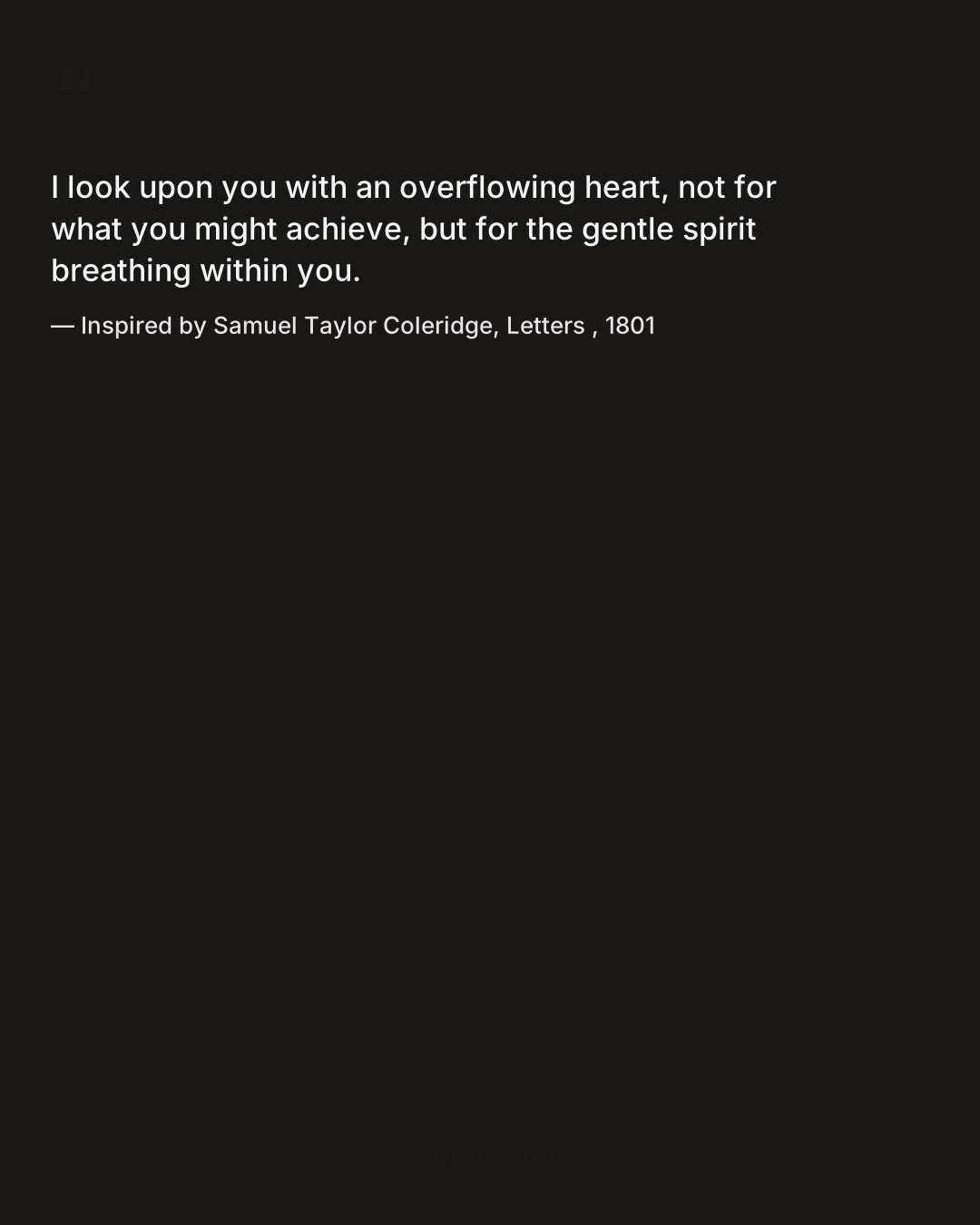
"I look upon you with an overflowing heart, not for what you might achieve, but for the gentle spirit breathing within you." — Inspired by Samuel Taylor Coleridge, Letters, 1801
The Romantic movement shifted the focus inward across Europe. Poets like Coleridge began praising a child's innate sensitivity, marking a radical departure from strict Georgian expectations.
Gilded Age Expectations vs. Post-War Realism
As industrialization reshaped the American landscape, prominent figures tied their paternal approval to physical endurance and professional ambition. The devastation of the world wars subsequently dismantled that aggressive optimism. Fathers who survived global conflicts stopped demanding monumental greatness from their boys, opting instead to celebrate simple survival, emotional depth, and everyday joy.
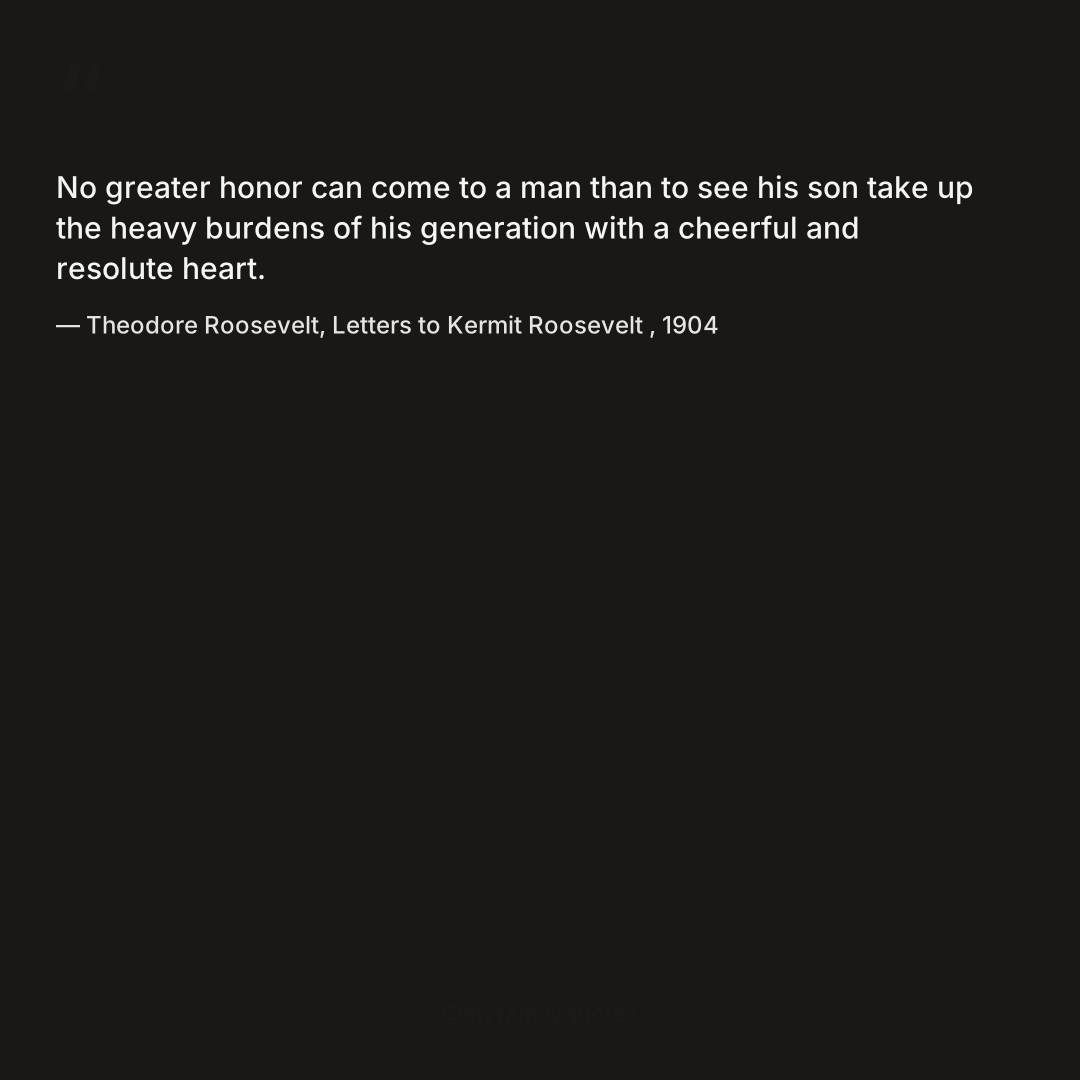
"No greater honor can come to a man than to see his son take up the heavy burdens of his generation with a cheerful and resolute heart." — Theodore Roosevelt, Letters to Kermit Roosevelt, 1904
Roosevelt famously tied his paternal approval to physical and moral endurance. He expected his boys to conquer obstacles cheerfully.
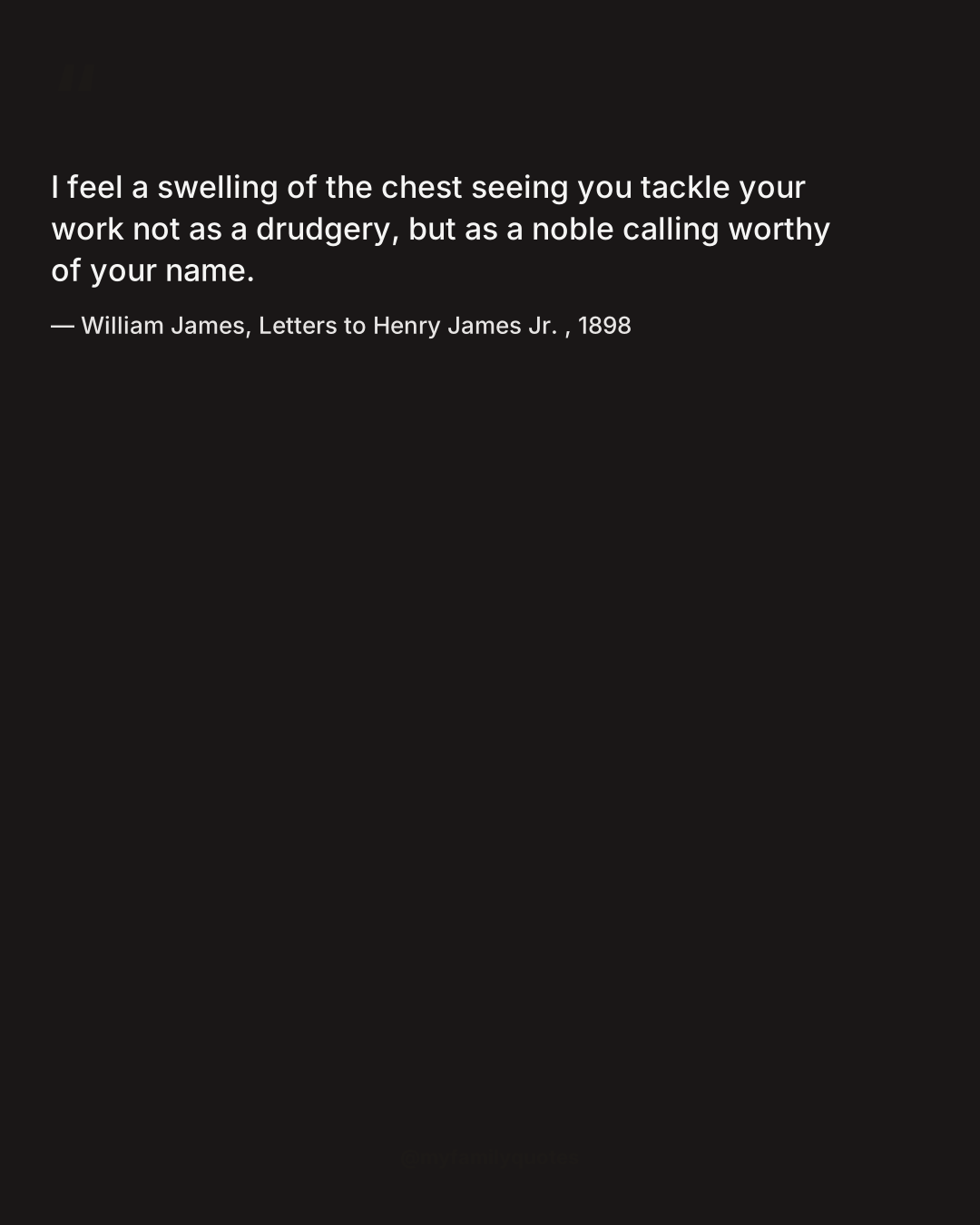
"I feel a swelling of the chest seeing you tackle your work not as a drudgery, but as a noble calling worthy of your name." — William James, Letters to Henry James Jr., 1898
The pioneer of American psychology viewed professional dedication as the ultimate marker of a son's maturity. Work ethic equaled character during the Gilded Age.
"If you are in love, that is a good thing—that is about the best thing that can happen to anyone. I am proud to see you feeling deeply." — John Steinbeck, Letter to Thom Steinbeck, 1958
Writing from Paris, the novelist dismissed traditional markers of success to validate his teenage son's emotional experiences. The post-war era allowed for softer definitions of manhood.
"I am pleased to hear of your success in your studies, but I am far more gratified by the reports of your honorable conduct." — Abraham Lincoln, Letter to Robert Todd Lincoln, 1859
Even before the vast devastation of the Civil War, Lincoln separated academic achievement from fundamental human decency. Character reports mattered more than test scores.
Late Century Reserve vs. Ancient Wisdom
The late twentieth century saw a fascinating blend of public reserve and private vulnerability among prominent leaders. Yet, looking back at foundational texts shows that the desire for a son to simply possess a wise and steady heart is one of the oldest recorded sentiments in human history.
"I have watched you argue your convictions with a grace I never mastered, and that is a father's true reward." — Mario Cuomo, Diaries, 1984
The political titan acknowledged his son's superior temperament in a rare moment of published vulnerability. Passing the torch required admitting one's own flaws.
"My son, if your heart is wise, then my heart will be glad indeed." — Proverbs 23:15, King James Version, 1611
Ancient texts often anchor the long history of paternal advice. Wisdom always outranked mere obedience in these foundational scriptures.
Reading them together
Comparing the letters of eighteenth-century aristocrats with mid-century novelists reveals a shared underlying anxiety about the future. Fathers across all these eras grapple with the same core tension between preparing a boy for a harsh reality and hoping he maintains a soft, receptive spirit. The language shifts from demanding civic usefulness to celebrating emotional honesty, yet the underlying desire for the child's ultimate well-being remains constant. They want their sons to survive the world without losing themselves to it.
Further reading
- scriptural foundations of parental responsibility
- how daughters assess a father's enduring impact
- finding brief words of bravery in hard times
What to Carry Forward
- Paternal pride historically leaned on civic duty before evolving to embrace emotional vulnerability in the twentieth century.
- Letters from figures like John Steinbeck prove that mid-century fathers actively validated their sons' romantic and emotional lives.
- The Romantic era marked a definitive turning point where a child's innate spirit became just as praiseworthy as their societal achievements.
- Even the most stoic historical figures separated academic or financial success from their ultimate pride in a son's honorable conduct.
- Reading these historical letters dismantles the pop-culture myth that men of the past never articulated their affection.