How Do Women Witness the Paternal Bond? 15 Father Son Quotes From Mom
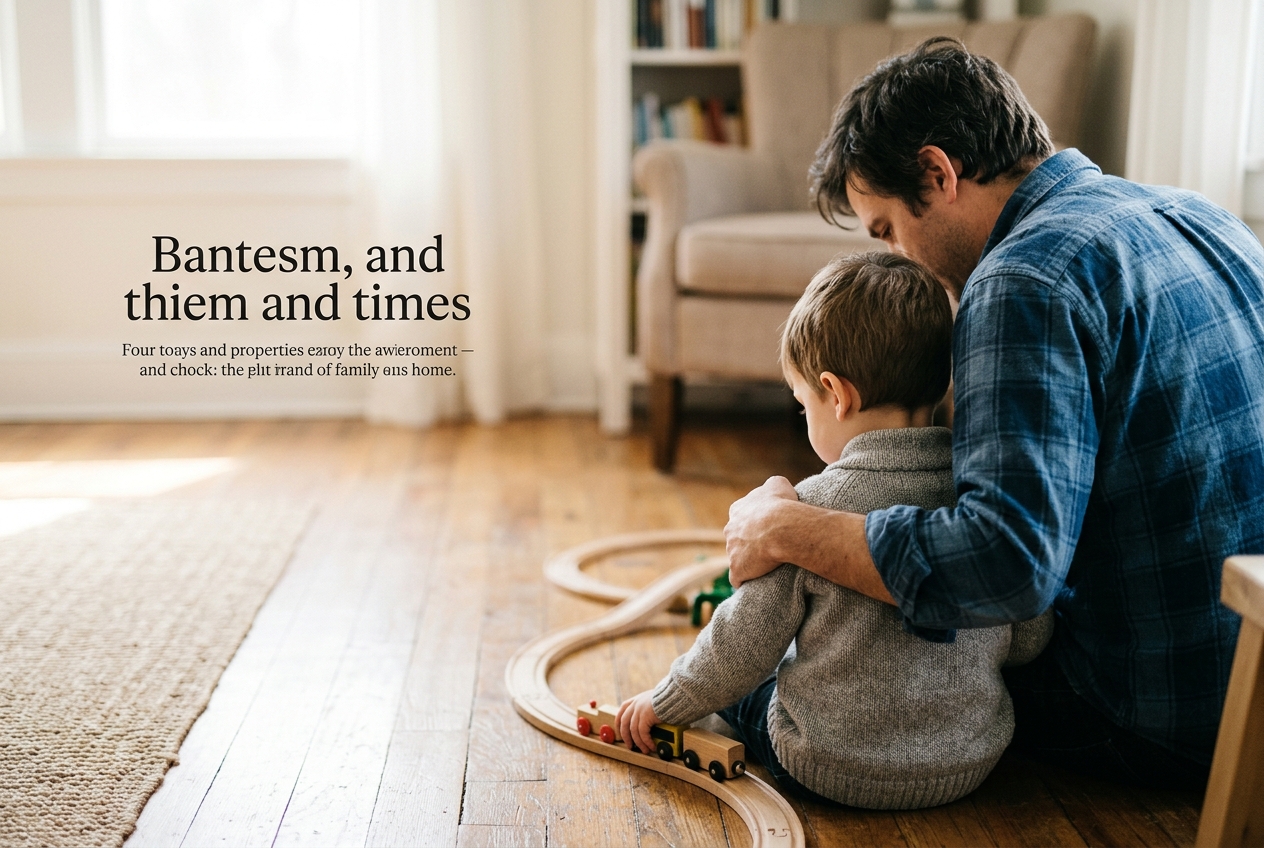
I sat next to my mother in a rented seaside cabin outside Bodega Bay, California, 2001, watching my brother and father align their shoulders identically against the wind. It was eerie. Women possess a distinct vantage point within the family geometry, acting as the primary audience to the gradual, sometimes clumsy formation of male alliances. The transmission of identity from an older man to a younger one rarely happens through explicit instruction. Instead, it unfolds in the silent replication of a gait, the shared exasperation over a broken carburetor, or the mutual avoidance of sustained eye contact during emotional conversations. Mothers watch this architectural replication happen in real time, serving as both archivists and translators of a language spoken entirely in gestures.
The Transfer of Temperament
Mothers observe the absorption of character traits firsthand, cataloging the exact moment a toddler adopts his father's specific posture of frustration. The house becomes a theater of mirrored reactions. Collecting these observations allows women to map the psychological inheritance passed down the male line.
"The greatest gift I ever gave my son was a father who actually wanted to hold him." — Inspired by Erma Bombeck, Motherhood: The Second Oldest Profession, 1983
Humorists often mask deep sociological observations behind lighthearted quips about domestic life.
"His father was his first friend, his best friend, and his fiercest critic." — Doris Kearns Goodwin, Team of Rivals, 2005
Biographers recognize that the foundational male relationship dictates future leadership styles and conflict resolution.
"It is a wise father that knows his own child." — William Shakespeare, The Merchant of Venice, 1596
The Elizabethan stage frequently explored the anxieties surrounding paternity and inherited flaws.
Related — how women document the shared histories of brothers and sisters.
Silent Languages and Shared Gazes
Communication between men frequently relies on proximity rather than vocabulary. A mother notices that the most profound exchanges between her husband and son occur when they are looking at a television screen, a car engine, or a fishing line, rather than at each other.
"When a father gives to his son, both laugh; when a son gives to his father, both cry." — Yiddish Proverb, Folk Tradition, 1800s
Cultural maxims frequently capture the emotional inversion that occurs when aging parents become dependent on their children.
"Boys do not ache for their father's masculinity. They ache for their fathers' hearts." — Terrence Real, I Don't Want to Talk About It, 1997
Psychologists have spent decades dismantling the stoic facade expected of men in twentieth-century households.
"No music is so pleasant to my ears as that word―father." — Lydia Maria Child, The Girl's Own Book, 1833
Nineteenth-century domestic manuals heavily romanticized the authoritative yet benevolent patriarch.
A deeper look at maternal perspectives is mapped in our repository of women’s generational experiences.
Forging the Male Identity
Boys eventually test the boundaries of their inherited names, pushing against the very men they spent their childhoods emulating. The resulting friction often requires maternal mediation.
"By the time a man realizes that maybe his father was right, he usually has a son who thinks he's wrong." — Charles Wadsworth, Southern Magazine, 1968
The cyclical nature of generational rebellion ensures that parental appreciation arrives just as new defiance begins.
"The older I get, the smarter my father seems to get." — Tim Russert, Big Russ and Me, 2004
Political commentators often retreat to memoir to humanize the rigid figures of their youth.
"Fathers and sons arrive at that relationship only by claiming that relationship: that is by paying for it." — James Baldwin, Notes of a Native Son, 1955
Mid-century essays laid bare the inherited trauma and racial realities passed down through bloodlines.
Another angle on inherited wisdom lives in reflections on the elders who root a family's history.
Distance and Gravitational Pull
As adolescence takes hold, the physical closeness of childhood gives way to a cautious distance. Mothers watch their sons pull away from the maternal orbit to crash into the paternal one, seeking validation in a completely different currency.
"A father is a man who expects his son to be as good a man as he meant to be." — Frank A. Clark, The Register-Guard, 1955
Syndicated columnists often struck the delicate balance between critique and empathy for mid-century dads.
"The heart of a father is the masterpiece of nature." — Antoine François Prévost, Manon Lescaut, 1731
French literature regularly elevated paternal affection above romantic entanglements in its moral hierarchies.
"A father is neither an anchor to hold us back, nor a sail to take us there, but a guiding light whose love shows us the way." — Unknown, Traditional Proverb, 1990
Nautical metaphors remain the default imagery for navigating the unpredictable waters of adolescence.
For the counterpoint, read how women navigate the transition toward adult friendship.
The Final Assessment
Ultimately, a mother's view of her husband and son reveals the mechanics of vulnerability. She sees the private moments of doubt that neither man will ever admit to the other.
"Every mother hopes that her daughter will marry a better man than she did, and is convinced that her son will never find a wife as good as his father did." — Martin Andersen Nexø, Ditte: Girl Alive!, 1920
Early twentieth-century novelists frequently highlighted the hypocrisies of maternal protectiveness.
"To be a father requires patience, love and giving up the 'all about me' attitude." — Catherine Pulsifer, Words of Wisdom, 2008
Modern self-help literature emphasizes the sacrifice of ego over the provision of capital.
"A boy's first hero is often the man who shows him how to tie his shoes, but a mother watches them both learn the knots." — Inspired by Barbara Kingsolver, Animal Dreams, 1990
Contemporary fiction excels at positioning the mother as the silent archivist of male vulnerability.
Exploring the broader ecosystem of domestic connections continues in our archive on household unity.
The quiet hours of evening often bring the sharpest clarity regarding who we are raising and who we have married. Watching a man and a boy navigate their shared existence from the periphery requires patience, restraint, and an understanding that some bonds form best in the spaces where words fall short.
Where Conventional Wisdom Slips
Popular reading: Mothers feel excluded from the father-son dynamic.
On closer look: While the bond between men relies on a distinct frequency, women often act as the crucial translators between stoic fathers and emotionally developing sons.
Popular reading: The paternal bond forms instantly at birth.
On closer look: Many mothers note that maternal attachment often precedes paternal connection, with fathers and sons building their alliance gradually through shared tasks rather than immediate biological recognition.
Popular reading: Fathers only teach physical skills.
On closer look: Throwing a baseball or fixing an engine serves merely as the scaffolding; the actual transfer of values, patience, and emotional regulation happens quietly in the margins of these activities.