How Do We Preserve the Past? 16 Quotes on Enjoying Family Memories
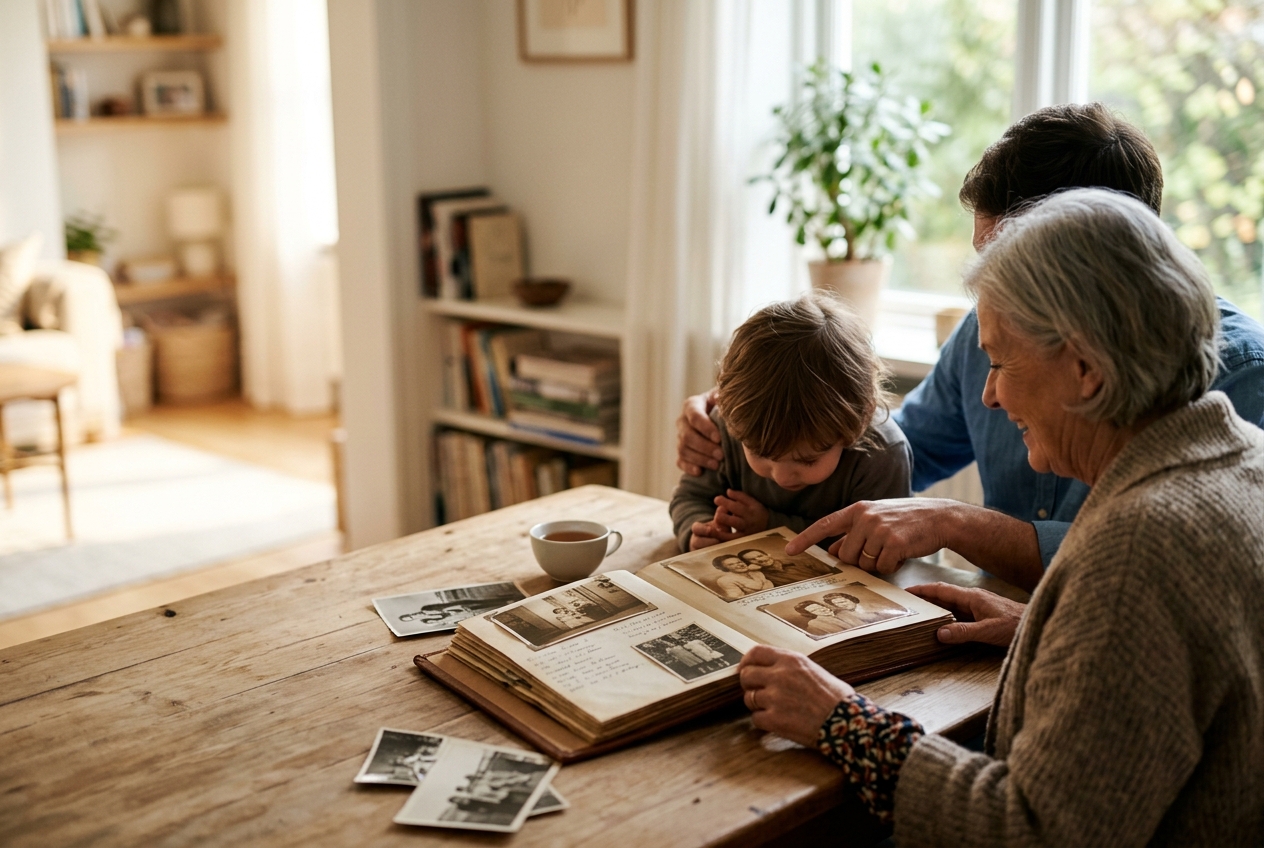
Why do we cling so fiercely to fading photographs? How do we balance the joy of recounting childhood stories with the inevitable inaccuracies of our own recall? These questions surface at every holiday gathering and quiet Sunday evening spent looking backward.
Watching my aunt sort through faded Kodachrome slides in a humid living room in Tampa, Florida, 1994, I realized how fragile our shared history actually is. We construct our identities from these scattered artifacts and half-remembered afternoons. The act of enjoying family memories requires more than passive nostalgia. It demands an active, ongoing negotiation between the past we inherited and the present we inhabit. Writers and thinkers have long debated how to handle this inheritance, splitting largely into two camps: those who view memory as a comforting refuge, and those who see it as a flawed, complex construct.
The Sentimentalists: Preserving the Golden Glow
For the sentimentalists, memory serves as a sanctuary against the passage of time. These thinkers argue that focusing on the warmth of our earliest bonds provides necessary emotional fuel for the future.
"God gave us memory so that we might have roses in December." — J.M. Barrie, Courage, 1922
Barrie delivered this address at St Andrews University, framing recollection as a deliberate tool for surviving difficult seasons.
"Nothing is ever really lost to us as long as we remember it." — L.M. Montgomery, The Story Girl, 1911
Montgomery anchored much of her fiction in the idea that childhood landscapes remain permanently accessible through the mind.
Writers exploring their heritage frequently document this exact dynamic.
"Some memories are realities, and are better than anything that can ever happen to one again." — Willa Cather, My Ántonia, 1918
Cather elevated the pioneer childhoods of her characters into mythic, untouchable ideals that governed their adult lives.
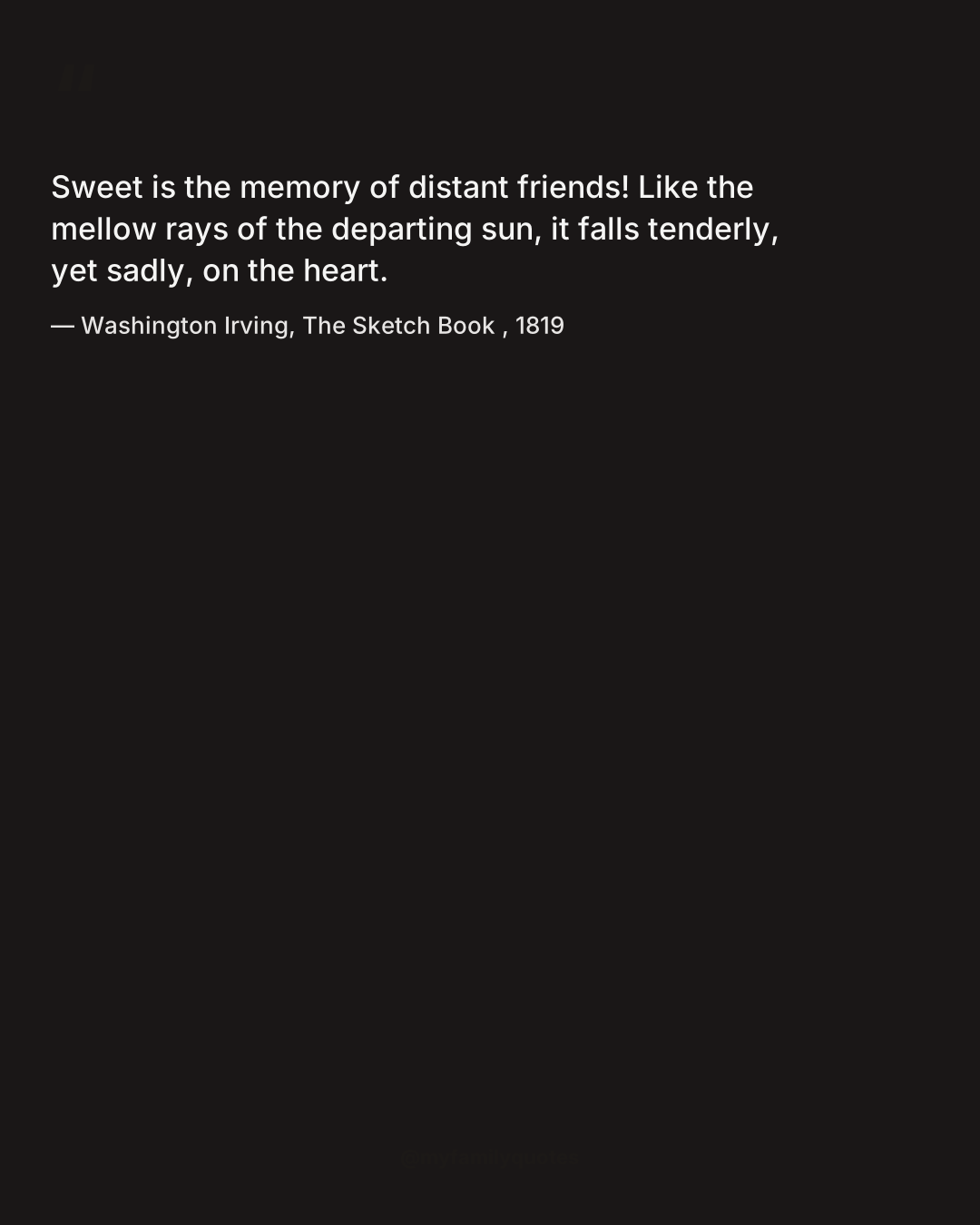
"Sweet is the memory of distant friends! Like the mellow rays of the departing sun, it falls tenderly, yet sadly, on the heart." — Washington Irving, The Sketch Book, 1819
Irving captured the bittersweet nature of looking backward, recognizing that distance often softens the sharp edges of human relationships.
"The leaves of memory seemed to make a mournful rustling in the dark." — Henry Wadsworth Longfellow, The Fire of Drift-Wood, 1849
Longfellow used the physical world to represent the internal landscape of grief and remembrance.
Gathering around the dinner table often forces these competing narratives into the open.
"Memory is the diary that we all carry about with us." — Oscar Wilde, The Importance of Being Earnest, 1895
Wilde offered a lighter, though no less profound, take on how we curate our own personal histories to suit our current needs.
"To live in hearts we leave behind is not to die." — Thomas Campbell, Hallowed Ground, 1825
Campbell crystallized the Victorian obsession with legacy and the enduring power of familial love across generations.
"Things that were hard to bear are sweet to remember." — Seneca, Hercules Furens, 54 AD
Even ancient Stoics acknowledged that surviving a difficult ordeal transforms the experience into a cherished story.
The Realists: Acknowledging the Flawed Reality
Conversely, the realists approach family history with skepticism. They understand that our brains edit, embellish, and sometimes entirely invent the past to protect our present egos.
"When I was younger I could remember anything, whether it happened or not." — Mark Twain, Autobiography of Mark Twain, 1924
Twain openly mocked the reliability of his own mind, acknowledging that a good story usually trumps factual accuracy.
The way siblings recall the same childhood event rarely aligns perfectly.
"Remembrance of things past is not necessarily the remembrance of things as they were." — Marcel Proust, Swann's Way, 1913
Proust built an entire literary masterpiece on the premise that memory is a subjective, sensory illusion rather than a historical record.
"The past is beautiful because one never realises an emotion at the time." — Virginia Woolf, Diary, 1925
Woolf suggested that we only understand the weight of our family dynamics long after the actual events have concluded.
"So we beat on, boats against the current, borne back ceaselessly into the past." — F. Scott Fitzgerald, The Great Gatsby, 1925
Fitzgerald viewed the pull of history as a tragic, inescapable force that dictates our future choices.
"Every man's memory is his private literature." — Aldous Huxley, Tomorrow and Tomorrow and Tomorrow, 1956
Huxley pointed out that we are the sole authors of our internal narratives, constantly revising the drafts of our youth.
"We do not remember days, we remember moments." — Cesare Pavese, The Burning Brand, 1952
Pavese understood that human recall operates in flashes of intense emotion rather than linear chronologies.
"The past is never dead. It's not even past." — William Faulkner, Requiem for a Nun, 1951
Faulkner famously argued that the history of our ancestors lives actively in our daily decisions and prejudices.
"Inspired by the way Joan Didion approached personal history, we often curate our family narratives to survive the chaos of our actual upbringing." — Inspired by Joan Didion, Slouching Towards Bethlehem, 1968
The essayist taught a generation that the stories we tell about ourselves are survival mechanisms, not court transcripts.
Where the two sides actually meet
The friction between romanticizing the past and dissecting it critically is where true appreciation lives. We need the sentimentalists to remind us why the golden afternoons matter. We need the realists to keep us grounded when nostalgia threatens to erase the complicated humanity of our parents and siblings. Enjoying family memories does not require perfect historical accuracy. It simply requires a willingness to hold both the joy and the flaws in the same hand.
Finding humor in these disparate viewpoints is often the best way forward.
If You Only Remember a Few Things
- Memory functions as an emotional diary rather than a factual ledger.
- The stories we repeat shape our current identities more than the actual events did.
- Siblings will almost always possess conflicting versions of the exact same afternoon.
- Nostalgia offers necessary comfort, provided it does not obscure the reality of the present.
- Accepting the flawed nature of human recall allows for greater grace toward our relatives.
Take five minutes tonight to text a sibling or cousin about a highly specific, mundane childhood afternoon.