14 Quotes for Grandparents' Love Highlighting Generational Bridges
The Misunderstood Role of the Elder
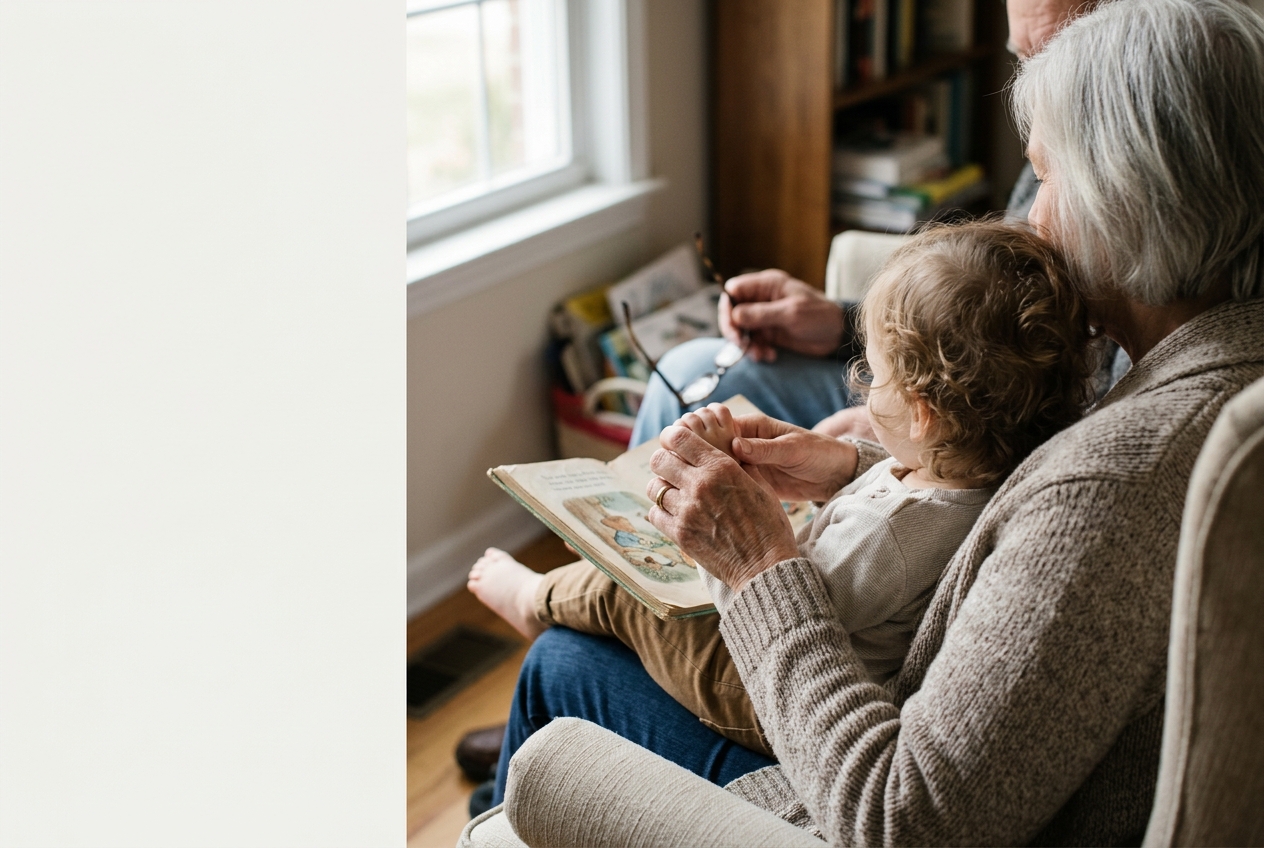
Most cultural narratives paint grandparents merely as purveyors of hard candies and lenient curfews. This cartoonish framing obscures the actual weight of their role in a functioning lineage, reducing a complex structural relationship to a series of holiday tropes. They act as the keepers of the family archive, holding memories that predate our parents and providing context for the quirks we inherit. Watching my grandmother repair a torn quilt on a porch in Portland, Oregon, 2018, I recognized she was physically threading the past into the present. That quiet labor anchors a household long after the immediate crisis of raising children has passed.
Moving past the stereotype requires examining how these elders function as a safety net. When parents enforce rules, grandparents offer grace. This dynamic is not about undermining authority; it is about providing a different texture of affection. If you find yourself defining generational ties within your own home, you quickly realize how much heavy lifting the older generation does simply by existing as a stable point of reference. They give children a broader map of the world.
The Architecture of Lineage
The foundation of a family tree relies on roots that remain largely unseen. Grandparents provide this structural integrity without demanding the daily spotlight.
"Grandparents are the stepping stones to future generations." — Lois Wyse, Funny, You Don't Look Like a Grandmother, 1989
Wyse captures the utilitarian reality of elderhood here, framing them not as a destination but as the vital pathway that allows the next cohort to move forward safely.
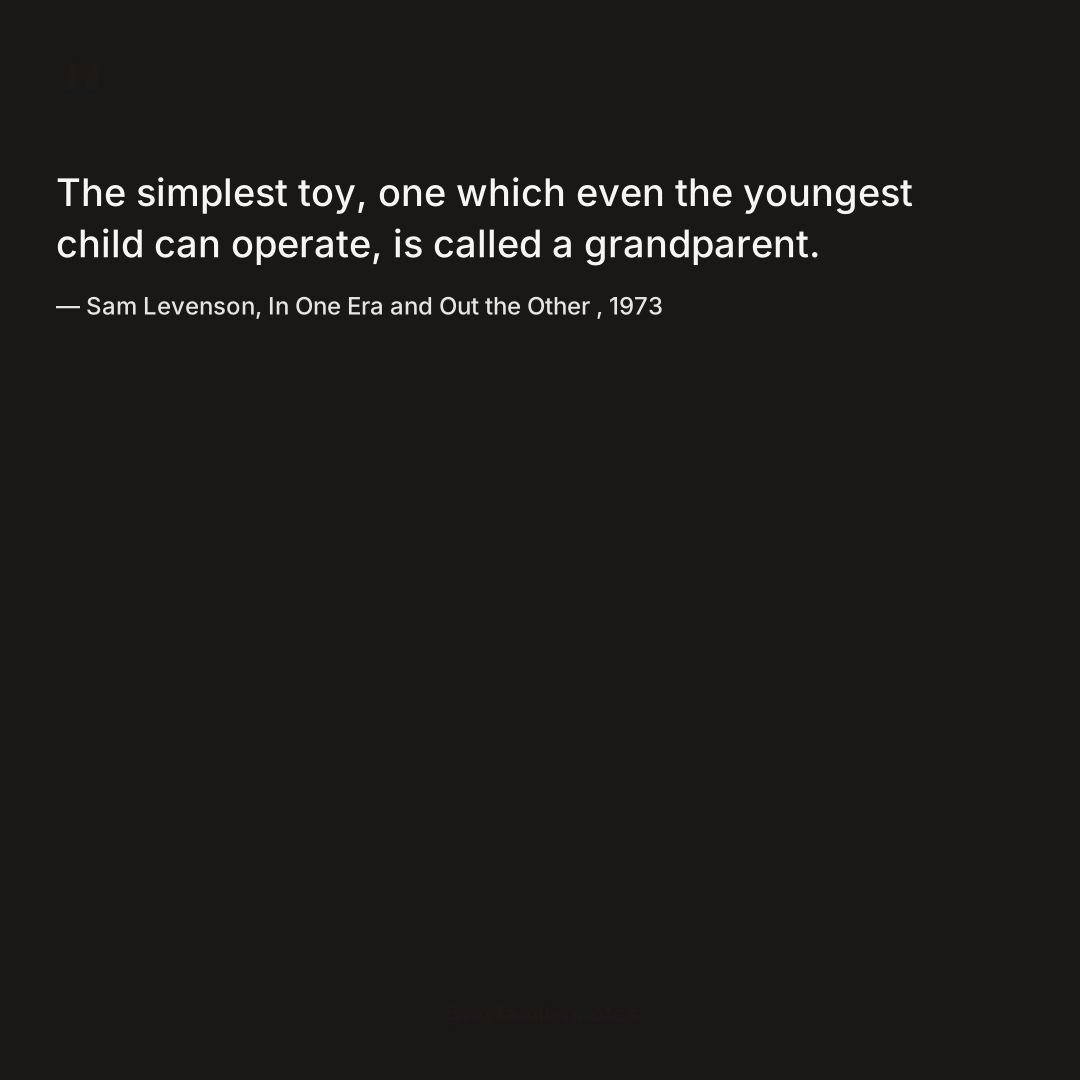
"Every generation revolts against its fathers and makes friends with its grandfathers." — Lewis Mumford, The Brown Decades, 1931
Mumford identifies the natural alliance that skips a generation, perfectly highlighting the absurdity of kinship where proximity breeds friction but distance allows for mutual appreciation.
"The history of our grandparents is remembered not with rose petals but in the laughter and tears of their children and their children's children." — Charles and Ann Morse, Grandparents, 1970
The Morses strip away the sentimental gauze to locate legacy in actual human behavior, rather than in curated photo albums or polite eulogies.
"Truth be told, being a grandma is as close as we ever get to perfection. The ultimate warm sticky bun with plump raisins and nuts." — Bryna Nelson Paston, How to Be the Perfect Grandma, 2007
Paston leans into sensory specifics to describe the role, emphasizing the unalloyed comfort that characterizes the shift from parent to grandparent.
"Grandparents scatter stardust over the lives of little children." — Alex Haley, Speech to the Family Firm Institute, 1989
Haley, obsessed with roots and origins, viewed elders as the magical element that elevates a child's mundane reality into something connected to a larger universe.
Wisdom Without the Friction of Parenting
Parents must discipline, organize, and correct. Grandparents, having already survived that gauntlet, get to interact with younger generations through a lens of pure enjoyment. This dynamic is essential when exploring family bonds across different stages of life.
"Perfect love sometimes does not come till the first grandchild." — Welsh Proverb
This traditional saying acknowledges that the anxiety of parenting often dilutes affection, whereas the grandparent role allows love to exist without the constant hum of responsibility.
"Young people need something stable to hang on to — a culture connection, a sense of their own past, a hope for their own future. Most of all, they need what grandparents can give them." — Jay Kesler, Grandparenting: The Agony and the Ecstasy, 1993
Kesler outlines the psychological scaffolding elders provide, grounding restless youth in a history they cannot yet appreciate but desperately require.
"Some of the world's best educators are grandparents." — Charles W. Shedd, Then God Created Grandparents and It Was Very Good, 1976
Shedd shifts the focus from formal schooling to the incidental lessons taught at kitchen tables and in garden beds, where the curriculum is entirely based on lived experience.
"The simplest toy, one which even the youngest child can operate, is called a grandparent." — Sam Levenson, In One Era and Out the Other, 1973
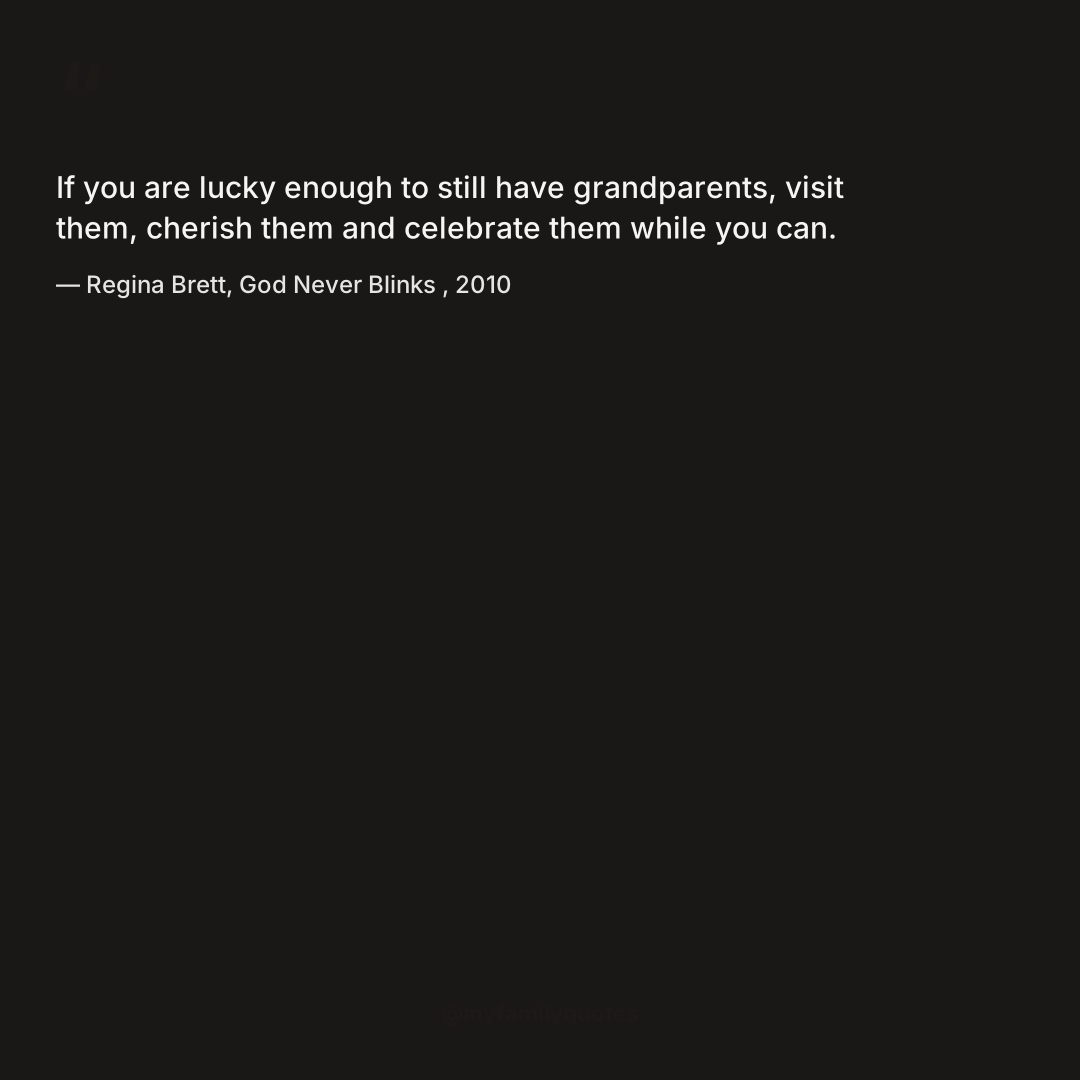
Levenson's comedic take masks a deeper truth about accessibility; grandparents often surrender their dignity to meet children exactly where they are on the living room floor.
"Elephants and grandchildren never forget." — Andy Rooney, A Few Minutes with Andy Rooney, 1981
Rooney points out the absolute permanence of the impressions made by elders, noting that a grandfather's minor habits become the mythos a child carries forever.
The Mechanics of Legacy
How we remember those who came before us dictates how we treat those who come after. The final phase of life is often a deliberate act of passing the baton.
"Grandchildren are the dots that connect the lines from generation to generation." — Lois Wyse, Grandchildren Are So Much Fun, I Should Have Had Them First, 1992
Wyse returns to the geometry of the family tree, illustrating how the youngest members pull the oldest back into the active current of the family's timeline.
"A grandfather is someone with silver in his hair and gold in his heart." — Anonymous, Early 20th Century Greeting Cards
While often dismissed as mere card copy, this phrase persists precisely because it neatly categorizes the physical decline and emotional wealth of aging.
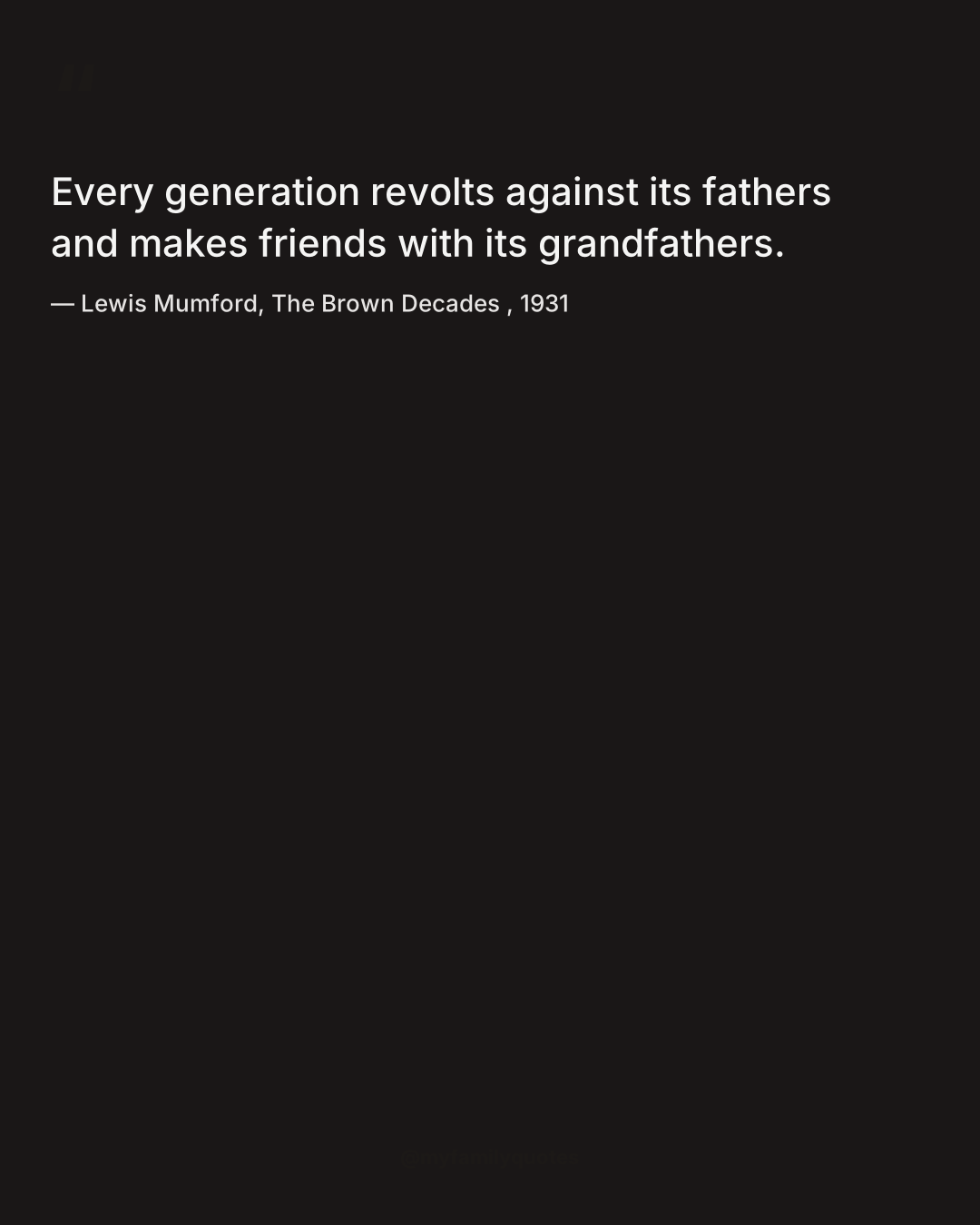
"If you are lucky enough to still have grandparents, visit them, cherish them and celebrate them while you can." — Regina Brett, God Never Blinks, 2010
Brett delivers a stark imperative, reminding readers that this specific type of unconditional support operates on a strictly limited timetable.
"You do not really understand something unless you can explain it to your grandmother." — Attributed to Albert Einstein
Though frequently debated by historians, this attribution survives because it positions the grandmother as the ultimate arbiter of clarity and common sense, anchoring a granddaughter's perspective in practical reality rather than academic jargon.
The Short Version
- Grandparents operate outside the disciplinary structures of immediate parenting, allowing for a relationship built almost entirely on grace.
- The historical context provided by elders gives children a necessary geographical and emotional map of their family's origins.
- Humor and leniency are not signs of weakness in older generations, but rather the privileges earned after surviving the anxiety of raising their own kids.
- The physical presence of a grandparent physically bridges the gap between the distant past and a child's immediate future.
As you move into the coming week, consider how the artifacts of your own family history influence your daily decisions. A single conversation with an elder, or a moment spent recalling their specific habits, can easily recalibrate your approach to the minor frustrations of your own Wednesday afternoon.