Short Thanksgiving Quotes for Family: 14 Lines From Plymouth to Edgar Guest, With Sources
Words My Family Quotes Editors
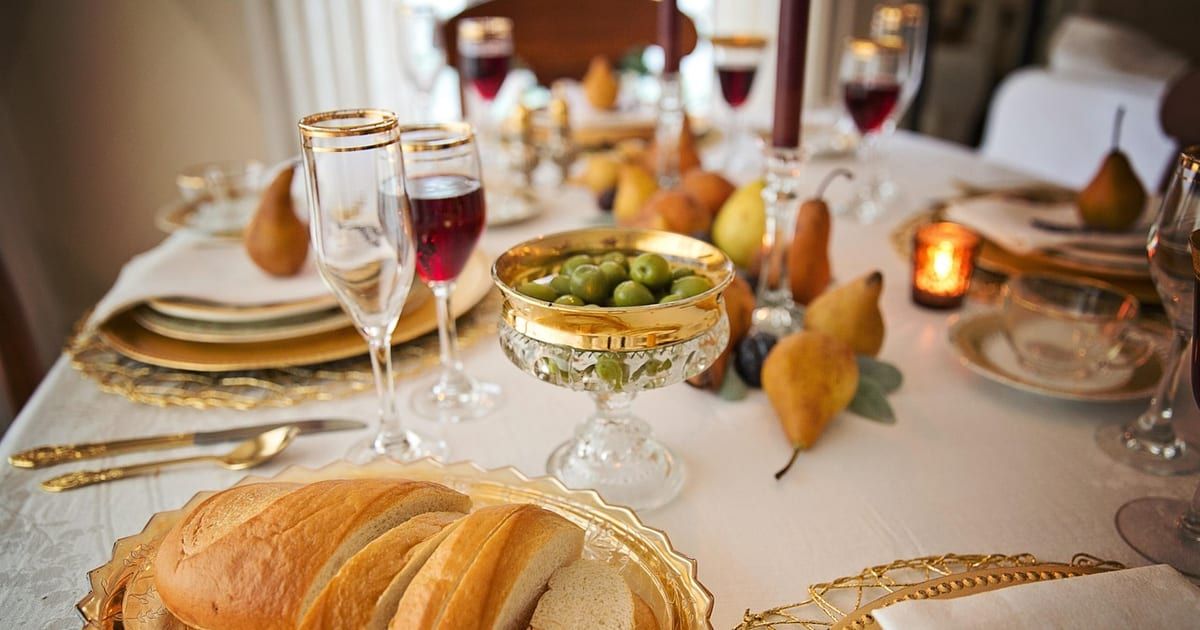
What did a family Thanksgiving sound like before anyone printed a greeting card for it? The oldest answer is a Pilgrim's letter from December 1621. The newest one here is a newspaper poet's verse from 1917. Between them, a children's song, two novels, a magazine editor and a president wrote most of what Americans still feel about the day. This page collects 14 short Thanksgiving quotes for family from those people. Each one gives the author, the book or document and the year, and each was checked against a scan or a full text of the original.
The lines run roughly in date order, so you can watch the holiday go from a harvest feast to a national day to a crowded family dinner. Along the way there are sections for funny lines, for a year when someone is missing, and for a short Bible verse at grace. After the quotes comes a table that cuts the longer passages down to place-card length. The last part covers the popular "Thanksgiving quotes" we looked for and could not trace.
1621: A letter home from Plymouth
"And although it be not always so plentiful as it was at this time with us, yet by the goodness of God, we are so far from want that we often wish you partakers of our plenty." — Edward Winslow, letter to a friend in England, 11 December 1621, printed in Mourt's Relation (London, 1622)
This is one of only two eyewitness accounts of the 1621 harvest feast. A few lines earlier, Winslow describes the governor sending four men "fowling" and Massasoit arriving with "some ninety men" for three days of feasting. He signed the letter only "E. W." It was written to someone left behind, and that is why it still works at a family table: "we often wish you partakers of our plenty" is what you say to the relatives who couldn't make the trip. Keep the second half on its own for a text to a faraway sister, or read the whole sentence before the meal.
1844: The song that went to grandfather's house
"Over the river, and through the wood, / To grandfather's house we go; / The horse knows the way to carry the sleigh / Through the white and drifted snow." — Lydia Maria Child, "The New-England Boy's Song about Thanksgiving Day," Flowers for Children, vol. 2 (1844)
Most people sing "grandmother's house." Child wrote "grandfather's," and her poem is about a Thanksgiving trip, not Christmas (the snow and sleigh bells fooled later generations). Her original has twelve stanzas; the song usually keeps four. Child was better known in her own day as an abolitionist writer, and the house in the poem is usually identified as her grandfather's place in Medford, Massachusetts. If you're putting the line on a card for a grandparent, use her word. A grandfather will notice, and it makes a nice small story to tell at the table.
1863: One day for every family, even the ones far away
"…the day of our annual Thanksgiving made a National and fixed Union Festival." — Sarah Josepha Hale, letter to Abraham Lincoln, 28 September 1863 (Abraham Lincoln Papers, Library of Congress)
Before 1863, each state picked its own Thanksgiving, so relatives in different states could end up celebrating on different days. Hale, editor of Godey's Lady's Book, had pushed for one shared date for years. In this letter she asked the president to make it national. Five days later he did. Her phrase isn't warm on its own. It belongs on a page like this because it explains why your whole family can count on the same Thursday. It reads well in a toast that starts with a bit of history.
"I do therefore invite my fellow citizens in every part of the United States, and also those who are at sea and those who are sojourning in foreign lands, to set apart and observe the last Thursday of November next, as a day of Thanksgiving and Praise…" — Abraham Lincoln, Proclamation of Thanksgiving, 3 October 1863
The proclamation came in the middle of the Civil War. What stands out now is how it reaches past the people at home, to sailors and to Americans abroad. That makes it the right line for a family member deployed, studying overseas or working through the holiday: "those who are at sea and those who are sojourning in foreign lands" can be cut out and sent on its own. (Our grateful-for-family quotes use a different sentence from the same proclamation, for toasts.)
Thanksgiving quotes about family from two New England novels
"…the king and high priest of all festivals, was the autumn Thanksgiving." — Harriet Beecher Stowe, Oldtown Folks, chapter XXVII, "How We Kept Thanksgiving at Oldtown" (1869)
Stowe, the author of Uncle Tom's Cabin, ranks the New England holidays here. Election Day and training days are fine, the Fourth of July "took high rank," but Thanksgiving is king. The rest of the chapter is a long, funny record of a household getting ready: children pounding spices in a mortar, aunts whispering recipes "of especial power and sanctity." The short line is a good caption for the cook's photo of the finished table.
"They were poor in money, but rich in land and love…" — Louisa May Alcott, "An Old-Fashioned Thanksgiving" (dated November 1881; collected in Aunt Jo's Scrap-Bag, vol. 6, 1882)
Alcott's story opens on Farmer Bassett's New Hampshire farmhouse "sixty years ago." Gran'ma falls sick, the parents ride off through the snow to her, and seven children are left to cook Thanksgiving dinner by themselves, with mixed results. The sentence goes on: "mutual patience, affection, and courage made the old farm-house a very happy home." Use the short half for a card to parents who raised a big family on little money. Use the full sentence if you want to name what actually held them together.

Funny Thanksgiving family quotes that someone actually wrote
Most "funny Thanksgiving quotes" online carry a comedian's name and no source (more on that below). These two are older, and you can find them in print.
"Sakes alive, I don't, boys! It's a marcy it don't come but once a year." — Mrs. Bassett, in Louisa May Alcott, "An Old-Fashioned Thanksgiving" (1881)
Her son Solomon has just said he'd "like to have Thanksgiving every day." His mother is up to her elbows in bread dough with her winter weaving still to do, and this is her answer. Every family has someone who has said a version of it. Text it to whoever is hosting this year, or write it on the card that goes with the wine you bring.
"There is one day that is ours. There is one day when all we Americans who are not self-made go back to the old home to eat saleratus biscuits and marvel how much nearer to the porch the old pump looks than it used to." — O. Henry, "Two Thanksgiving Day Gentlemen," in The Trimmed Lamp (1907)
O. Henry wrote this for New Yorkers who had come from small towns. It catches how a childhood home seems smaller every time you go back, and he keeps the joke going with a jab at the "Turkey Trust" and a guess that somebody in Washington leaks the date of the proclamations. "There is one day that is ours" is the short version. The pump line is the one that makes a table of grown siblings laugh.
Edgar Guest's 1917 poem, for the grace or the group chat
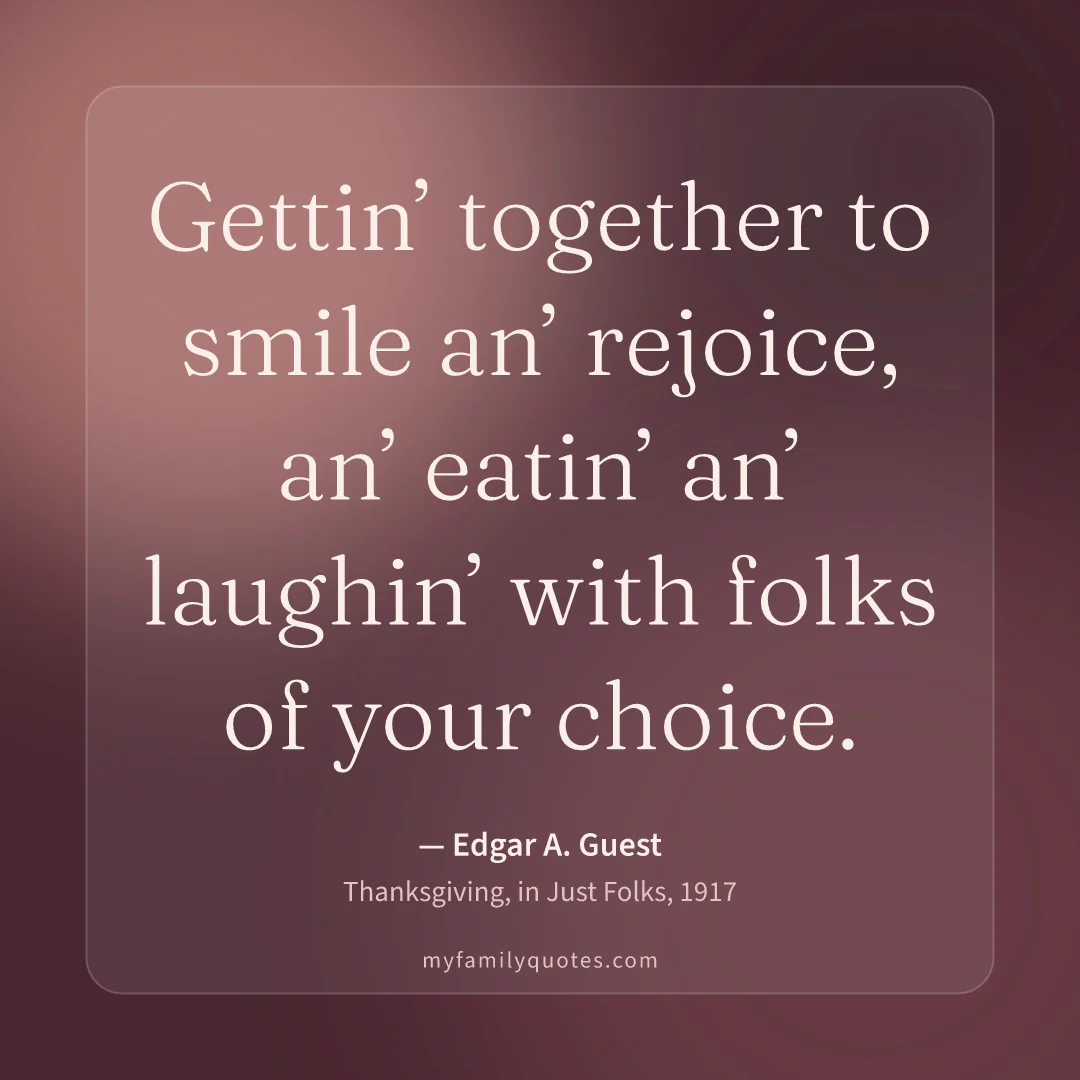
"Gettin' together to smile an' rejoice, / An' eatin' an' laughin' with folks of your choice…" — Edgar A. Guest, "Thanksgiving," in Just Folks (1917)
Guest wrote verse for the Detroit Free Press for decades, and his newspaper poems were syndicated across the country. His dialect spelling is part of the voice, so keep it if you quote him. "Folks of your choice" has a second life now: it works for a Friendsgiving or a blended family where the table is chosen as much as inherited. (We trace that idea further in family is not always blood quotes.)
"Just as we did when the youngsters were small; / Mother's a little bit grayer, that's all." — Edgar A. Guest, "Thanksgiving," in Just Folks (1917)
The same poem, second stanza. Grown children come back "under the old roof" and find the parents only slightly changed. It is gentle and a little teasing, which makes it a good caption under a photo of your mother at the head of the table. She'll know it's affectionate.
When someone is missing from the table
Thanksgiving is often the first holiday after a death, and the empty chair is hard to ignore. The old New England custom Stowe describes made room for it out loud.
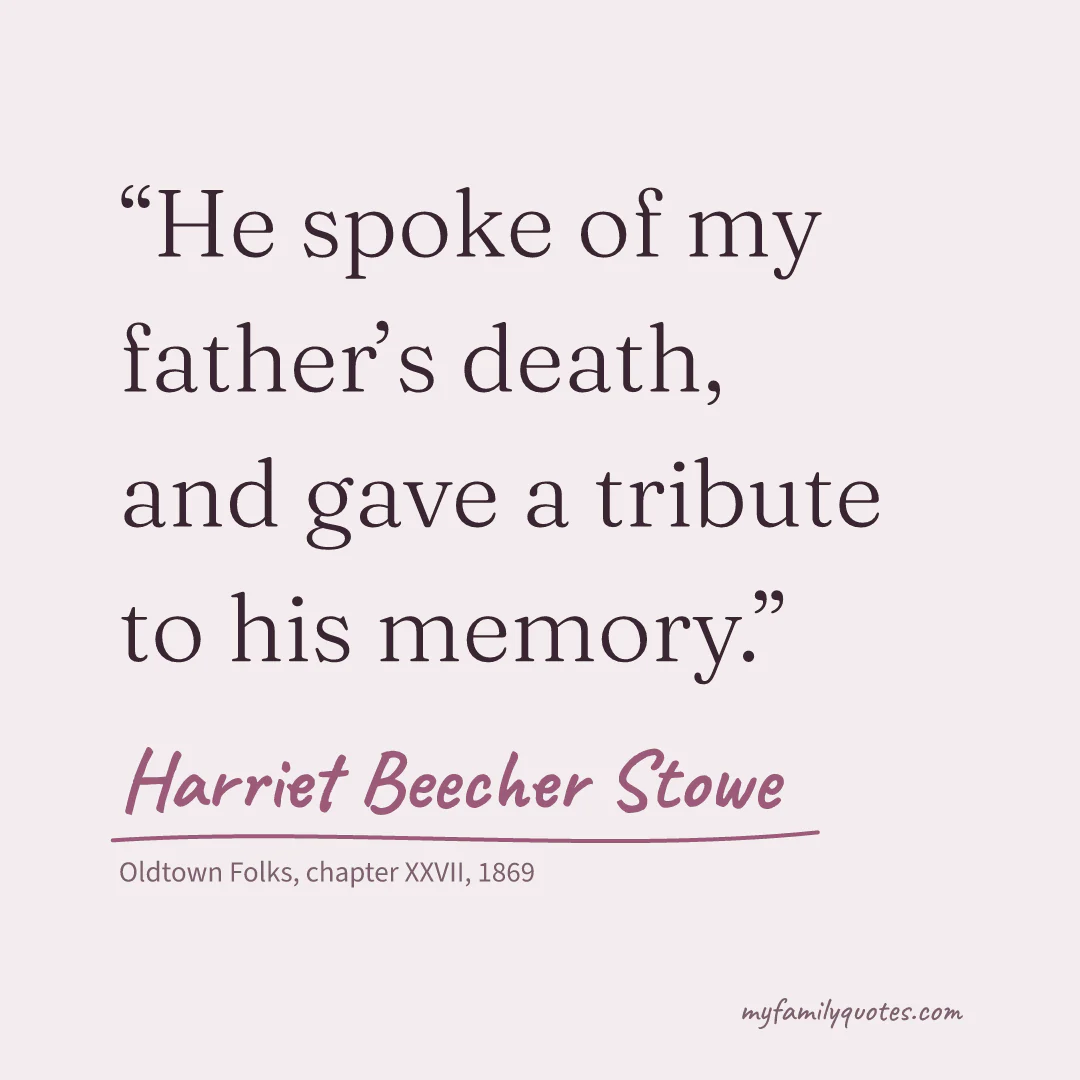
"It was a sort of family history, going over and touching upon the various events which had happened. He spoke of my father's death, and gave a tribute to his memory…" — Harriet Beecher Stowe, Oldtown Folks, chapter XXVII (1869)
After the meal, the narrator's grandfather stands at the head of the table and, "in conformity to the old Puritan custom," recites the year's events in the family, losses included, before they all sing a psalm. Families today can borrow the custom without the sermon. Before the meal, one person says one sentence about each person who isn't there this year. If you need words to start with, read Stowe's line aloud and then say the name.
"And thou shalt rejoice in thy feast, thou, and thy son, and thy daughter, and thy manservant, and thy maidservant, and the Levite, the stranger, and the fatherless, and the widow, that are within thy gates." — Deuteronomy 16:14, King James Version (1611)
This verse is about the harvest feast of tabernacles, kept "after that thou hast gathered in thy corn and thy wine." The guest list it gives is what matters here. It starts with family and ends with the stranger, the fatherless and the widow. It's a good verse for a host who has invited a recently widowed neighbor or a student who couldn't fly home, and for anyone who is spending the day as someone else's guest.
Two short Bible verses for saying grace
"In every thing give thanks: for this is the will of God in Christ Jesus concerning you." — 1 Thessalonians 5:18, King James Version (1611)
Paul wrote this to a young, hard-pressed church, and "in every thing" doesn't mean "for everything." It asks you to give thanks in whatever the year held, which is why it suits a family that has had a hard one. The first five words, "In every thing give thanks," make the shortest grace on this page.
"Enter into his gates with thanksgiving, and into his courts with praise: be thankful unto him, and bless his name." — Psalm 100:4, King James Version (1611)
The whole of Psalm 100 is only five verses, short enough for a child to read at the table. Verse 4 has the word "thanksgiving" in it, which children like to spot. For a longer grace, read all five verses.
Cutting a long line down to place-card size
A place card or caption holds about ten words. Several of the passages above are longer. Here is how we would shorten each one without changing what the author meant:
| Source | Short version | Words | Where it fits |
|---|---|---|---|
| Winslow, 1621 | "We often wish you partakers of our plenty." | 8 | Text or card to relatives who can't come |
| Child, 1844 | "Over the river, and through the wood, to grandfather's house we go." | 12 | Card for a grandparent; road-trip photo |
| Lincoln, 1863 | "Those who are at sea and those who are sojourning in foreign lands" | 13 | Message to family serving or living abroad |
| Stowe, 1869 | "The king and high priest of all festivals" | 8 | Caption for the finished table |
| Alcott, 1881 | "Poor in money, but rich in land and love" | 9 | Card for the parents who hosted |
| Alcott, 1881 | "It's a marcy it don't come but once a year." | 10 | Thank-you text to the cook |
| O. Henry, 1907 | "There is one day that is ours." | 7 | Group-chat invitation |
| Guest, 1917 | "Eatin' an' laughin' with folks of your choice" | 8 | Friendsgiving or blended-family post |
| Deuteronomy 16:14 | "Thou shalt rejoice in thy feast, thou, and thy son, and thy daughter" | 13 | Grace or a family Bible card |
Three rules kept the cuts honest. Mark any cut in the middle of a sentence with an ellipsis. Keep the author's spelling: "marcy" and "eatin'" are the joke, so don't tidy them. Put the name and year after the line, even on a place card. "— Alcott, 1881" takes up almost no room and starts a conversation. For more lines sorted by occasion (toast, card, caption), see our grateful for family quotes. For a thank-you to grandparents in particular, see thankful for grandparents quotes.
Lines you'll see everywhere that we couldn't source
We searched for these and could not find a primary source, so they are not in the 14 above:
- "We Thank Thee" ("For each new morning with its light…"), a grace poem printed on countless Thanksgiving cards over Ralph Waldo Emerson's name. It does not appear in the Household Edition of Emerson's Poems (Houghton Mifflin), which adds an appendix of pieces he never published. Treat the Emerson credit as unproven.
- The joke about relatives who travel "thousands of miles" to see people they see once a year, then find once a year is too often, is credited to Johnny Carson on most quote sites. None of the ones we checked names a show or a date.
- The line about a dinner that takes eighteen hours to cook and twelve minutes to eat is credited to Erma Bombeck, again without a column, book or date. She may well have written it; we just couldn't find where.
If you use one of these, say "attributed to," or leave the name off. We keep a longer list of family lines with corrected credits on our misattributed family quotes page.
Questions about Thanksgiving family quotes
What is a good short Thanksgiving quote for family?
Alcott's "poor in money, but rich in land and love" (1881) and O. Henry's "There is one day that is ours" (1907) are both under ten words and come from real Thanksgiving stories. For grace, 1 Thessalonians 5:18, "In every thing give thanks," is the shortest.
Is it "to grandmother's house" or "to grandfather's house we go"?
Lydia Maria Child's 1844 poem says "grandfather's house." "Grandmother's" came in later as people sang it from memory, and the poem was about Thanksgiving, not Christmas.
What should I caption a Thanksgiving post?
Pick a line that fits the photo. Use Stowe's "the king and high priest of all festivals" for the table, Guest's "folks of your choice" for a Friendsgiving group, or Winslow's "we often wish you partakers of our plenty" for a post to family who couldn't come. Add the author's name so people know the line is real.